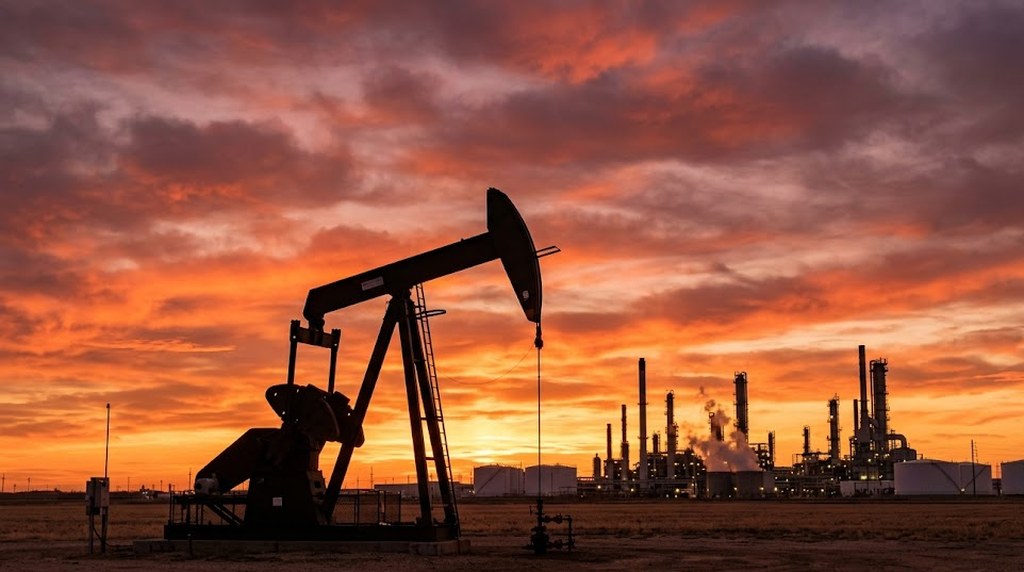
Six years ago, with Covid keeping the world parked in its driveway, refinery profits collapsed on fuel nobody wanted. On Thursday, Valero Energy (VLO), Marathon Petroleum (MPC) and Phillips 66 (PSX) all closed at records, each more than doubled in 2026 and together worth about $224 billion more than at the start of the year. Collin Eaton and Benoît Morenne's B1 story explains the in-between: two wars knocked a big slice of the world's refining offline, Asian exporters kept more of their fuel at home, and the U.S. ended up as about the only big fuel supplier left. “They make hay while the sun shines,” John Auers of Novi Labs told the Journal.
The number that matters isn't the oil price — it's the gap between crude and the fuel made from it, the crack spread. Fuel has risen faster than crude, and the refiner keeps the difference on every gallon. At Valero's Gulf Coast plants that spread averaged $47.11 a barrel in the third quarter, from $30.28 the quarter before, by JPMorgan's count. The bank's analysts figure Valero could post $8.95 billion of pretax earnings for the quarter — 50% more than the prior three months and 24% above its mid-2022 record. By Piper Sandler's math, Marathon's per-share profit could come in at more than seven times the year-earlier figure, and analysts expect Phillips 66's refining business to beat its best quarter on record.
Why the gap is so wide: the Iran war crippled Middle East refineries; in Russia, about 15 refining sites have been hit by Ukraine since late July, idling nearly 2 million barrels a day of capacity; and China and its neighbors have held back fuel exports. Industrial Info Resources counts 12.1% of world refining capacity offline as of September. U.S. diesel hit a record $6.53 a gallon and has only edged lower since. And nobody's building — Auers expects fat margins for U.S. refiners in 2027 too, but no rush into new projects: “No one will do that because they think [market conditions] are temporary.”
Washington noticed
Here's the part we read twice. After July's earnings the president said the big oil companies were “making too much money” and suggested the industry hand some of the windfall back to consumers. Last month his team called refining executives to the White House to talk about adding capacity before the midterms. And one idea industry and administration officials have raised is restarting two California refineries shut over the past year — Phillips 66's near Los Angeles and Valero's at Benicia, once almost 20% of the state's capacity — which some analysts say can't be done quickly. None of that is an export restriction. It's a meeting, an idea and a complaint — so far.
Our read
Investments and Risk (IN04). Valero sits at 1.5% in 12 of our 81 model books, bought Sept. 28; Marathon and Phillips 66 aren't held. The rest of the energy sleeve — Chevron (CVX) in 37 books, ExxonMobil (XOM) 34, Cheniere (LNG) 20, ConocoPhillips (COP) 17, EOG Resources (EOG) 15 — is held at weight; nothing added. Valero came with a written trim rule: a published White House restriction on diesel exports. Friday's Journal reports a meeting, a restart idea and a complaint — not a restriction. On Polymarket (our pull, Friday 12:23 p.m. PT), the crowd prices a U.S. diesel-export ban by Oct. 31 at 2% and by Dec. 31 at 12% — crowd prices, not forecasts. The trigger hasn't fired, so the position hasn't moved.
The planning point is the written rule itself. A stock that's more than doubled this year is the easiest to fall in love with and the hardest to sell on a hunch — so we don't sell on hunches. We tied the trim to a policy event, not a price, because the risk to a refiner in a windfall year is political, and a chart won't show it coming. That isn't the same as ignoring weight: if a winner has grown past the share your plan gave it, trimming back to that share is a rule too, not a hunch. Have that conversation this month, while the sun's still out — nobody fixes the roof in the rain.