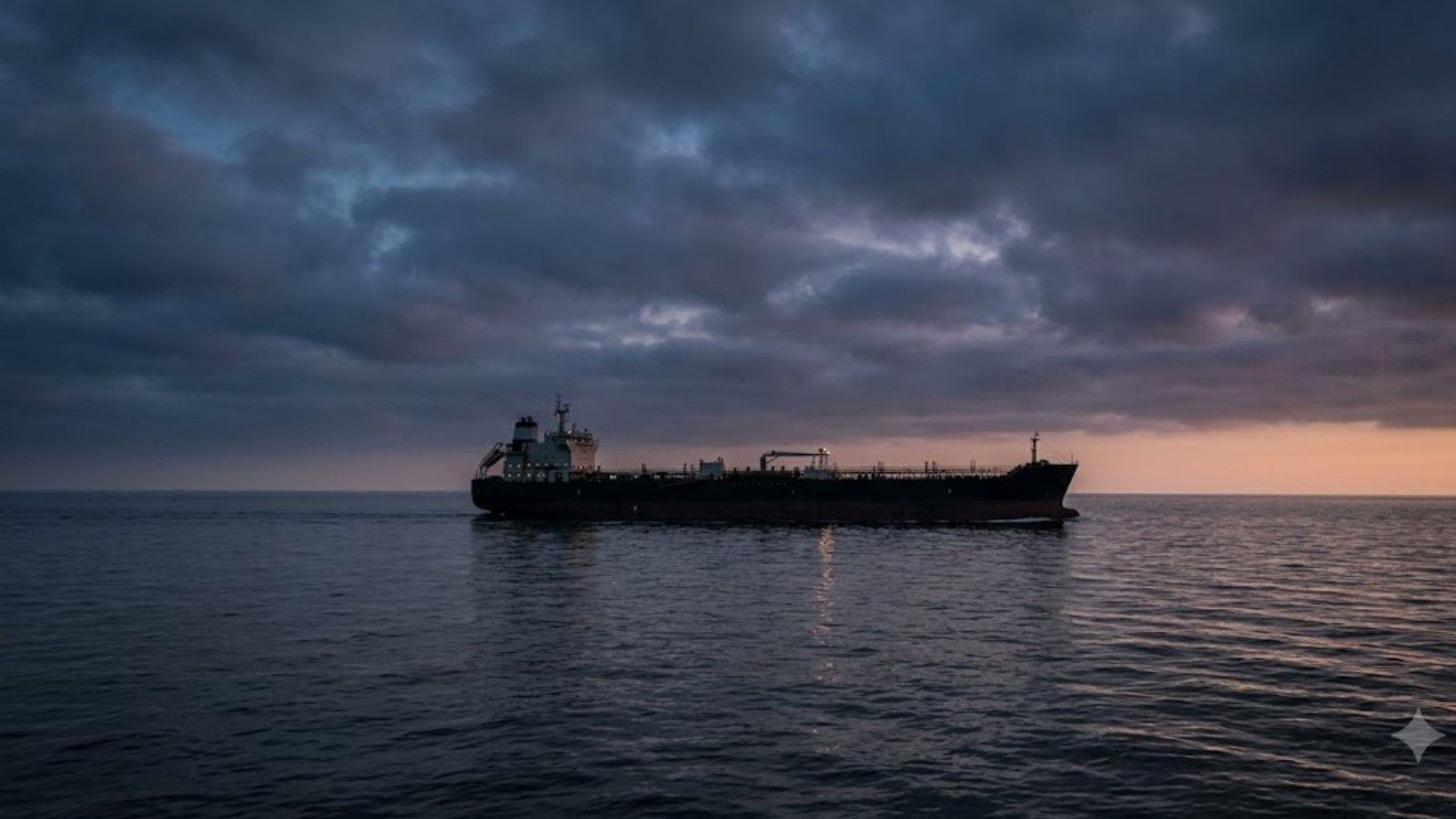
For months, ships near the Strait of Hormuz got hit and kept floating. This week two of them sank. The GFS Pride and the Cape Dao went down within 24 hours of each other, Pakistan's National Hydrographic Office said. On Tuesday a Houthi missile strike set fire to a Saudi Aramco office building in Dhahran. Oil closed at $95.09 a barrel on Wednesday, Oct. 14, and at $97.97 on Thursday.
The Cape Dao was a coal carrier. It was first hit on Sept. 23 off Khasab, Oman, with about 170,000 tons of coal on board bound for India. One Indian crew member died. The GFS Pride, a container ship, was struck Tuesday a nautical mile off the Omani coast. It caught fire and sank the next day. Its crew got off safely. The last sinking here was the Safeen Prestige in March, when four seafarers died. Attacks on ships reached 12 last week, a wartime high, by Windward AI. About two dozen ships have been hit since Oct. 1, more than in all of September. The U.S. military is escorting Gulf oil through the strait while blockading Iran's own exports.
In Dhahran, the missile hit the Aramco building that holds the chief executive's office and the team that plans the company's oil supply. Fire spread across several floors and part of the roof fell in. No one was hurt, people familiar with the matter told the Journal's Summer Said. The Houthis have warned that Aramco's headquarters, its Riyadh refinery and the capital's airport are targets. Aramco shares fell more than 1% in Riyadh.
Planes parked wingtip to wingtip
The Riyadh airport is the insurance story. A missile tore through a terminal on Saturday, Oct. 10, killing at least 12 people and injuring more than 300. An Oct. 8 strike had already destroyed a nearly 16-year-old Saudia Airbus A320. Saudi airlines are now flying as much as $4 billion of aircraft out of the capital. Planes on the ground fell to 38 from 134 since Oct. 8, by Flightradar24. Six damaged planes carry about $375 million of insured value. Benjamin Katz of the Journal calls this the war insurers' doomsday case, billions of dollars of planes parked side by side on one apron. Marcos Alvarez of Morningstar DBRS said “the real exposure is on the ground.” The three big Saudi airlines renew their war-risk policies in November.
Our read
This is Investments/Risk · IN04, with an Insurance · M11 lesson on the side. Nothing here changes the desk's stance. Energy is the hedge in our books, and this is the kind of week it's for. Chevron (CVX) is held at weight in 37 books, ExxonMobil (XOM) in 34, Cheniere (LNG) in 20 and ConocoPhillips (COP) in 17. Valero (VLO) is held in 12. Nothing was added this week. We don't chase a hedge after the storm starts. The insurance half has its own lesson. Insurers fear many expensive things in one place. War exclusions exist in your own policies for the same reason.
Your plan touches this story in one line, the energy sleeve. It's the slice meant to help offset the pump price and the heating bill when they go up. This week's check is simple. Open your accounts and find out what share of them is energy, whether a stock, a fund or nothing at all. If filling the tank is biting and nothing in the portfolio pushes back, that's a gap worth naming. If energy has grown past the size you meant, that's a different note. Nobody buys the raincoat in the downpour. Either way it's a ten-minute look, and one we're glad to do with you in a review.