 Capital Wealth Daily
One Tenth of a Point Moved Everything
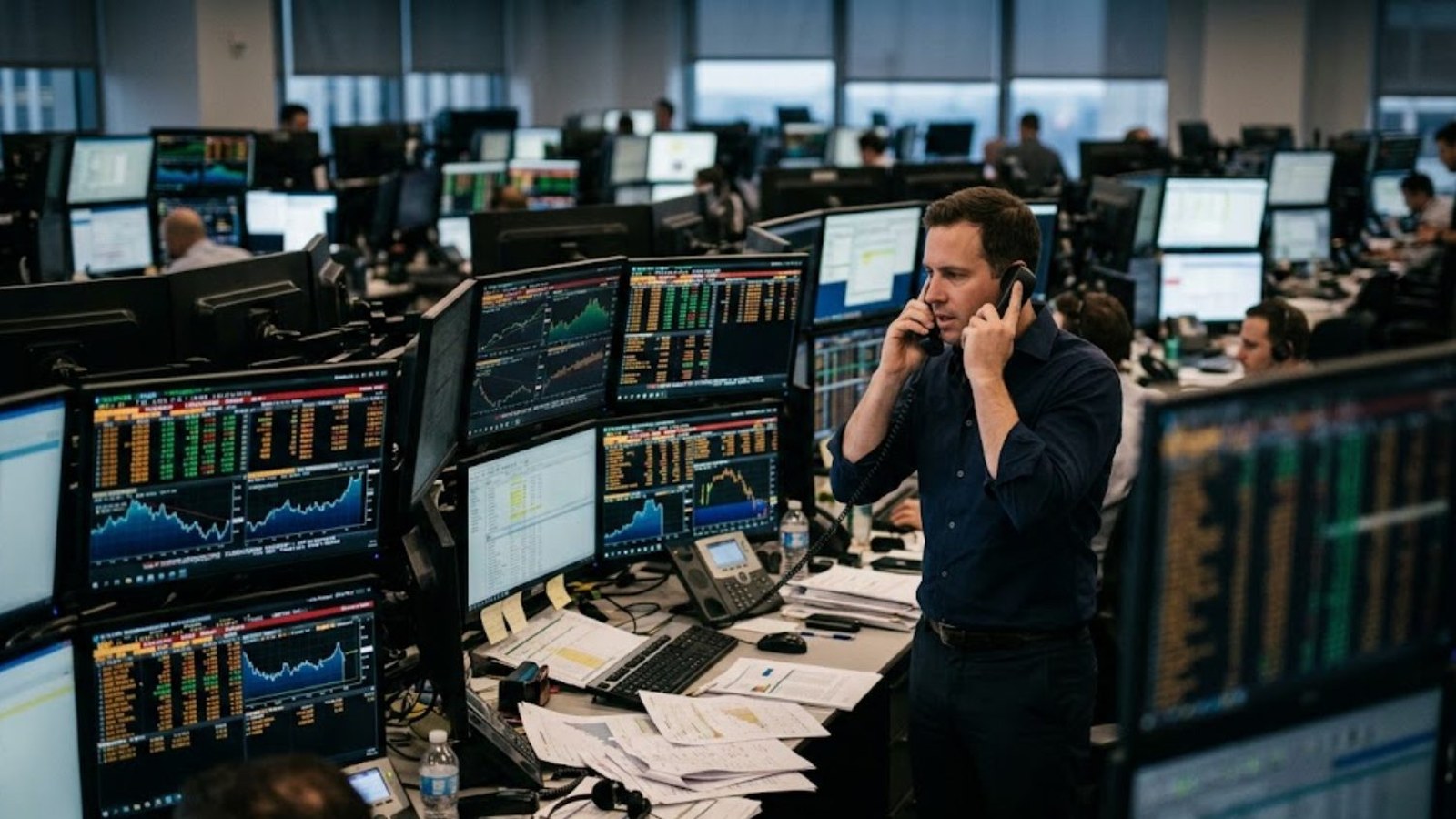
Inflation came in at 3.7%, with core up 0.3%. Odds of an October Fed hike jumped to about 50%, and stocks had their worst day since July.
Gasoline rose 9.1% in September alone, and airfares are up 22.4% over the year. Real hourly earnings fell 0.5% for the month, the sixth month in a row that inflation outran wages. The 10-year Treasury yield touched 5.329% Wednesday, closed at 5.189%, then settled at 5.086% Thursday. The S&P 500 fell 1.11% Wednesday to 7,718.94 and rose 0.33% Thursday to 7,744.06. Thursday morning brought more of the same, with producer prices up 1.3% for September. The Fed meets Oct. 27–28, and the futures market now prices a real chance of a hike. By our own pull, the S&P 500 closed Friday, Oct. 16 at 7,659.44, down 1.09%.
Our TakeOne tenth of a point of core inflation moved the odds of a rate hike, and the whole market, in one morning. That is why the house keeps its safe money short. If your budget assumed 2% inflation, rerun it at 3.7% this week, and keep next year's money in bills rather than long bonds. Nothing was bought this week.
Inflation ran hot again. Consumer prices rose 3.7% over the year in September. Core prices rose 0.3% for the month against a 0.2% forecast. Gasoline alone rose 9.1% in a month.
The market repriced the Fed. Odds of an October hike jumped to about 50%, then ended near 35%. The S&P 500 fell 1.11% Wednesday, the worst since July. CoreWeave fell more than 15%.
Your check grows 3.6%. Social Security rises 3.6% in 2027, about $75 a month on the $2,088 average. Medicare Part B is set at $209.50, up $6.60. The wage cap rises to $192,300.
One fine, three diesel moves. Bank of America fell 4.76% after a $1.2 billion fine. The White House's diesel steps all add supply, and none limits exports. Valero closed at $444.06 Thursday.
The life side. A 16-year-old's 300-plus flyers asking strangers for a day at their jobs. Two 20-yard bridges that cost $314 million, a ballplayer who came back for health insurance, and a $60,000 kitchen that became $180,000.
Off Duty · The Human File
22 stories · 3 pictured · 19 listed
He's 16 and spent $500 on flyers asking strangers for a day at their jobs. Cheap research.
He wanted to know what a job feels like before he pays for a degree in it. Put one shadow day on your teenager's calendar before the first tuition bill.
Hold
A $314 million Oxford bridge took longer to build than the Titanic. Budget for what's underground.
Planners promised four to five days. The ground under the road had other plans. Write a ceiling next to every renovation quote, and decide now what you'd cut.
Hold
Six daughters, eight grandkids, one $4 million house. Two of the daughters designed and built it.
Two daughters designed and built it so every grandchild can sleep over at once. Check whether your will treats the family house as one asset or as cash to split.
Hold- SportsHe nearly quit baseball at .199. His family needed health insurance. Now he's a playoff hero.Hold
- Mansion · House CallKirk Douglas's son once pumped gas. What he treasures of his father's is a stack of scripts.Hold
- Business & Finance · HealthNew cancer drugs make cells destroy their own bad proteins. One trial patient is in remission.Hold
- Personal Journal · Carry OnHer rental EV showed 110 miles, then warned her to charge now. Four days of charging cost $57.19.Hold
- Personal Journal · WorkThe memo says cuts are coming, soon, and nothing more. Fund the cushion before a list has your name.Hold
- Arts in Review · ExhibitionA king pawned a jeweled crown for a loan in 1348. Centuries later it came out of the ground.Hold
- Sports · BaseballBaseball's best player tried to bunt. He went into Game 3 at 3 for 20, and the Dodgers trail 3-0.Hold
- Opinion · EssayHer mother remarried and a friend said the rich get richer. Your will has to say who your family is.Hold
- Bookshelf · HistoryA city of 8,000 hid under a grass mound until 1952. What nobody writes down goes the same way.Hold
- Bookshelf · Short StoriesTwenty writers over 60 on retiring, grandkids and selling the house. A plan should get there first.Hold
- Arts in Review · FilmShe defrauded investors with a blood test that didn't work. On camera she says she never lied.Hold
- Business & Finance · AutosThree-row SUVs with built-in fridges, the kind Americans would love. They sell abroad, not here.Hold
- Business & Finance · Cars & WorkPorsche's bonus topped $10,000 in 2024. This year nobody got it. The next one comes partly in stock.Hold
- Mansion · Historic HomesHis mother bought the family house from her siblings for about $42,000. It now asks $19.2 million.Hold
- Mansion · Private PropertiesShe wanted turnkey. Six years of renovation later, the Macks ask $80 million, a would-be record.Hold
- Mansion · Private PropertiesThe ranch cost $3.1 million. The road and bridge ran past $6 million. He's afraid to add the rest.Hold
- Mansion · House of the WeekHe bought a gray beach house for about $1.5 million and made it pink. Now it asks $5.999 million.Hold
- Opinion · WorkYoung workers always job-hopped. The real change is tenure falling for workers 45 to 64.Hold
- Sports · GolfJon Rahm forfeits much of the $100 million-plus left on his LIV deal. The league went bankrupt.Hold
Your Money & The Economy
20 stories · 3 pictured · 17 listed
Social Security checks rise 3.6% in January. Medicare Part B is set to take $6.60 of it back.
The raise is real, but Medicare gets paid first. Add 3.6% to your check, subtract $6.60, and put that number on the 2027 budget.
Hold
1.5 million sellers, 929,000 buyers, and prices still hold. The owners don’t have to sell.
A crash needs forced sellers, and right now there are hardly any. Rerun your payment at 7.4% and ask for concessions instead of waiting for a price collapse.
Hold
Parents can now borrow only $65,000 in federal loans per child. The school’s price didn’t change.
The school’s price didn’t change. The federal loan that used to cover the rest did. Do the four-year math per child this fall and compare the gap with your 529.
Hold- U.S. News · Taxes / HousingHe moved to Florida in 2019 and kept the Manhattan apartment. Now the city wants $101,000 a year.Watch
- Mansion · Real EstateYou search Zillow and assume every home for sale is there. The biggest brokerage pulls some off.Watch
- Mansion · HomesA $60,000 kitchen became a $180,000 kitchen in four months. The cabinets alone cost $44,200.Hold
- Mansion · Under $1 MillionThey built architect-designed homes for under $1 million. Not one got the garage it asked for.Hold
- Business & Finance · Taxes & InvestingA tax strategy drove Schwab's margin loans to $188 billion. Borrowing to cut taxes is still debt.Watch
- U.S. News · EconomyWholesale prices jumped 1.3% in a month, the most since 2022. That bill reaches the shelf next.Watch
- U.S. News · Energy CostsA Wyoming household paid $969 extra for gas this year. Oregon paid $336. The bill follows the miles.Hold
- U.S. Watch · Long-Term CareMassachusetts waited two years to vet nursing-home owners. Ask who owns your parent's care home.Hold
- Heard on the Street · The ConsumerWalmart's recession signal sits near its 2008 high. Part of the middle class is trading down.Watch
- Business & Finance · InsuranceAn AI agent filed fake murder tips. The insurance to cover that kind of harm barely exists.Watch
- Business & Finance · RestaurantsKFC is switching its U.S. soda fountains from Pepsi to Coke in January. Pepsi owned KFC until 1997.Hold
- Business & Finance · Media / CareersNetflix cut 1,000 jobs, then lost its content chief. Streaming's lowest cancel rate didn't help.Hold
- Opinion · Review & Outlook · HealthA federal panel picks which cancer screenings are free. Now the fight is over who sits on it.Hold
- U.S. News · FraudA LinkedIn message, then a $1 billion shakedown of a Fortress billionaire. Guilty plea Tuesday.Avoid
- World News · Global economyMotorcycles line up for gas in Indonesia. Just 32 economies now produce 95% of the world's growth.Hold
- Page One · TradeA tariff deal with Mexico stalled over cars. The 25% tariff stays, and so does the sticker price.Watch
- Technology · LogisticsFreight demand rose for the first time since January 2023. Shipping costs end up on your receipt.Hold
Markets & The Money
16 stories · 3 pictured · 13 listed
Some CoreWeave bonds fell below 80 cents. Higher rates tax the borrower, not the lender.
The cash-rich giants shrugged off 5% yields. The borrower didn't. Look up your growth fund's top holdings and find the AI names that run on debt.
Watch
AI deals helped four banks earn $30 billion-plus. BofA got a $1.2 billion fine instead.
AI pays the banks in deal fees, then again in wealth flows. Higher rates take some back on the bond desks. Count the banks in your dividend fund's top ten holdings.
Hold
The White House made three diesel moves in a week. None limits exports, so Valero stays at 3%.
Every diesel move that week aimed at the price. None limited U.S. exports, our Valero trim line. Write the one sentence that would make you sell your energy holding.
Hold- Heard on the Street · SentimentFund managers hold 3.9% cash and expect a boom. Main Street feels worse than 1980.Watch
- Opinion · InvestingBlackRock's chief says 4 in 10 Americans own no stock. Check where your paycheck money lands.Hold
- Opinion · Review & OutlookThe editors say take a walk this weekend instead of checking your 401(k). We'd add one switch.Hold
- Technology · EarningsTSMC's profit rose 69% and its stock fell 1.8%. The picks-and-shovels trade got crowded.Hold
- Business & Finance · TechApple closed above $5 trillion on its seventh try, on a day the Nasdaq fell 1.9%.Hold
- Business & Finance · BerkshireBerkshire paid 13% under market for a stake in a software firm. The stock rose 41%. Know what you own.Hold
- U.S. News · EndowmentsHarvard's endowment gained 27.1%. The median college lost to a plain 70/30 mix. Check your split.Hold
- World News · OilTwo cargo ships sank near Hormuz in a day. Oil sits near $98. Check what in your plan offsets it.Hold
- Money & Investing · Stock SpotlightSkydance fell 22%. Much of the value moved to a new line, the warrants. Add both before you judge.Hold
- Business & Finance · Power for AIA utility will build Google a $4 billion private power plant. Check why you own your utility fund.Watch
- Money & Investing · In Market HistoryEnron's $618 million loss was the first crack. Check how much of your 401(k) is company stock.Hold
- Opinion · Notable & QuotableA study's method pins 2.2 million cancer deaths on Costco. The method can't say no.Hold
- Business & Finance · BankingA bank 150% the size of its country's economy may pack up and leave. Know who holds your cash.Watch
From the desk Bias, the book, what’s priced, the planopen
This is Part 2 of a two-part week, from the Thursday and Friday papers. The lead is Inflation hit 3.7% in September, and a 0.3% core print put an October Fed hike back on the table. One tenth of a point of core inflation moved the odds of a Fed hike and gave stocks their worst day since July. Markets & The Money runs from CoreWeave's bonds below 80 cents to Apple's close above $5 trillion. Your Money & The Economy opens with Social Security's 3.6% raise and the new $65,000 cap on parent loans. The Human File carries the Mansion section too, a $4 million horse-themed house and a gutted stable asking $80 million. Part 1 covered the quiet before the report, the first bank results and the Russian diesel deal. Nothing was bought, nothing was trimmed. The three conditions for new money now all fail.
Wednesday opened with the inflation report and ended with an AI selloff. The S&P 500 fell 1.11% to 7,718.94, the Nasdaq lost 1.88%, and the semiconductor index dropped 4.30%. The 10-year Treasury yield touched 5.329% in the morning and closed at 5.189% as money ran back into bonds. The VIX rose to 16.87. Thursday turned the other way. The S&P 500 rose 0.33% to 7,744.06, the Dow gained 1.08% to 52,177.69, and the Russell 2000 added 1.38%. The 10-year settled at 5.086%. Crude rose 3.03% to $97.97 and gold gained 1.54% to $4,147.70. The same morning, retail sales rose 0.8% and producer prices jumped 1.3%, and the bond rally won anyway. By our own pull, the S&P 500 fell 1.09% Friday to 7,659.44, and the week ended down about 2% from the Oct. 9 close.
Expected volatility by horizon at Friday's close, our own pull, not in the papers. The 9-day closed above the 30-day, so the front of the curve turned over. Tuesday it rose left to right, from 11.99 to 17.96.
- Vol-of-vol under 90 — 94.45 Wed., 92.57 Thu., 109.91 Fri. (our pull)FAIL
- Core inflation at 0.1% or less — +0.3% in SeptemberFAIL
- The Fed not raising — raised Sept. 16; October hike odds about 35% in futures after the reportFAIL
The Weather is our own Cboe pull, kept apart from the paper. After the inflation report the VIX rose to 16.87 Wednesday, eased to 16.46 Thursday, then jumped to 19.99 Friday. Friday the 9-day VIX, at 20.12, closed above the 30-day, at 19.99. The front of the curve turned over, the shape of near-term fear. Vol-of-vol closed at 109.91. SKEW reached 168.59, the highest in our pulls this year. The equity put-call ratio rose to 0.65. In plain words, people are paying more for protection this week than last. Signals point to a choppy stretch into the Fed's Oct. 27–28 meeting and the Nov. 3 vote. What we do with it is nothing new. We raise the bar for new money and keep safe money short. None of this is a forecast, and these gauges can turn back as fast as they turned.
The futures market after the report (CME, as printed Thursday). Odds of an October hike stood at 22% before the report, about 20% in the markets wrap. They jumped to about 50% after it and ended the day near a third, 33% on one page and 35% on the other.
The Journal's own crowd markets (Polymarket, as printed). The Fed's upper bound at the end of 2026, 4.25% at 59%, 4.5% or more at 20%, 4% at 9%, from Thursday's paper with $7.1 million traded. Best asset of 2026, the S&P 500 at 69%, bitcoin 18%, gold 9%, from Friday's paper. Our own pull, 8:28 p.m. PT Friday, Oct. 16. October no change 86.5% and a hike 13.5%. December a hike 76.5%. A U.S. recession by year-end 7%. The House to Democrats 90.5%.
The borrowing table (Bankrate, Thursday, as printed). A 30-year fixed mortgage 7.48%, a 15-year 6.93%, a money-market account 0.45%, a five-year CD 1.80%. Freddie Mac's weekly survey put the 30-year at 7.40%. Social Security's raise for 2027 is 3.6%.
Market-implied expectations, not forecasts. They move intraday and have been wrong before. Not investment advice.
Three sittings this week, none a forecast. First, Social Security. Add 3.6% to your current check, subtract the $6.60 Part B increase, and write the net number on the 2027 budget. The average retiree nets about $68 of the $75. Second, college. Parent Plus loans now stop at $20,000 a year and $65,000 per child. Do the four-year math per child, set it next to the 529, and find the gap before the school does. Third, the layoff memo. Companies now announce cuts weeks or years before they name names. Fund the emergency account to the date you would want it ready, and learn your vesting and severance terms this week, before any list has your name. Each of these takes under an hour, and none depends on what the Fed does Oct. 27–28.
Fifteen minutes is enough to find out whether your plan was built for 2% inflation or 3.7%. It is enough to check a Social Security claiming date after this raise, and what the new loan caps do to a college bill. The rain came this week. We would rather check the umbrella now than in the storm.
Book 15 minutes — phone or Zoom →Capital Wealth Daily · Vol. III · No. 185 · Part 2 of 2 · the week of October 12, 2026. Reported from The Wall Street Journal of Thursday and Friday, October 15–16, 2026 (Page One, U.S. and World News, Personal Journal, Arts in Review, Business & Finance, Heard on the Street, Mansion, the opinion pages and Sports), whose market tables are the closes of Wednesday, Oct. 14 and Thursday, Oct. 15; Treasury yields are the Journal’s. Friday’s close, the volatility readings by horizon, vol-of-vol, the SKEW and put/call figures, and the trend lines in the tiles are the desk’s own pull from Cboe and market data at 8:28 p.m. PT Friday, Oct. 16; prediction-market odds are the Journal’s own Polymarket boxes as printed and the desk’s own Polymarket pull at that time, each labeled where it appears. We carry crowd odds as a price, not an endorsement of any platform. The September letter’s conditions and dates are the desk’s opinions, stated so they can be graded, and are not forecasts. Written and edited by the Capital Wealth LG research desk.