Dr. Sameh Toma bought a 30-acre farm in North Carolina in 1996. He started an equestrian center there so he'd have a way to spend time with his three daughters. After her divorce, Cindy Luihn boarded her horse at the farm. She brought her own three daughters along. The girls rode together. Then, both divorced, the parents fell in love.
The two went back to childhood, the Journal's Nancy Keates reports. Toma had been friends with Luihn's older brothers. Toma, now 66, is a reproductive endocrinologist and fertility doctor. They married in 2002 and blended the two families. Luihn, 61, calls it “a female Brady Bunch.” Her family money came from a large franchise of KFC and Taco Bell restaurants in the Southeast, which she inherited. The parent of those brands is Yum Brands (YUM).
The couple's 2018 purchase in Cary was an ordinary four-bedroom house, about 12 miles from the farm. It sat on 0.75 acre above a lake on a golf course and ran 4,684 square feet. The price was $1.275 million. Then they tore it down. The new house is 7,500 square feet, still four bedrooms, and cost $4 million to build. It took four years. The pandemic slowed supplies and crews, and the lot sits on a steep hill. They finished in 2025.
Built by the family, for the family
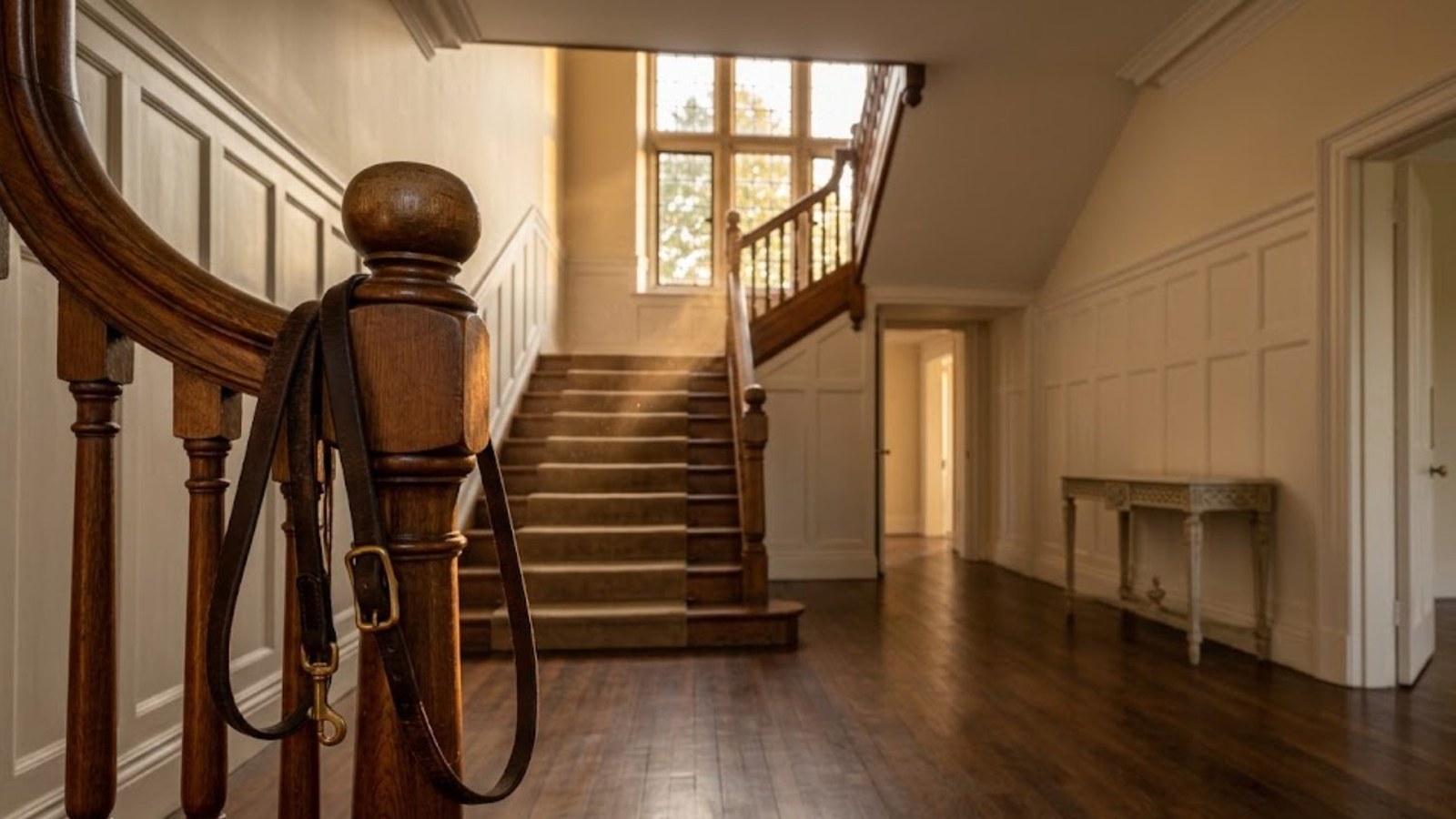
The architect is their daughter Megan Toma, 38, a founder of Toma Farren Architects. The builder is their daughter Nicole Toma Townsend, 41, a principal at Toma Townsend Construction. The sisters argued at times, Megan says, and she thinks the house is better because they were open with each other. The horses are everywhere. Saddle leather covers the chairs. The wide-plank floors echo a barn aisle, and there are sliding barn doors. The point of the whole thing is a place where six daughters and eight grandchildren can all stay over on the same night. Nicole's daughter, 11, went to the site every day during construction. After school she's on a pony at her grandfather's farm, and many nights she's at her grandparents' house with a pile of cousins.
Our read
This is a Housing story, M6, and it's an Estate story too, meaning the papers that say who gets what. By our math, counting the lot, more than $5 million went into one house whose purpose is to gather a family. Nothing wrong with that. It's the clearest kind of spending we see. The trouble comes later, when a gathering house has to pass to six daughters. A house doesn't split six ways. In most families, one child lives nearby and uses it, and another would rather have the cash. Who pays the taxes, the roof and the upkeep in ten years is a question better answered on paper than at a funeral. Yum Brands is held at weight in 5 books; nothing added.
Here's the connection to your plan. Maybe you own the house where the family gathers, the beach place, the farm, the big kitchen. Your estate plan needs to say what happens to it, in a sentence your kids could read aloud. This week, pull the deed and the will and check two things. Whose name holds the house, and whether the will treats it as one asset or as cash to be split. If the answer is fuzzy, that's the first item for a review. The family in Cary built the house they wanted. The next step is writing down how it stays a family's house. The roof gets checked before the rain, and we're glad to look over a gathering-house plan with you.