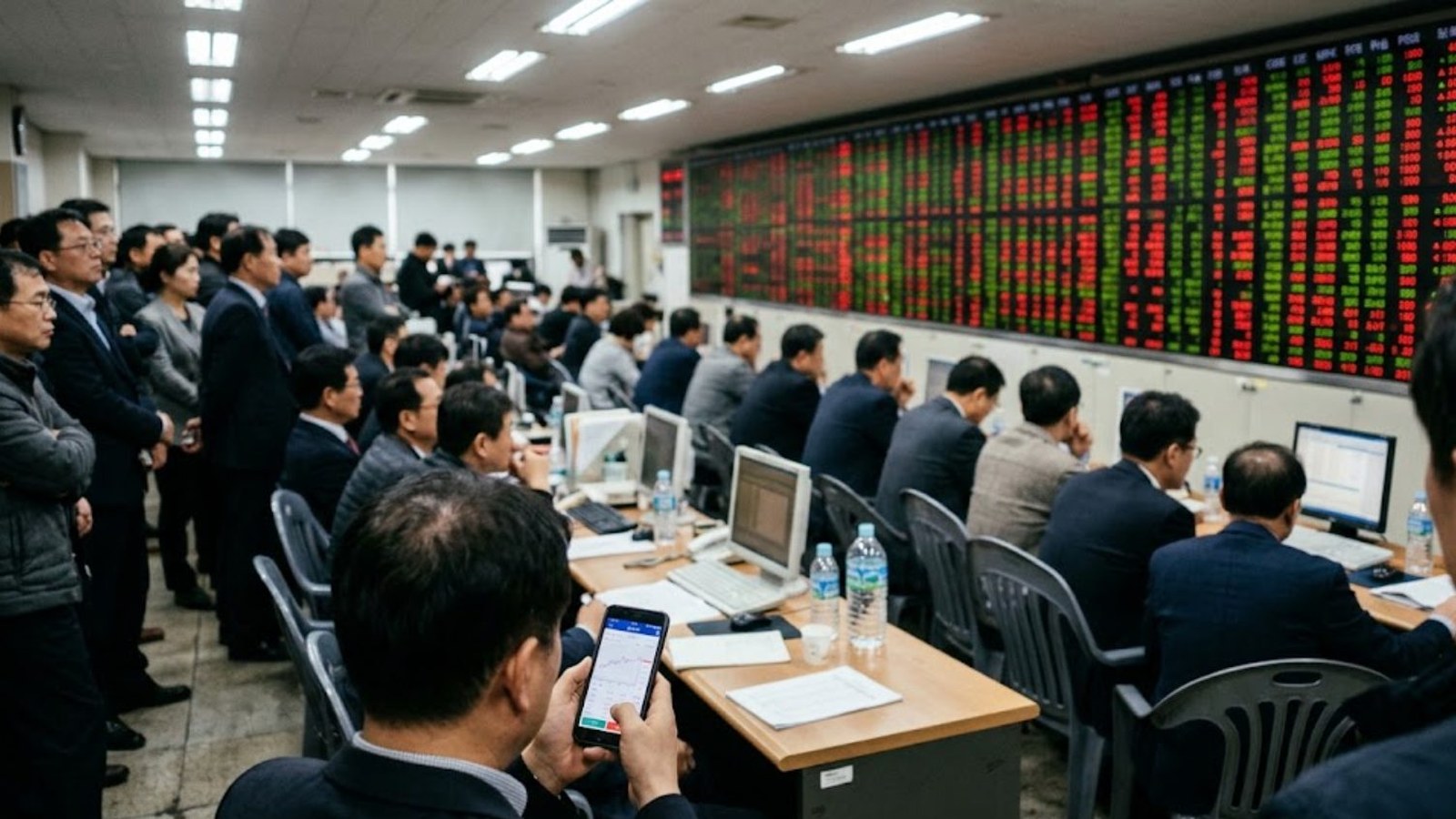
In Indonesia, motorcyclists lined up for gasoline on Thursday. The shortages reached Bali this week, with warnings that pumps had run dry. Ethiopia is saving its fuel for trucks and tractors and turning ordinary cars away. French students have filled the streets to protest spending cuts. The Journal's Gabriele Steinhauser and Katrina Northrop report from the IMF's meetings in Bangkok, where the message is blunt. The world is splitting into countries inside the AI boom and everyone else.
The headline number looks calm. The International Monetary Fund expects the world to grow 3.1% this year, down from 3.5% in 2025 and about what it forecast in April. Under that number, the fund counts only 32 economies producing 95% of the world's growth. In April the count was 54. “Those who are part of AI will be better off,” said Thailand's finance minister, Ekniti Nitithanprapas.
Two costs are doing the damage. A barrel of oil cost around $70 before the Iran war. The story puts it around $105 now. Borrowing got more expensive too, partly because AI companies are issuing so much debt. Investors now demand higher yields from governments that already owe a lot. France's debt is headed for a record 118% of GDP. Senegal told its bondholders and Chinese state banks it needs relief. Pakistan's fuel prices are up more than 50% since the war began. Its finance minister says a broad subsidy is off the table, because the country “simply can't afford it.”
Where the growth went
The United States is on the winning side, for now. The IMF kept its U.S. forecast at 2.3%, crediting big AI and energy sectors. But the U.S. runs the largest budget deficit of any rich country, projected at 8.5% of GDP, and its 10-year Treasury yield is the highest since 2002. U.S. consumer prices were 3.7% higher in September than a year before. That's six straight months of prices beating paychecks. Taiwan, home of the chip makers, is forecast to grow nearly 11%, the fastest of any advanced economy. Canada is down to 1.1%, from 1.5% in April, partly over trade fights with the U.S. China is seen at 4.5% this year and 4% in 2027.
Our read
Investments/Risk · IN04, with a Fixed Income · IN02 footnote. Hold. The map the IMF drew is roughly the map in our books. The AI supply chain is held at weight, Taiwan Semiconductor (TSM) in 30 of 81 books and the Korea fund (EWY) in 17. Energy sits as the hedge, Chevron (CVX) in 37 books and Exxon (XOM) in 34. Nothing was added this week. The September letter's three conditions for new money all fail as of Thursday, Oct. 15, so we sit. The part we'd underline is the bond side. A 10-year yield at its highest since 2002 tends to mean every government pays more to borrow, and the ones already deep in debt pay the most. That's why our safe money stays short, in Treasury bills and floating-rate paper, and long bonds stay avoided.
Your connection is the international sleeve of your own portfolio. Most target-date funds in a 401(k) hold a big slice of their stocks overseas, spread by market size rather than by who's inside the AI boom. This week, open your international fund's fact sheet and read the country list. See how much sits in Taiwan and Korea versus France, Canada and the heavily indebted names the IMF is worried about. You don't have to change it. You should know it, because international stopped being one thing. You check the tide tables before you launch the boat.