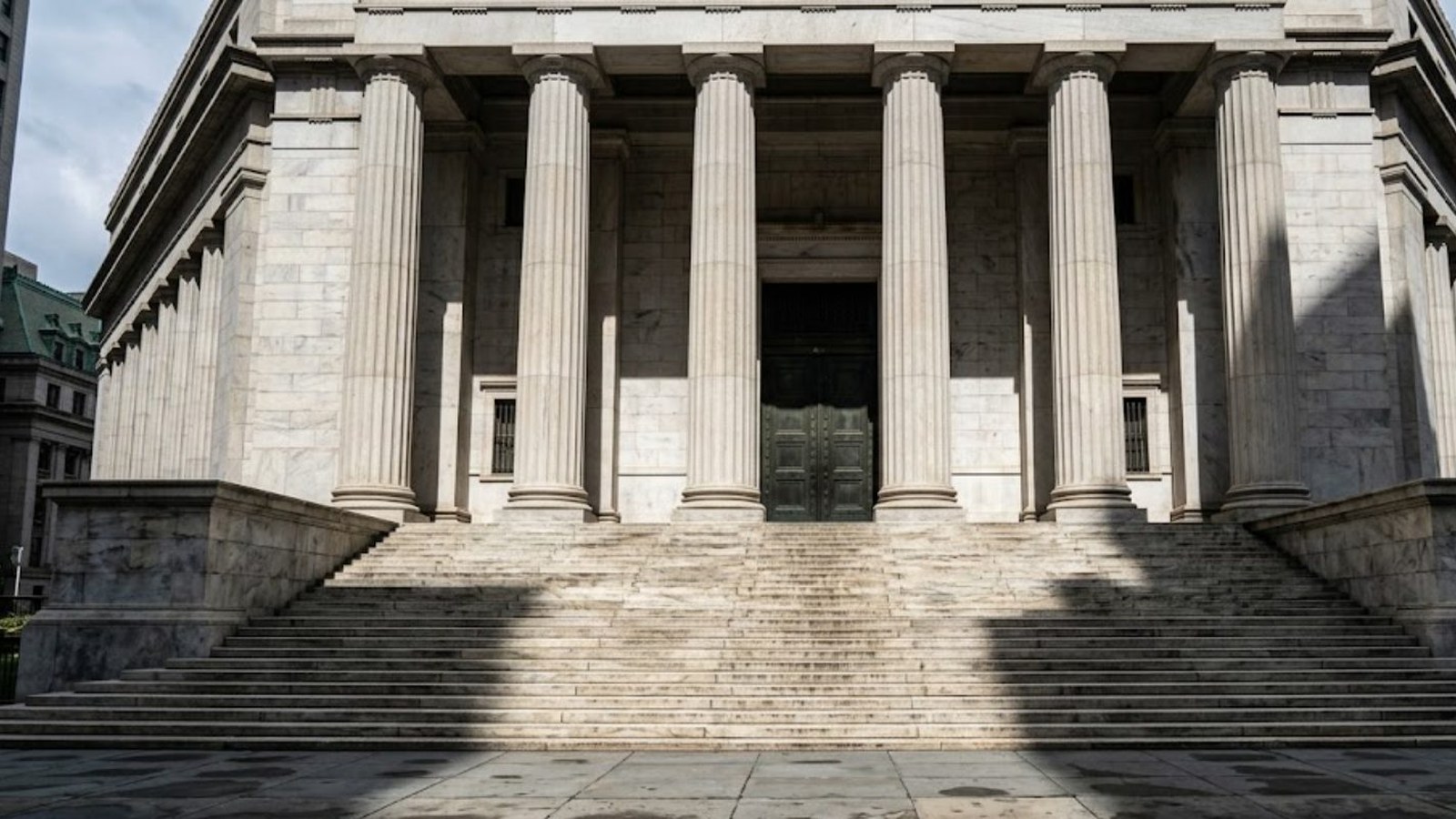
Picture Wall Street on Thursday, Oct. 24, 1929. A crowd fills the street. That's the photo in Wednesday's Journal. Four days later came the day the paper's history box is really about. On Monday, Oct. 28, 1929, the Dow fell 13.5% in one session. That was a record at the time. It happened 97 years ago today.
The names tell the story of that era. Packard Motor Car lost 50.7% in a day. RCA, the hot technology stock of the 1920s, fell 31.3%. Montgomery Ward, the catalog giant, lost 20.5%. International Nickel fell 17.2% and Consolidated Gas 17.1%. Most of those names are long gone from the market. By most counts, the Dow's record for a one-day fall stood until October 1987.
Now look at Tuesday. The Dow closed at 52,377.57, up 15.99 points, or 0.03%. Stocks rose for a second day as traders waited on the Fed. Nobody is lining up on Wall Street. That's exactly when a history box earns its space. A 13.5% day on today's Dow would be thousands of points. The points don't matter. The percentage does, and 13.5% is a number every investor should be able to picture in their own account.
What diversification is for
A crash is never a surprise in the long record. It's a feature. The 1929 names show the other half of the lesson. A single stock can lose half its value in a day and never come back. An index of many companies fell 13.5% that Monday and went on to new highs, though it took decades. Owning many things, including bonds and cash, is how a bad day stays a bad day and never becomes a bad life.
Our read
This one is about risk and about nerves (Investments/Risk · IN04, Behavioral). Gold (IAU) sits in 46 of our 81 books, and a short-Treasury fund (SGOV) in 49. Those slices are small, and they're there for a day like Oct. 28, 1929. We don't know when the next one comes. Nobody does. The cushion that pays the bills in a bad stretch belongs in your own plan, not in the stock book. Enough cash and short Treasurys to cover a stretch of bills is what keeps a family from selling stocks at the bottom. That's the plan working, and it's boring on purpose.
The concrete thing is your own bad-day number. This week, take your portfolio total and figure what 13.5% of it is, in dollars. Then ask yourself whether you could leave it alone for a year at that lower number. If the honest answer is no, your stock weight is too high, or your cash cushion is too thin. The umbrella gets bought on a dry day. Bring the number and we'll check the mix against it.