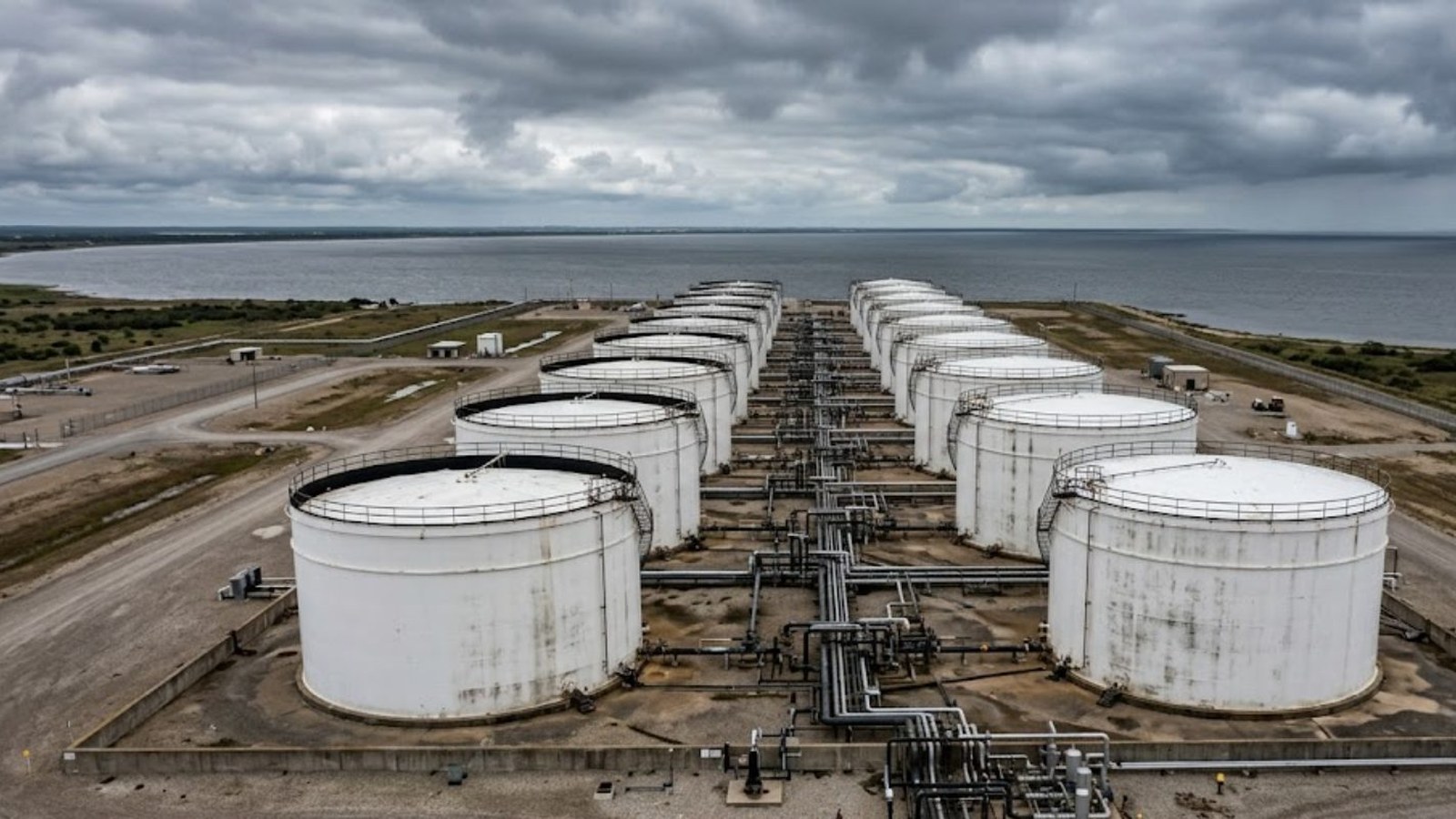
Europe’s winter hasn’t started, and its gas bill already has. On Monday the Dutch benchmark for natural gas went past €97 a megawatt-hour, about $108. Europe hasn’t seen that price since late 2022, the year of the energy crisis. Giulia Petroni of the Journal lays out the squeeze. Supply is down, storage is low and the cold is coming.
Start with supply. Before the war, about 20% of the world’s liquefied natural gas moved through the Strait of Hormuz. The fighting has curbed exports from Qatar and the United Arab Emirates. Most of that gas went to Asia, so Asian buyers now compete with Europe for every spare cargo. Europe is importing less LNG than it did a year ago, and ANZ’s analysts see that gap reaching 11% by month-end. Experts told the Journal Europe probably won’t run short. It’s likely to pay more, and so are households.
Then storage. As of Sunday, the European Union’s tanks sat at 74.6% full. Normal for late October is well above that. Last Tuesday, for the first time this season, more gas came out of storage than went in. Refills picked up again after that. Mild weather had been helping. That may be ending. Martin Senior of Argus Media says slower Arctic winds in early November raise the odds of a cold snap in the second half of the month. A cold snap would mean a faster draw from storage that’s already at a record low for the season.
The view from a U.S. furnace
Here at home, the picture is the mirror image. We wrote on Oct. 23 that U.S. gas heat should cost less this winter, because American output is running at a record pace. The same abundance is what Europe is buying. Cheniere Energy (LNG), the largest U.S. exporter of liquefied natural gas, hit a 52-week high on Monday. The Journal’s gas story doesn’t name it. We do, because it’s the clearest link between a European price spike and an American portfolio.
Our read
This is Investments/Risk, IN04. An energy sleeve isn’t a bet on where gas goes next. It’s the part of the plan that tends to hold up when a war or a cold winter pushes fuel prices higher and most other things lower. Cheniere is held at weight in 20 books, Williams (WMB) in 18 and Kinder Morgan (KMI) in 15; nothing added. We hold them for weeks like this one, and we don’t chase them on a headline.
The one thing to check is your own winter fuel line. If you heat with gas, the Oct. 23 piece said the bill should be lower, so pencil that in. If you heat with oil, plan for more. Then look at whether your plan holds any energy at all, and how much. A sleeve of a few percent is a hedge. A sleeve of a quarter of the account is a bet. The time to check the furnace is a warm week in October, and we’re glad to walk the plan with you before the cold arrives.