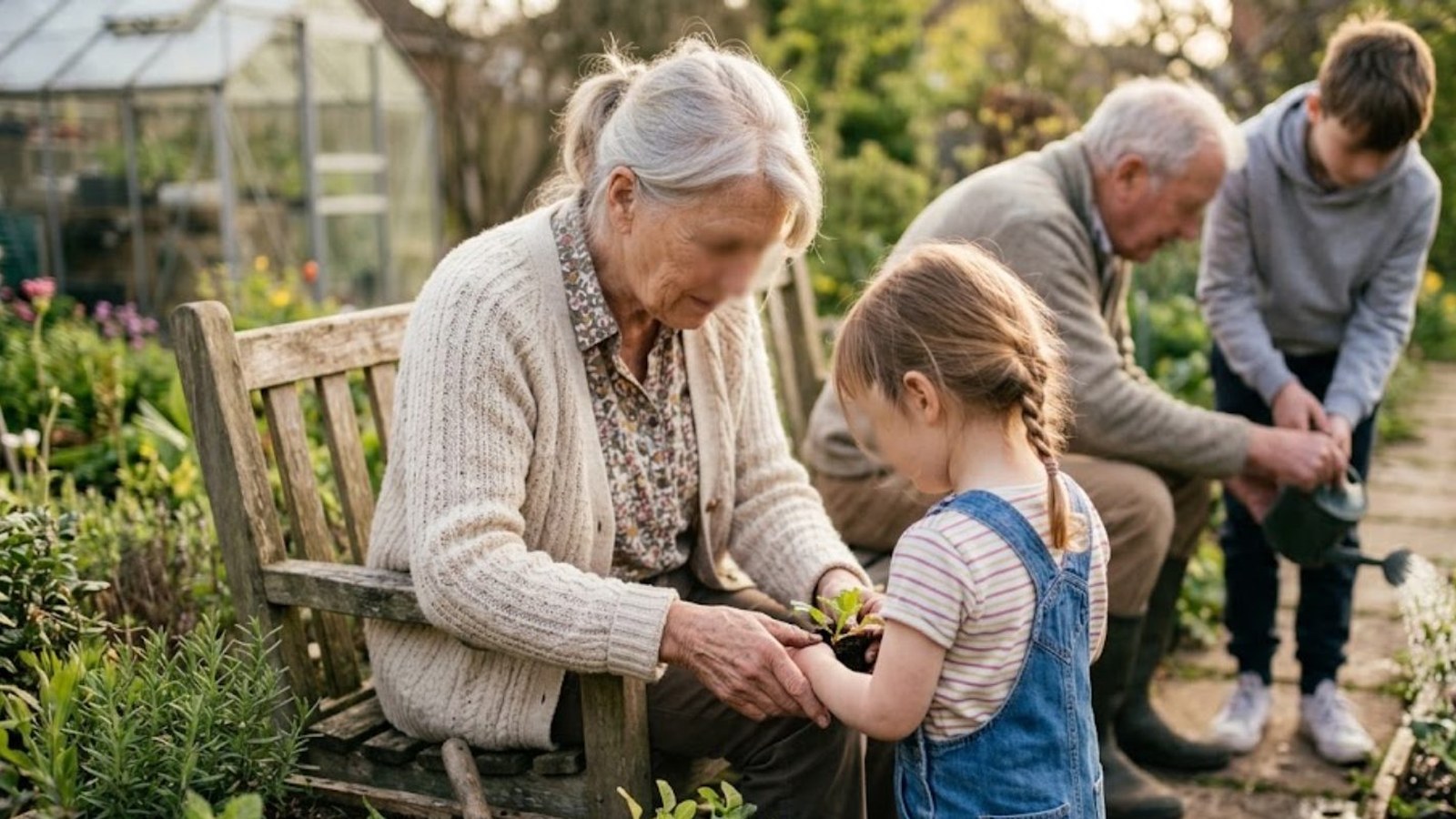
For most of his life, David Andrus's idea of a weekend was a backpack or a mountain bike in Colorado. His first grandchild arrived when he was 72. By then he had a degenerative spine condition. He won't be teaching Cedar to throw a football. He did something else instead. He and his wife Martha moved from Boulder to Portland, Ore., in May, to be near both their sons and about 2 miles from the baby.
Rachel Wolfe's story in Monday's Journal starts with a simple chain. Americans have children later. So they become grandparents later too. Back in 1960, a woman typically had her first baby in her early 20s. The median new grandmother that year was 44, meaning half were younger and half older. First births now come at nearly age 28 on average. That pushes the grandmother milestone to 57, by a working paper from economists Dora Costa of UCLA and Matthew Kahn of USC. The two economists figure that cuts the healthy years a grandmother gets with her grandchildren to 15 from 28. Even allowing for longer healthy lives, Costa says, those years fall by about a third.
The money runs the other way. Older grandparents are more often retired, so they have time. With smaller families, more gets spent on each grandchild. A recent AARP report found grandparents gave more than 500 hours of care over the prior year, on average, and $2,654 out of pocket for daily needs and school. Ellen Vance, 65, couldn't decide when to leave her government grants job. Then her son and daughter-in-law told her a baby was on the way. That settled it. She retired last October. Her granddaughter Anna arrived two weeks later. Since January she and her husband have watched Anna about five hours a day, three to five days a week. Her son figures that saved his family thousands in child care. She calls it the toughest job she's ever loved. She'll need to cut back soon, because spinal surgery is on the calendar.
A shorter window, so use it on purpose
Cindy Allen, 73, a retired preschool teacher in New Hampshire, had her first child at 25. Her middle daughter had hers at 39. The boys are 4 and 6 now. Allen keeps up with them on arthritic knees, not long after cataract surgery. “I can still kick a soccer ball,” she told the Journal, “but I can't do it for an hour anymore.” The love isn't smaller. The window is. In Portland, Martha Andrus, 72, puts it another way. “We don't need a fireplace,” she says. Everyone's too busy staring at the baby.
Our read
This is Estate and Retirement · M10 planning, with a clock on it. Many retirement plans treat the grandkids as a line for birthday gifts. This story says the gifts are the small part. The big parts are a move across the country, hundreds of hours of care, and about $2,654 a year out of pocket. The move changes housing costs and state taxes. The care hours change what travel and part-time work can look like. And the shorter healthy window means the good years come early in retirement, when you'd rather not be holding back. So front-load it. A plan that spends more in the first ten years and less later may fit this story better than a flat line.
The one thing to put in your plan is a grandparent budget, money and hours both, with a start date you can see. The check this week is simple. Pull last year's spending and count what went to the grandkids, from plane tickets to the day care gap. If it's near $2,654, you're average, and average is a lot. If a move to be nearby is even a maybe, add it to the same page. Then bring both to your next review, and we'll run the numbers while the baby is small and the knees still work. The umbrella gets found before the rain. The map gets looked at before the surgery date.