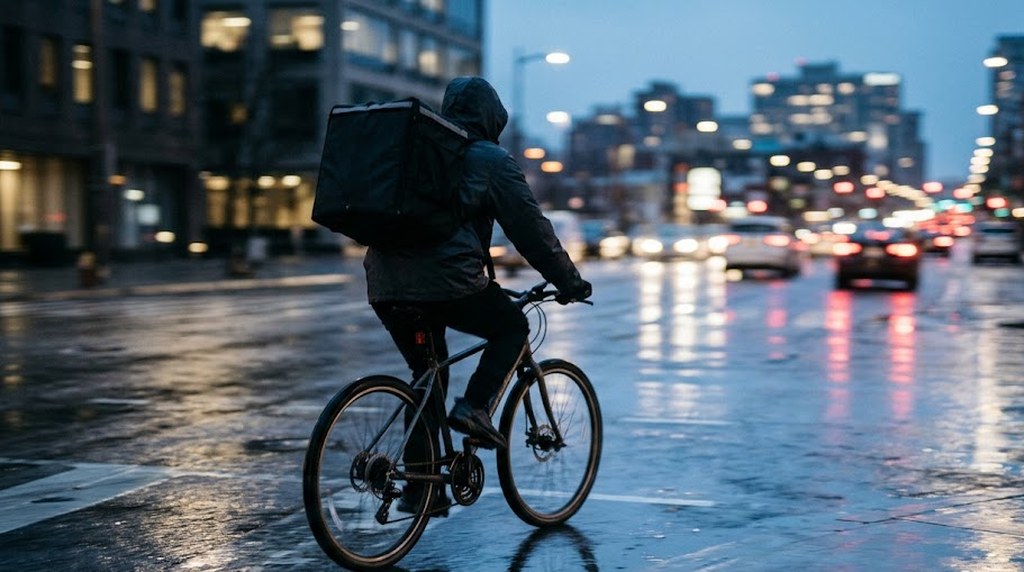
Tony Xu was a Stanford business student, touring Bay Area shops with his future co-founders. A baker told them about a binder full of delivery orders. She had nobody to fill them. That was about a decade ago. On Thursday, Oct. 29 his company, DoorDash (DASH), agreed to buy Instacart for $17 billion. It's the biggest bet in DoorDash's 13-year history.
We wrote about this deal on Oct. 28, when it was still talks. The Journal first reported those talks on Monday, Oct. 26, and DoorDash's stock fell that day. On Thursday, with the deal signed, it rose 5.6% to $179.00. Instacart, whose corporate name is Maplebear (CART), slipped about 2% to $57.11. DoorDash put the price at $65 a share, paid in cash and stock. That's 11% more than Instacart's Wednesday close. It's about 26% more than its Oct. 22 close, before word of a sale got out.
DoorDash is now a $78 billion company with nine million “dashers.” It already delivers Macy's dresses, Costco paper towels and CVS cold medicine, the Journal's Heather Haddon reported. Instacart gives it a real seat in groceries, where it would compete with Walmart and Amazon. More than 80% of grocery shopping still happens in stores, so there's room to grow. There's also a catch. Both companies hold big shares of third-party grocery delivery, and regulators may look hard. Xu's answer is that the deal helps smaller grocers compete. “The biggest companies are eating more and more of the pie,” he said.
Same stock, two headlines, two directions
DoorDash's stock is still down around 20% this year. It looked at buying Instacart back in 2021 and passed, then struck a deal with Kroger in 2022. Its shares were priced at $102 for the December 2020 IPO and hit $182 on the first day. This week the same company lost ground on Monday's report and gained 5.6% on Thursday's signing, for the same $17 billion.
Our read
This is Investments/Risk · IN04 and Behavioral. We don't own DoorDash or Instacart in any model book. The lesson is in the trading. On Monday, the market seemed to worry the buyer was paying too much. On Thursday, it cheered the same buyer at about the same price. The headline number barely moved between the two days. The mood did. Instacart holders get a lesson too. The stock closed at $57.11 against a $65 deal value. Part of that gap likely reflects the DoorDash shares in the price, which move every day. Part of it is the regulators, who still have to sign off. A deal price is a promise, and a promise like this can take months to keep.
Here's where this touches your money. A total-market index fund likely holds a sliver of both companies already, so this deal needs no move from you. What it touches is your own habit with headlines. This week, open your brokerage app and look at your last five trades. Next to each one, write down whether a headline set it off. If a stock you own ever gets a buyout offer, compare its price with the offer first. A wide gap means the market sees risk in the deal. Bring that list to your next review and we'll talk through the pattern. You pick the umbrella before the sky turns, not after.