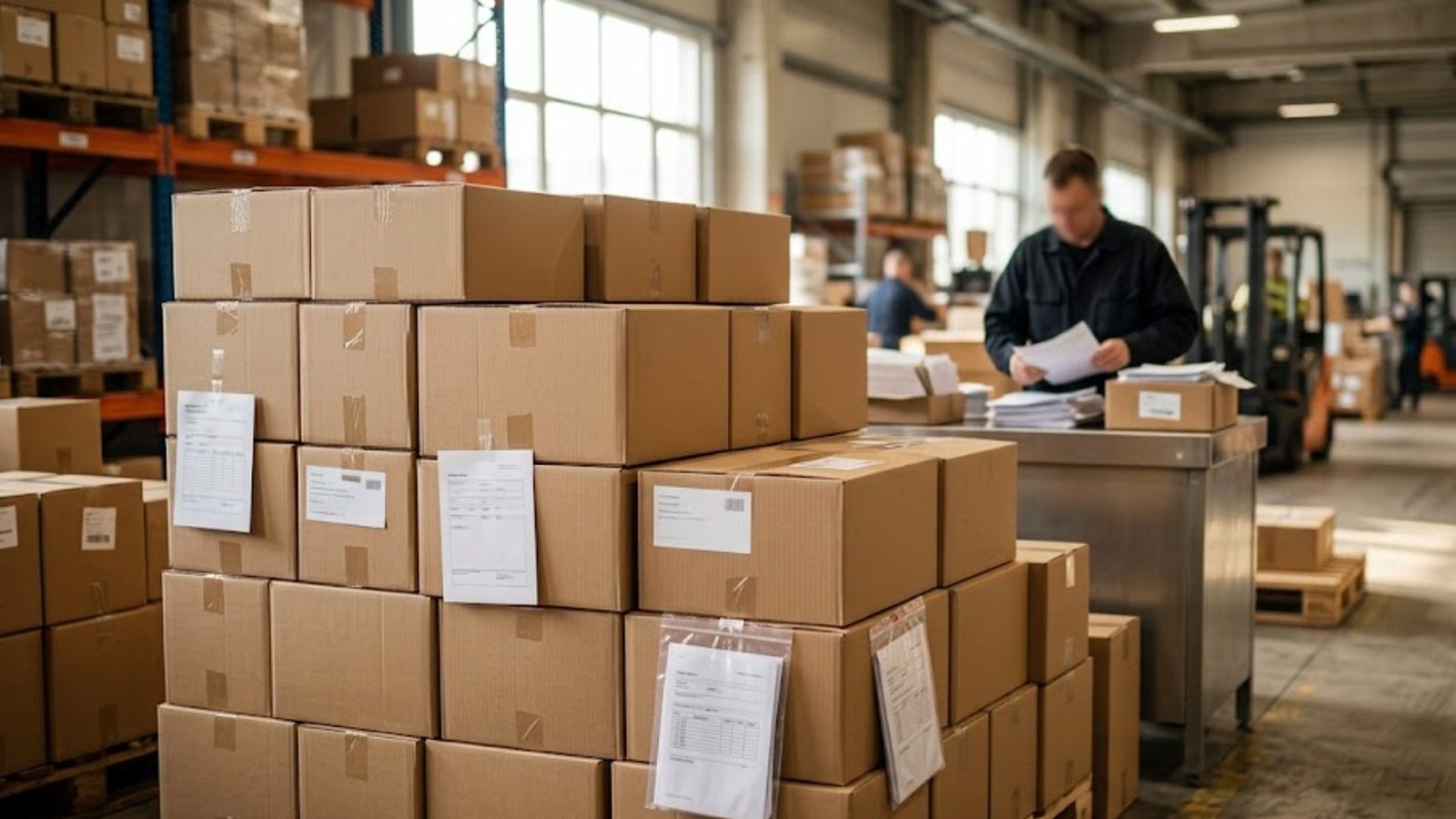
FedEx charged more to move a box last quarter, and it moved more boxes. On Wednesday, Oct. 28, it raised its forecast for the whole year. The company credited higher base package yields, more volume and lower costs. Yield is the shipping word for what FedEx collects on each package. That first part, the price of a box, is the piece a shopper feels.
The reported profit looks weak, and one-time items explain much of it. FedEx earned $290 million, or $1.21 a share. A year earlier it earned $920 million, or $3.89, and $1.16 a share of that came from discontinued operations, businesses it no longer runs. This quarter also took a $1.2 billion loss tied to June's spinoff of FedEx Freight as a separate company. Leave those aside and adjusted earnings came to $3.74 a share. Analysts had expected $3.34. Revenue rose 12% to $22.86 billion, ahead of the $22.73 billion they'd forecast, Elias Schisgall reports in the Journal.
FedEx also changed its calendar. Starting with this quarter, its fiscal year ends Dec. 31 instead of May 31. For this calendar year it now sees revenue up about 12%, where it had said roughly 11%. Its range for adjusted earnings moved up to $18 to $18.60 a share, from $16.90 to $18.10. CEO Raj Subramaniam said the company is “winning across high-value market segments” while it reworks its network.
Unilever's fastest growth is in emerging markets
Two pages later, Unilever told a different growth story, Aimee Look reports. The maker of Dove soap had third-quarter turnover, its word for sales, of 13.3 billion euros, about $14.80 billion. Underlying sales, which leave out currency swings and deals, grew 5.2%. Volumes grew 2.9%. In July it had expected about 3% volume growth for the year, and now it says 3% or more. Home care, the unit that sells Cif cleaner, grew 9.1%. Emerging markets grew 9.5%, with double-digit volume gains in India, Turkey, Vietnam and Pakistan. Developed markets were weaker. In North America, gains in personal care and beauty were offset by drops in well-being and foods.
Unilever is also breaking itself apart. Its food arm is set to combine with McCormick, the spice maker. That deal is expected to close in 2027 and would form a company valued at more than $65 billion, debt included. What's left leans toward beauty, with prestige brands like Dermalogica and K18 out front. Analysts now hold it up against L'Oréal.
Our read
This is a Cash Flow · M5 story with two companies in it. FedEx's gain came partly from charging more for each package. Unilever's growth was led by emerging markets, while its sales in rich countries, the U.S. included, were softer. Soap isn't selling much faster here, and the box that carries an order costs more to move. Neither company is in our model books. Procter & Gamble (PG), the closest thing we own to Unilever, is held at weight in 27 books, and nothing was added. We read a shipper's forecast raise on price as a quiet inflation signal. You won't see it on the grocery shelf. You'll see it at checkout, on the shipping line.
Here's where it touches your plan. Stores pay FedEx's rates, and part of that cost reaches you on gifts and online orders. This week, before the holiday sales start, list the gifts you'll ship and who gets them. Check the free-shipping minimum at the two stores you use most. Then decide whether you'll ship early and slow or late and paid, and give that number its own line in the December budget. You check the weather before the trip, and the shipping line before the sale. If the holiday line keeps running over, bring it to your next review and we'll find it a place in the plan.