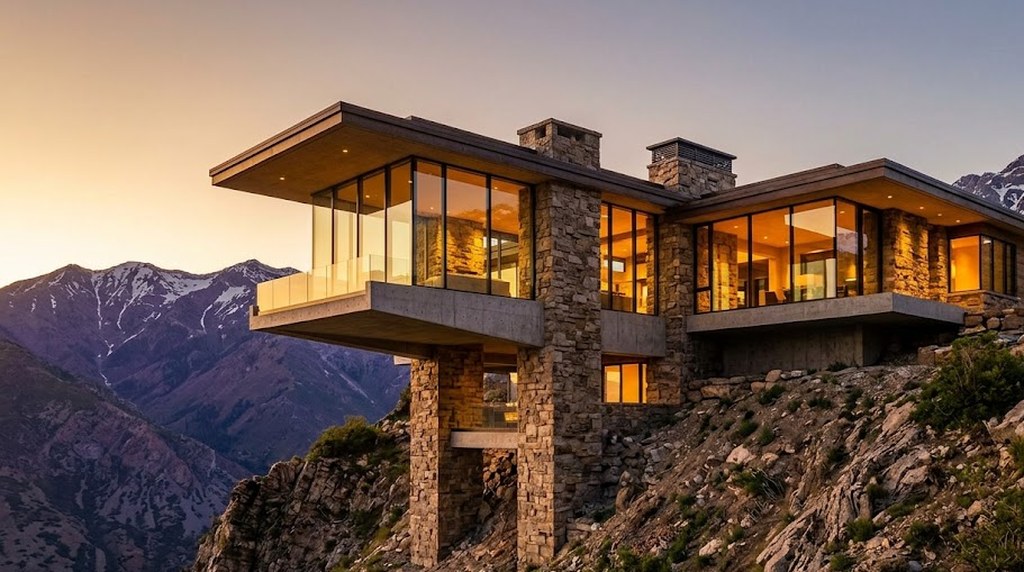
Scott Gillen, 66, bought 24 acres on a Malibu bluff in July 2017. He paid $50 million, a record at the time for bare land in Malibu. He planned five modern houses and priced them from $40 million to around $100 million. The goal was nearly half a billion dollars for the set. Nine years on, one has sold.
The project is called the Case, and it's now in bankruptcy court. Companies tied to Gillen filed for Chapter 11 this summer. That's the kind of bankruptcy that lets a business keep running while a judge oversees its debts. The Journal's Katherine Clarke reports that the main fight is with his money partner, Los Angeles developer Barry Shy. Shy's company says it put up a $260 million promissory note, a written loan promise, in 2021. It says roughly $120 million of that is still unpaid. With interest, Shy puts what he's owed above $240 million. Gillen told the court in July that the principal still owed is $89 million. The project also has loans from JPMorgan Chase (JPM) and a bridge lender.
Agents blame the price
Agents say Gillen wouldn't budge on price. “We will sell for close to the asking,” he told the Journal in 2023. Agents say rich buyers didn't like the design, or how close the houses sit to each other. “At that level, buyers don't want to live in a subdivision,” said Tracy Tutor of Compass. One house did sell, for $61 million in 2024. In court papers, Gillen says he backed a $110 million sale of two more homes last year, and Shy threatened to block it. By mid-October, 160 Malibu homes had been marked down from their first price. The median cut was 8.9%, according to the site Luxury Price Drops.
The same lesson comes in a smaller size in Beverly Hills. Markus Persson created Minecraft and sold it to Microsoft (MSFT) for $2.5 billion in 2014. That same year he outbid Beyoncé and Jay-Z and paid a record $70 million for a house there. Now, 12 years later, he's asking $70 million. Listing agent Aaron Kirman says U.S. luxury markets “are slower than they used to be.” Getting his dollars back would sound like breaking even. It isn't. Twelve years of property tax, insurance and upkeep went out the door. And a dollar in 2014 bought more than a dollar does now.
Our read
This is a Housing (M6) story with a Behavioral core. The price you set is your opinion. The price a buyer pays is the market's answer. When a seller clings to the first number, the wait isn't free. Interest, security and insurance bills keep coming. Shy's own filing warns the houses could lose their insurance if the bills go unpaid. Years of those costs on four unsold mansions is a steep price for defending a number. JPMorgan (JPM) shows up here only as a lender, held at weight in 26 books; nothing added. Persson's version is quieter, with the same dollars in and out and 12 years of costs and inflation in between. That's Time Value of Money (M3) in one listing.
If you own a home or a rental you plan to sell, the thing this touches is your asking price. This week, add up what that property cost you to hold over the last 12 months. Count property tax, insurance, loan interest and upkeep. Then set that total next to the price cut you've been putting off. For some sellers, a year of waiting costs more than the cut would. Bring both numbers to your next review. It's better to pick your price before the bills pick it for you.