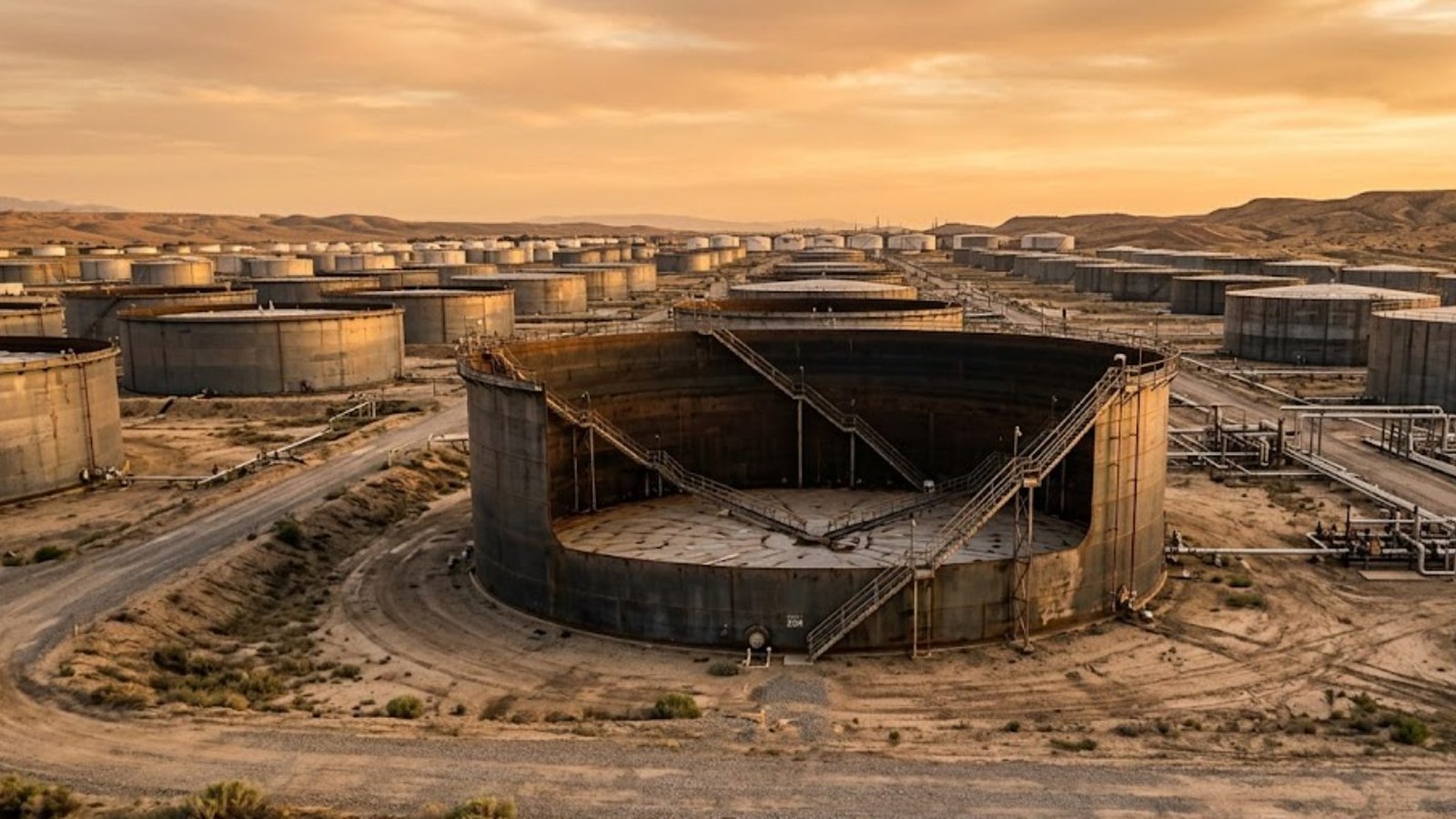
The pump sign in the Journal's photo reads $7.68 for a gallon of diesel, at a Chevron station. The companies behind the pump just had the best fuel-making quarter in their history. ExxonMobil (XOM) earned $15.4 billion in the third quarter, up 104% from a year earlier. Chevron (CVX) earned $9.9 billion, almost triple. Both stocks hit 52-week highs on Friday, Oct. 30, the day the chip stocks fell.
Collin Eaton's story in the Journal explains why. Drone strikes knocked out big refineries in Russia and the Middle East. Diesel prices hit records. So Exxon and Chevron ran their plants near full and shipped record amounts of fuel abroad. Exxon made 5.8 million barrels a day of fuel worldwide and set a record in North America. It plans to spend $9 billion on the Gulf Coast and elsewhere to add 100,000 barrels a day. Its diesel output already equals about 40% of what Texas uses. Exxon's adjusted profit of $4.23 a share beat the $4.12 analysts expected. It sent $9.4 billion back to investors through dividends and buybacks.
Chevron's U.S. refineries ran a record 1.1 million barrels of crude a day. It cleared bottlenecks at its Pasadena, Texas, and Pascagoula, Miss., plants and got 10% more diesel and heating oil out of them. Its U.S. refining profit rose fivefold to $3.6 billion. Adjusted profit was $5.28 a share against $4.87 expected. BP (BP) earned $8.46 billion by its own measure, up from $2.21 billion a year ago and above the $7.33 billion expected. It cut net debt to $13.9 billion from $22.3 billion and hit its 2027 debt target a year early. Exxon and Chevron say they'll stay careful with spending and keep cutting debt. BP's new chief, Meg O'Neill, is on the same path.
The hedge did its job
High fuel prices hurt at the pump, and the Journal notes the politics. After the July results, President Trump said the companies should return profits to the public. Exxon's finance chief, Neil Hansen, answered. The best response, he said, is to "pull every lever available to us to increase supply." For a saver, the week told a plainer story. On Friday the chip index fell 7.20% and the Nasdaq 2.86%. Exxon closed at 187.25 and Chevron at 235.52, and both touched new 52-week highs during the day. The energy fund (XLE) gained 1.91% on the day. For the week, energy rose 1.00% while tech fell 1.77%. Cheniere (LNG) raised its quarterly dividend to 62.5 cents from 55.5. One housekeeping note. Valero's (VLO) written trim trigger is a published White House restriction on U.S. diesel exports, and nothing in the weekend paper reports one, so the trigger is not met.
Our read
Investments/Risk, IN04. This is what a hedge looks like when it works. The same supply shock that put $7.68 on a pump sign put record profits in the refiners' hands. A household that owns a slice of the refiner can get some of its fuel money back. It comes through the dividend and, when it happens, a higher stock price. The desk's model books hold Chevron in 37 books, Exxon in 34, Cheniere in 20, ConocoPhillips in 17 and Valero in 12. Held at weight, nothing added. One quarter doesn't make a trend, and refining margins can shrink as fast as they grew. General planning principles, not advice for anyone in particular.
Here's the check for your own plan this week. Pull up your 401(k) or IRA statement and find the energy line. Many growth-heavy funds hold almost none. If your energy weight reads near zero, every fill-up this fall came straight out of your pocket, with nothing on the other side of the ledger. You pick out the umbrella before the storm, not during it. Bring the statement to your next review and we'll see what sits across from your fuel bill.