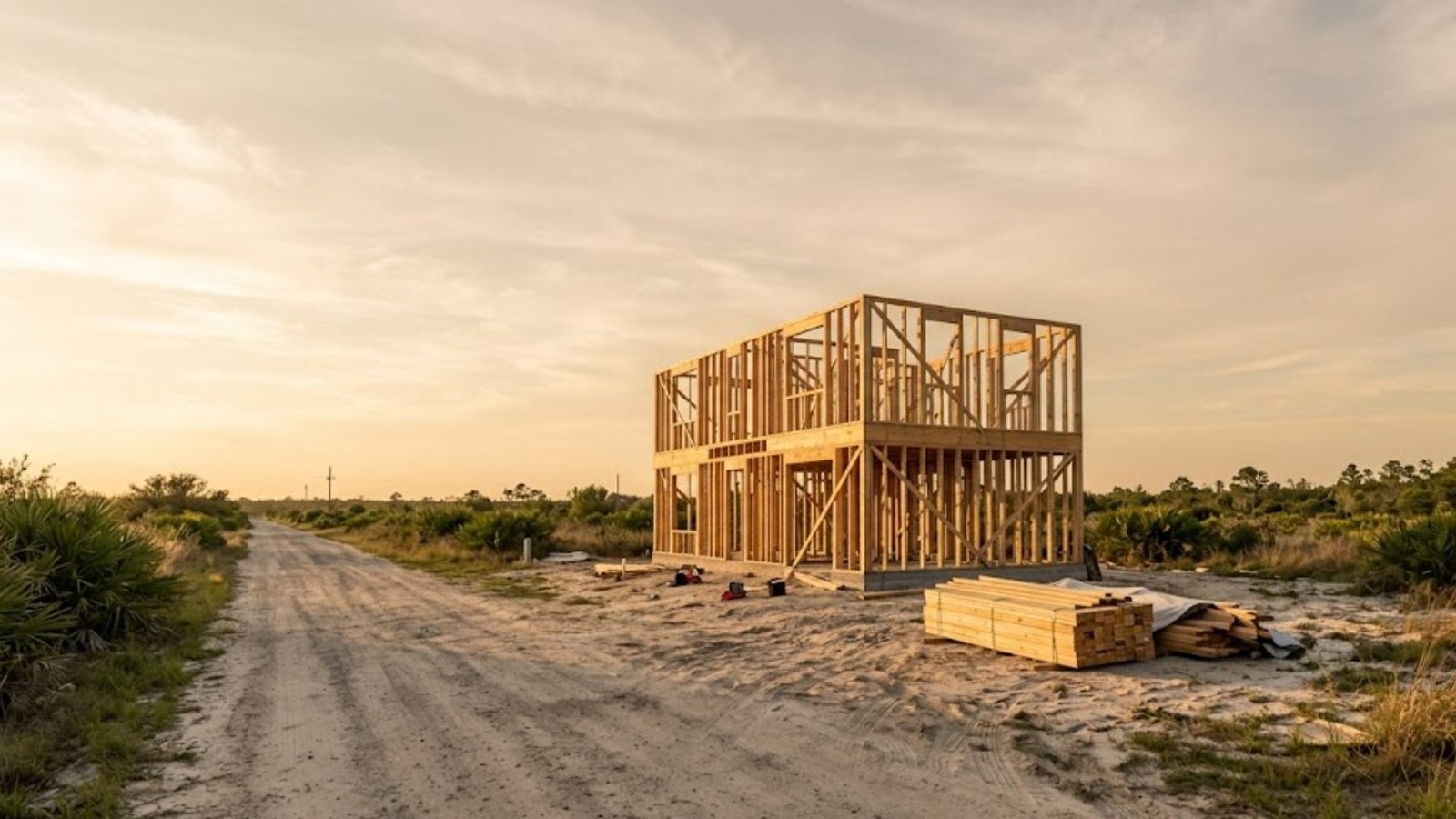
Open the Journal to page A2 this weekend and one bar stands out. Changes to building codes over the last 10 years add $40,288 to the cost of an average new single-family home. That's one line on one chart. Nicholas G. Miller and Alana Pipe lay out five of them, and together they explain why a new house costs what it does. The country is trying to bring that cost down. So far the costs are winning.
Start with the materials. Tariffs pushed up drywall, windows and lumber. Aluminum goes into siding, window frames and gutters. It carries a 50% tariff, and higher energy bills sit on top of that. Last month UBS analysts put a number on the tariffs then in place. They add about $8,200 to the cost of building a typical home. The Iran war did the rest. Asphalt shingles and PVC pipe are made from petroleum. Owens Corning (OC), a top roofing supplier, lifted shingle prices by as much as 8% in April. In June it added another 6% to 9%. Copper got pulled the other way, toward the AI data-center build-out, which is heating up demand.
Then the rules. Congress passed its biggest housing bill in decades this year. It leaves local rules alone, and local rules are the strictest ones. New energy and fire codes mean builders have to put up more complex, costlier homes. The NAHB chart puts a national average on each piece. Codes, $40,288. Fees after buying the lot, $20,154. Unique architectural standards, $16,117. Building on restricted land, $13,593. The list runs eleven items deep.
Rates, hands and trucks
Borrowing hurts builders twice. High mortgage rates thin out buyers, so builders spend heavily on rate buydowns to bring them back. Builders also borrow to build. They've told the NAHB their credit has been tightening for 18 straight quarters. The big public builders fund themselves with longer corporate debt. That got dearer as the 10-year Treasury yield climbed to what the paper calls multidecade highs. Labor is tight too. Electricians and HVAC technicians are choosing data-center jobs over houses. The paper says the immigration crackdown has hollowed out crews in some parts of the country. Even the trucking got pricier. Diesel recently set a record, and that cost rides on every load of plywood and concrete to the site.
Our read
Housing, M6. Five charts, one lesson. A new home's price has a floor made of costs nobody at the sales office controls. Tariffs, codes, financing, labor and fuel are all pointing up at once, and builders facing weak demand are building less. That matters for buyers, and it matters for owners. The cost to rebuild a house that already stands rises with the same lumber, shingles and electricians. The builders D.R. Horton (DHI) and Lennar (LEN) sit in one model book each, held at weight, nothing added. Home Depot (HD) is in 8 books, held. General principles, not advice for anyone in particular.
Here's where it touches your plan. If you're buying new, ask the builder to price the mortgage-rate buydown separately from the house. That buydown is a real cost you're paying back inside the price. If you already own, pull your homeowners policy this week and read the dwelling coverage limit, the amount the insurer would pay to rebuild. Set that against what these charts say rebuilding costs now. Many limits were set years ago and never moved. You fix the roof while the sky is clear. Bring the policy page to your next review and we'll check the number against the plan.