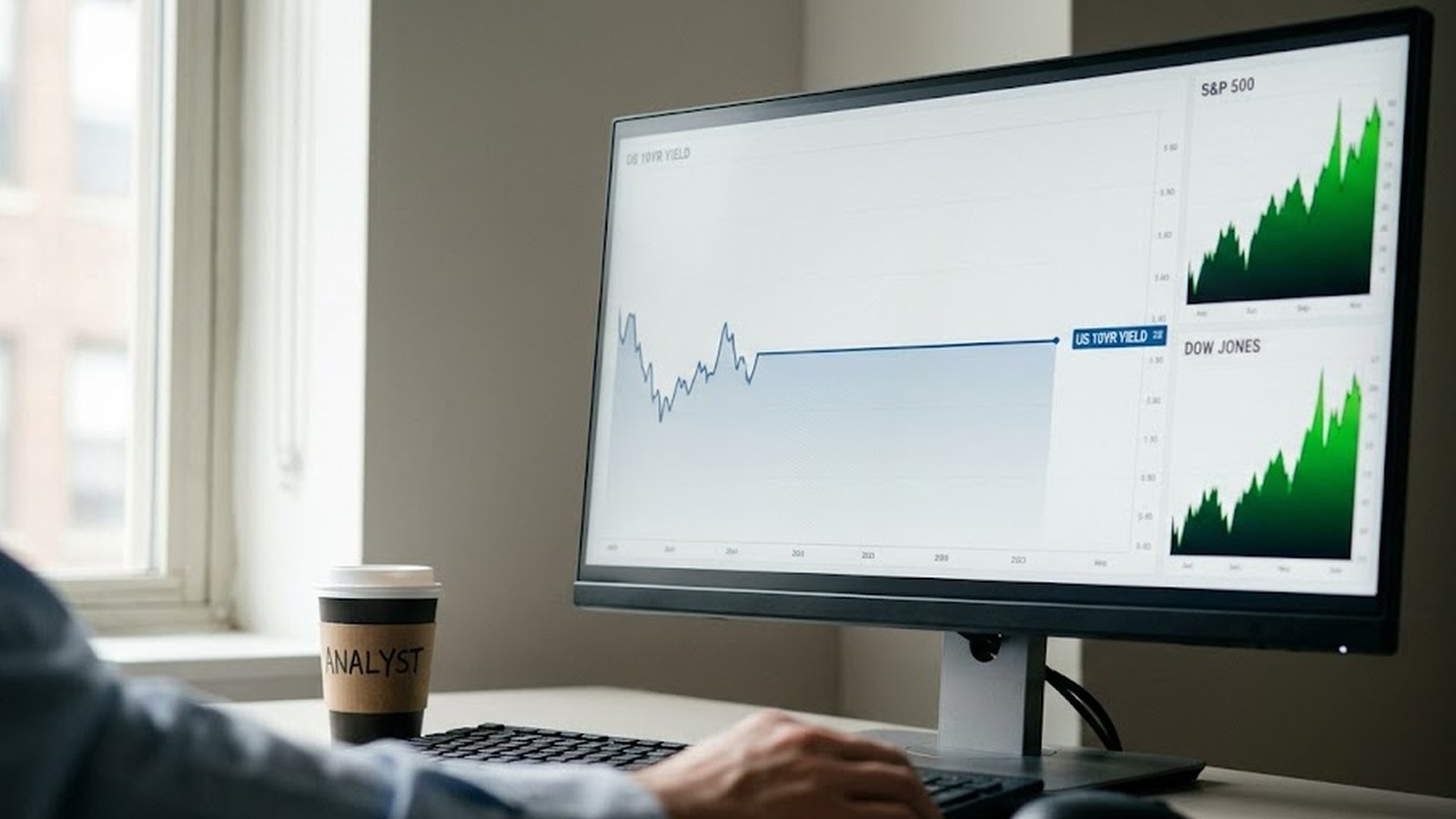
On Friday, Oct. 30, the Nasdaq fell 2.86%. Scared money ran into Treasurys, as it usually does. But the 10-year yield fell just 0.06 point, to 4.928%. On Oct. 22, a smaller Nasdaq drop of 2.6% had pulled the yield down nearly 0.20 point. Sam Goldfarb's bond story in the Journal calls the response muted. We call it a warning for anyone whose bond fund is supposed to be the cushion.
Here's the plain version. A bond's price rises when its yield falls. On a scary stock day, money runs into Treasurys, prices rise and yields drop. That's the cushion a bond fund is meant to give. On Friday the run happened, and yields did drop late in the day as stocks sank further. The move just didn't match the fear. The Journal's read is that buyers have turned careful. Yields sat at 24-year highs earlier in October, and they've already come down a lot since. A month ago the 10-year was at 5.292%. The paper says yields may have "found a floor for now."
Goldfarb gives the good and the bad. The good is that the economy keeps growing at a solid pace. Markets see the Fed as far more likely to raise rates than cut them in the months ahead, so few investors want a big bond bet. The bad follows from the good. If yields have stopped falling, bonds may not soften stock losses the way they did in recent weeks. High yields also weigh on stock prices and make borrowing costlier for businesses. There's an inflation worry too. The paper points to signs that the U.S. could strike Iran again after the midterm elections. That could lift energy prices.
What a bill pays, and what the long bond cost
Now the part that touches a saver. At the latest Treasury auctions, a 4-week bill paid 3.910%, a 13-week bill 4.050% and a 26-week bill 4.210%. A bill that short barely moves in price, up or down. Compare the long end. The 20-year-plus Treasury fund (TLT) rose 0.43% on Friday, which sounds like a cushion. Its price is still down 6.1% this year, by the paper's fund table. One more line from the paper's Bankrate survey. The average online money-market account pays 0.47% and a five-year CD 1.77%, by that survey. A 26-week bill pays about nine times the money-market rate.
Our read
Fixed Income, IN02. This is why the practice keeps near-term money in Treasury bills and floating-rate paper. The 0-3 month Treasury fund (SGOV) sits in 49 model books and the floating-rate Treasury fund (USFR) in 14. The long-duration fund (TLT) is in 4 older books and nothing has been added. A long bond is a bet on where rates go. A bill is a place to keep money. Friday showed the difference. The Nasdaq had its worst day since June, and the 10-year yield fell less than a third as much as it did on Oct. 22. Money you'll spend in the next two years shouldn't depend on that relief showing up. General planning principles, not advice for anyone in particular.
Here's the check for your own plan this week. Find your 401(k)'s bond fund on the plan website and open its fact sheet. Look for one line, duration, or average maturity. If it says seven years or longer, you own the thing that didn't cushion Friday. Then look at your cash. If an online savings account is paying you under 1% while a 26-week bill pays 4.210%, that gap is your money, every month. You check the roof while the sun's still out. Bring the fact sheet to your next review and we'll match the bond sleeve to the years you'll need it.