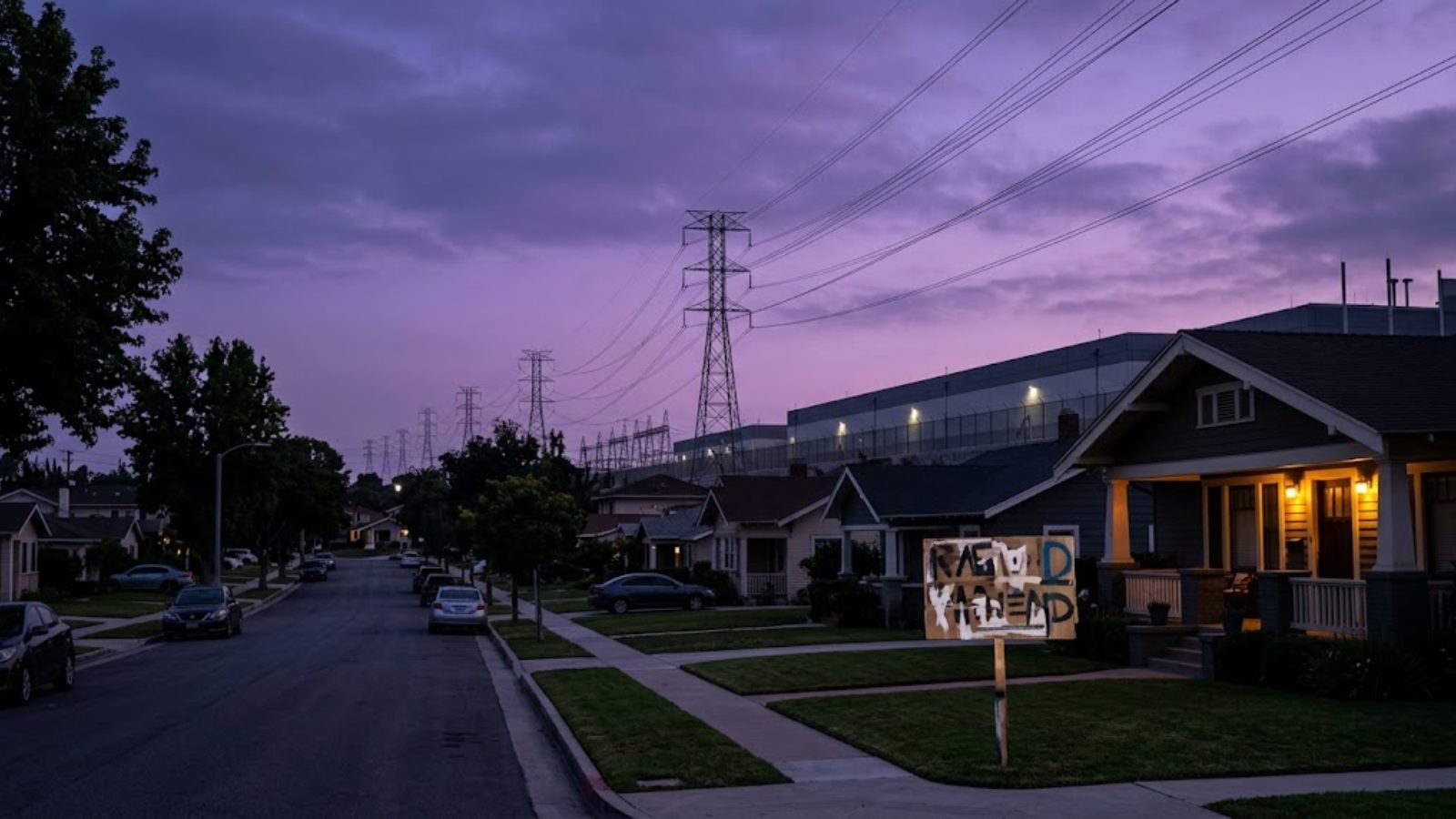
Everybody Wants the AI. Nobody Wants the Data Center Next Door.
Seventy percent of Americans oppose a data center near them, electricity costs are up 35% in five years, and governors in Texas and Pennsylvania have paused approvals. The unions that build them are breaking with Democrats over it. And Westinghouse, half-owned by a company in our energy book, just filed for an IPO to build the reactors that would power them.
By Sean Anees Saifi · Capital Wealth · Published Tuesday, September 1, 2026 · Source: The Wall Street Journal, August 29–30 and September 1, 2026 editions
Key Points
President Trump, Monday: communities that reject data centers will “end up being backwards and poor.” Polls show more than 70% of the public oppose one nearby; his own advisers worry about November.
Average U.S. electricity costs are up more than 35% in five years (BLS). Texas paused new approvals; Pennsylvania restricted them; Illinois cooled; Senator Sanders wants a national halt.
Building-trade unions — Steamfitters, IBEW — are drawing a “clear line” against politicians who oppose the projects; a Kansas union broke decades of precedent to endorse a Republican.
The Journal’s editorial board: an EPRI study found data centers reduced residential rates from 2015 to 2024 by spreading fixed grid costs; Microsoft’s Wisconsin site uses four Olympic pools of water a year, half a car wash.
Westinghouse filed confidentially for an IPO under an $80 billion federal reactor push that gives Washington an option on 20% if orders arrive by 2029. Its owners: Brookfield and Cameco, which paid $8 billion in 2023.
70%+
oppose a data center nearby
+35%
U.S. electricity costs, five years
$80B
federal push for new reactors
$15–20B
Westinghouse IPO valuation, est.
Once built, a data center employs few people but pays steady taxes. During construction it employs the unions now switching sides.
In one line: The AI build-out has become a midterm issue, which makes policy an input to the power sleeve, and the nuclear answer just filed to go public.
On Monday the president wrote that any community that does not want a data center wants “to end up being backwards and poor.” He wrote it because the politics have turned. More than 70% of Americans say they do not want one nearby; the governors of Texas and Pennsylvania — one Republican, one Democrat — have paused or restricted approvals; Illinois has gone cold; Senator Sanders wants a national halt; a Wisconsin congressman is running ads calling his opponent “Data Center David Crowley.” Some of the president’s own advisers worry it makes him look out of touch before November.
The complaint is the electric bill. Average U.S. electricity costs are up more than 35% in five years. Vice President Vance put the administration’s line simply: if you build the data center, put power back into the grid, not out of it.
The other side of the ledger
The Journal’s editorial board argued the backlash is “anxiety more than reality”: an Electric Power Research Institute study found data centers reduced residential rates between 2015 and 2024 by spreading the grid’s fixed costs over more load; most developers now agree to cover the incremental costs they add; Microsoft’s new Wisconsin site uses about four Olympic pools of water a year, half a car wash. In Loudoun County, Virginia, homeowners would pay $5,800 more a year without the data-center tax base; a Louisiana parish paid teachers bonuses up to $50,000 from Meta’s. The Saturday paper found the building trades agreeing: the Steamfitters and IBEW locals in the mid-Atlantic say they will not support politicians who oppose the projects, and a Kansas union broke decades of precedent to endorse a Republican over it.
The reactor that would power it
Westinghouse, from the Tuesday paper
Detail
Owners
Brookfield Asset Management and Cameco, who paid about $8 billion in 2023 and assigned no value to new reactors
Federal support
$80 billion push; $17.5 billion of low-interest loans for five two-reactor projects; a U.S. option on 20% if orders arrive by 2029 and the valuation hits $30 billion
Cost
~$10 billion “overnight” per AP1000 — Vogtle’s two came in at $35 billion against $14 billion projected, seven years late
Utilities’ mood
Southern: “not going to be next.” Duke: “keeping our options open.”
“There really is no credible path to the AI build-out and energy security without nuclear,” Westinghouse’s chief executive said. That is also the thesis behind the power sleeve — GE Vernova, Vistra, Constellation, Cameco — in the Capital Wealth energy book. What changed this week is that the sleeve now has a political input as well as an engineering one.
What It Means For Your Portfolio
Hold — the power sleeve at weight; CCJ reinforced on the Westinghouse filing
The power builders stay held: the demand is real and the projects that are already permitted get more valuable every time a governor pauses new ones. Cameco is reinforced — it owns half of a company that just filed to go public with Washington as a prospective shareholder.
Policy is now an input, not a footnote, for Vistra and Constellation. A moratorium in one state is a windfall for a plant already connected in another; a national halt would be a different story, and we watch the odds of it, not the noise about it.
Westinghouse’s IPO, if it prices near the $15 billion to $20 billion analysts expect, would mark Cameco’s half-share at more than the whole company cost three years ago. That is the kind of arithmetic we reinforce.