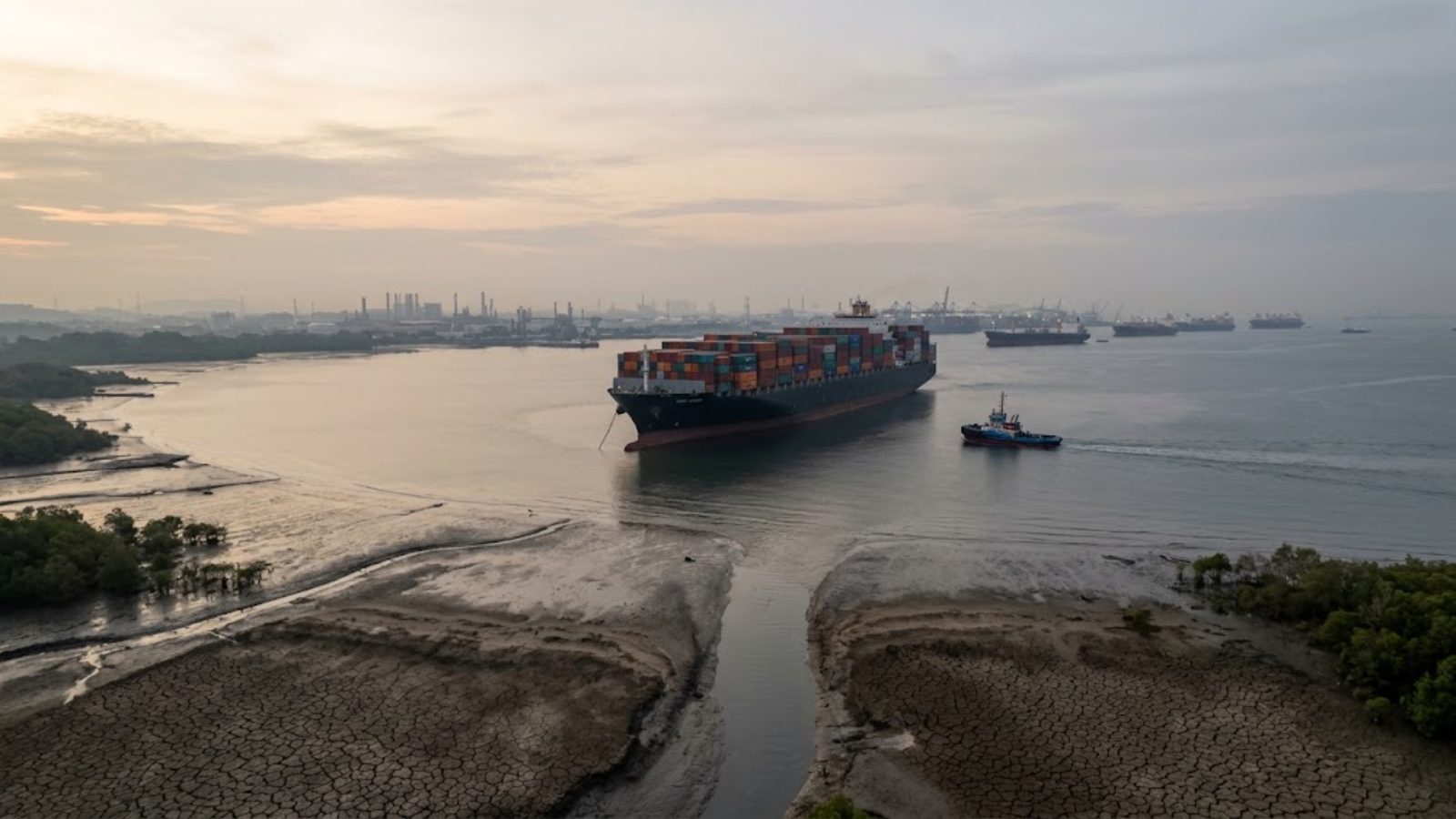
El Niño Is Coming for the Panama Canal, the Copper Mine and Your Grocery Bill.
Scientists say this El Niño may be among the strongest in living memory and will last into 2027. Canal auctions have tripled to $2.5 million, Peru suspended the anchovy catch, India’s monsoon is 13% short — and Europe just lived through a summer that cut Bordeaux’s harvest by a third to a half and will add one to two points to food inflation.
By Sean Anees Saifi · Capital Wealth · Published Wednesday, September 2, 2026 · Source: The Wall Street Journal, August 29–30 and September 1, 2026 editions
Key Points
El Niño was declared in June and is “potentially generationally strong”; it is expected to persist into 2027, forecast to be the hottest year on record.
The Panama Canal will cut daily transits to 32 from 36 by mid-September; auction prices for the largest locks have surged to $2.5 million from about $800,000, on a waterway already crowded by ships avoiding Hormuz.
Peru suspended the anchovy catch; fish meal is at record prices. A Chilean copper mine cut its forecast after a freak storm. Copper is at records. India’s monsoon is running 13% behind.
Europe’s hottest June–July on record: England’s driest July since 1836, four major rivers at record lows, Bordeaux harvests down a third to a half, an estimated 1–2 points of food inflation and 0.2 point off euro-area growth.
China halted phosphate-fertilizer exports and sulfur prices have doubled this year (Jeff Stier, op-ed). The upside: a strong El Niño tends to mean fewer Atlantic hurricanes, which helps insurers.
$2.5M
Panama Canal slot auction, from $800K
−13%
India’s monsoon vs. average
+1–2 pts
European food inflation from the heat
2027
how long El Niño may last
Each degree between 30 and 35 Celsius cuts worker productivity about 3%, according to Allianz. The vines in Bordeaux got the same memo.
In one line: Weather is the inflation nobody can hike against, which is why the inflation-linked sleeve is a permanent line and not a trade.
A French company that breeds black soldier flies for fish feed is having its best year ever. That is how you know an El Niño is serious. Peru, the largest producer of the anchovies that become fish meal, suspended this year’s catch early on El Niño fears; fish meal hit record prices; insect protein went from premium to bargain. “In the last two months we have secured more demand than in the past two years,” the chief executive told the Journal.
Scientists declared the onset in June. Ocean temperatures are the highest on record. One climate scientist called it “potentially generationally strong,” with “economic consequences that are accordingly quite severe.” It is expected to last into 2027.
Where it shows up first
Chokepoint
Effect
Panama Canal
Rainfall 34% below average; transits cut to 32 a day; slot auctions $2.5 million vs. ~$800,000 — on top of ships diverted from Hormuz
Copper
Antofagasta cut its forecast after 5 million cubic meters of snow shut a Chilean mine; prices already at records on data-center demand
Asian rice, Indian monsoon
Monsoon running 13% behind; consumer prices rise ~2 points in Indonesia and the Philippines after an El Niño drought (Bloomberg Economics)
Fertilizer
China halted phosphate exports and most sulfuric acid; sulfur prices doubled this year
The bright side
Fewer Atlantic hurricanes (good for insurers), a milder European winter (less LNG), and Vail is praying for Rocky Mountain snow
Europe as the preview
The Saturday paper’s European dispatch reads like a forecast for everyone else. The hottest June-to-July on record in Western Europe. England got a quarter-inch of rain in July, the least since records began in 1836. The Loire, Danube, Rhine and Po all hit record lows in August, which is the real economic hit — Germany’s factories move goods on the Rhine. Château Carbonnieux in Bordeaux, which relied on rain for 700 years, sent a tractor with hoses into the vineyard for the first time; the heat will cut its white-grape production by a third and red by half. Oxford Economics puts the bill at one to two points of food inflation and 0.2 point off euro-area growth this quarter; France alone expects up to €15 billion in damage. Britain has not built a major reservoir since 1992.
Warsh, at Jackson Hole, said the Fed should not treat supply shocks as things that fix themselves. This is the shock. It is coming through the grocery aisle over the next six months, and it does not respond to interest rates.
What It Means For Your Portfolio
Hold — the inflation-linked sleeve stays funded; staples held for the pricing power
The inflation-linked sleeve (TIP, LTPZ, VTIP) is a permanent line in the Capital Wealth books precisely because weather is the inflation no central bank can raise rates against. Nothing about this week argues for trimming it.
Walmart and Costco are held for traffic and pricing power, and a food-inflation cycle is when that pricing power gets tested — and, historically, when the value shopper wins. Dollar General, added last week, is the same thesis one rung down.
For a household, the practical hedge against a grocery bill that rises 5% is not a commodity fund. It is a budget line that assumes it, and an inflation-linked bond sleeve that pays more when it does.