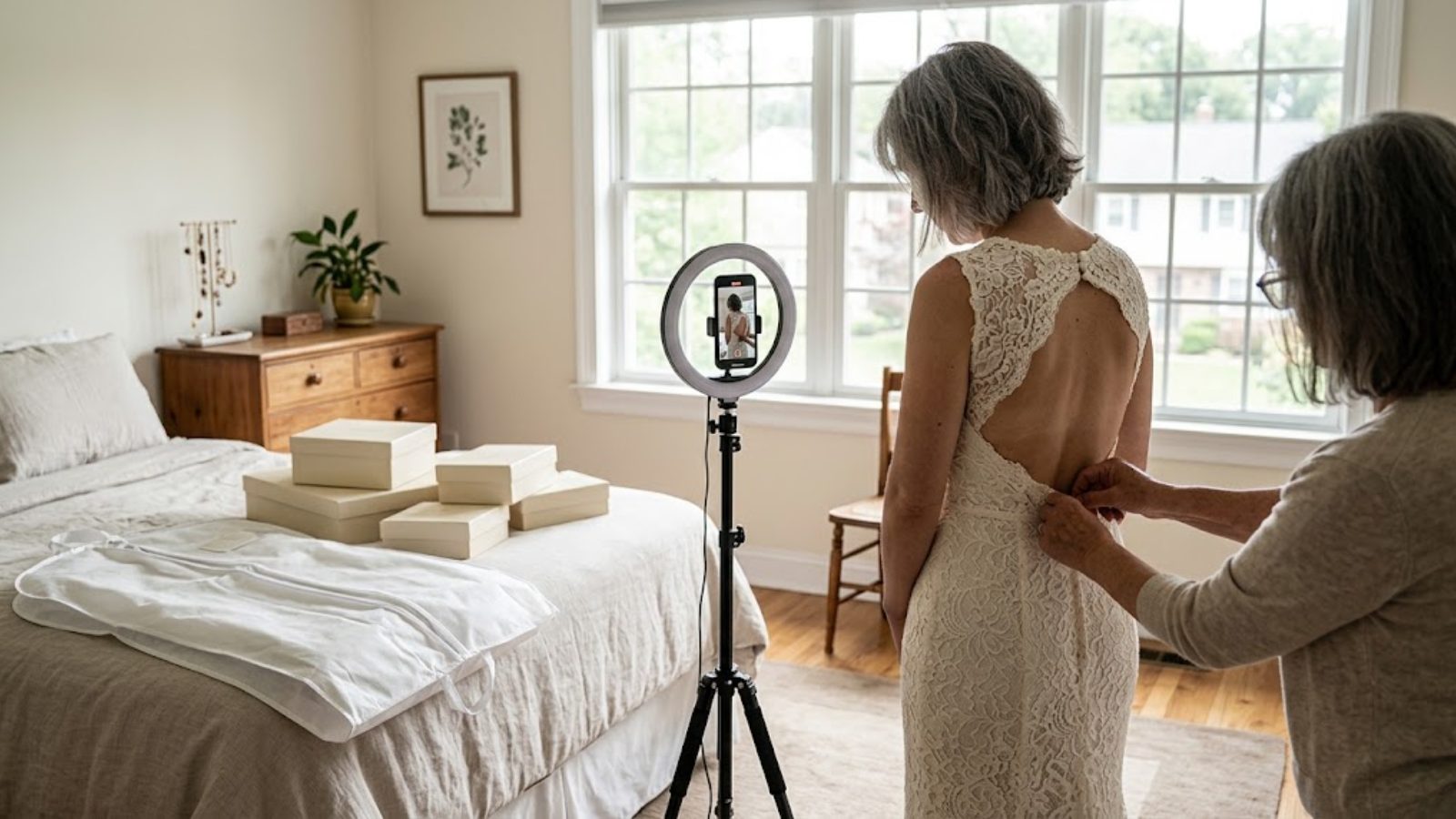
Arlesia McGowan was trying on wedding dresses in her bedroom a few months ago and decided to share the options on TikTok. She had about 2,000 followers. The videos got millions of views. The 29-year-old marketing professional in New Jersey asked herself the obvious question: could she turn that into money for the wedding? She could. Her June 2027 wedding at a New Jersey mansion now has free invitations from The Knot, a free gown from a Detroit bridal designer who found her on TikTok, free bridesmaid dresses and free tuxedos. Her following is nearing 16,000. “This niche does so well,” she says. “So, of course, I’m going to capitalize on it.”
Why the wedding costs what it costs
Wedding spending rose 8.5% in the first half of this year compared with last, according to the Bank of America Institute, partly because inflation and tariffs pushed up the price of flowers and liquor. The Knot, surveying more than 10,000 couples, put last year’s average wedding at $34,200. The same survey found that 31% of couples sought financial support from family, or through credit cards or loans.
That second number is the one a planner reads twice. Nearly a third of weddings are financed, and “family” in that sentence usually means the parents of the bride, who are often the people sitting across from us in a retirement review.
The sponsorship ladder
| Followers | What the sponsors paid for |
|---|---|
| 3,000 | $350 from Zola for a post; $600 a post from a local nail salon and waxing parlor |
| 16,000 | Gown, invitations, bridesmaid dresses and groomsmen’s tuxedos |
| 107,000 | A $50,000 bachelorette weekend at the sponsor’s eight-bedroom house |
| 158,000 | $3,000 to $30,000 per collaboration; stationery and fine jewelry |
| 1.8 million | A private jet and a villa in St. Barts; collaborations of $50,000 to $150,000 |
Naomi Hege, 25, sells tickets for the Indiana Pacers and has about 3,000 Instagram followers. Zola sent her $350 for a post about her wedding website. A nail salon pays her $600 a post. “Every partnership that comes in where I get money is going to the wedding,” she says. “After that, it’ll go to buying a house.” She turned down a GLP-1 company that reached out. “I’m not going to be thanking Capital One on my wedding day.”
At the top of the ladder, Brigette Pheloung McHale, a New York influencer with 1.8 million TikTok followers, got a private jet and a St. Barts villa for her April bachelorette party from a company that sells an AI smart mirror. “It was like a reality show all weekend,” its chief executive says, approvingly. Emily Gerszberg, founder of the modest-fashion line Yakira Bella, put $50,000 of company money into a bachelorette weekend for Adriana Fernandez, who has 107,000 followers, and moved her family out of their eight-bedroom house in Englewood so it could be the venue. The posts brought sales and followers. Fernandez also secured free hair, makeup, a custom gown and a wig that would retail for about $10,000. “I don’t think people realize,” she says, “even if you get some stuff sponsored, the wedding is still insanely expensive.”
What the parents should know
Three things, none of them romantic. The free gown and the $600 posts are income. A sponsor who gives you goods or cash in exchange for content has paid you, and the fair value of the goods is taxable the year you receive it; the bigger sponsors will send a 1099. The 31% borrowing figure is the actual risk in this story, and the most common bad version of it we see is a parent taking a loan against a 401(k) or a home to fund a party. And the wedding is a line in the plan like any other. Put a number on it early, tell the couple the number, and let the sponsors fill in above it.