Capital Wealth
FRI CLOSE · SEP 11   S&P 500 7,656.98 ▲0.86%  ·  DJIA 52,573.29 ▲0.98%  ·  NASDAQ 26,333.04 ▲0.96%  ·  10-YR 4.975%  ·  2-YR 4.572%  ·  WTI $99.99 ▼2.4%  ·  GOLD $4,390.00 ▲0.6%  ·  VIX 15.84 ▼11.2%
Exchange · Tech Review

Apple’s $1,999 Folding iPhone Made a Skeptic Rethink Her iPad Mini — and Her Budget

Nicole Nguyen’s first look finds a nearly invisible crease, a surprisingly hefty phone and an $800 premium over the iPhone 18 Pro. It ships Oct. 23.

By Sean Anees Saifi · Capital Wealth · Published Tuesday, September 15, 2026 · Source: The Wall Street Journal, September 12–13, 2026 Weekend edition (Exchange)
Key Points
$1,999
price of Apple’s first foldable iPhone
+$800
premium over an iPhone 18 Pro
254 g
Duo’s weight, vs. 201 g for Samsung’s Fold 8
2X
Duo camera zoom, vs. 8X on her Pro
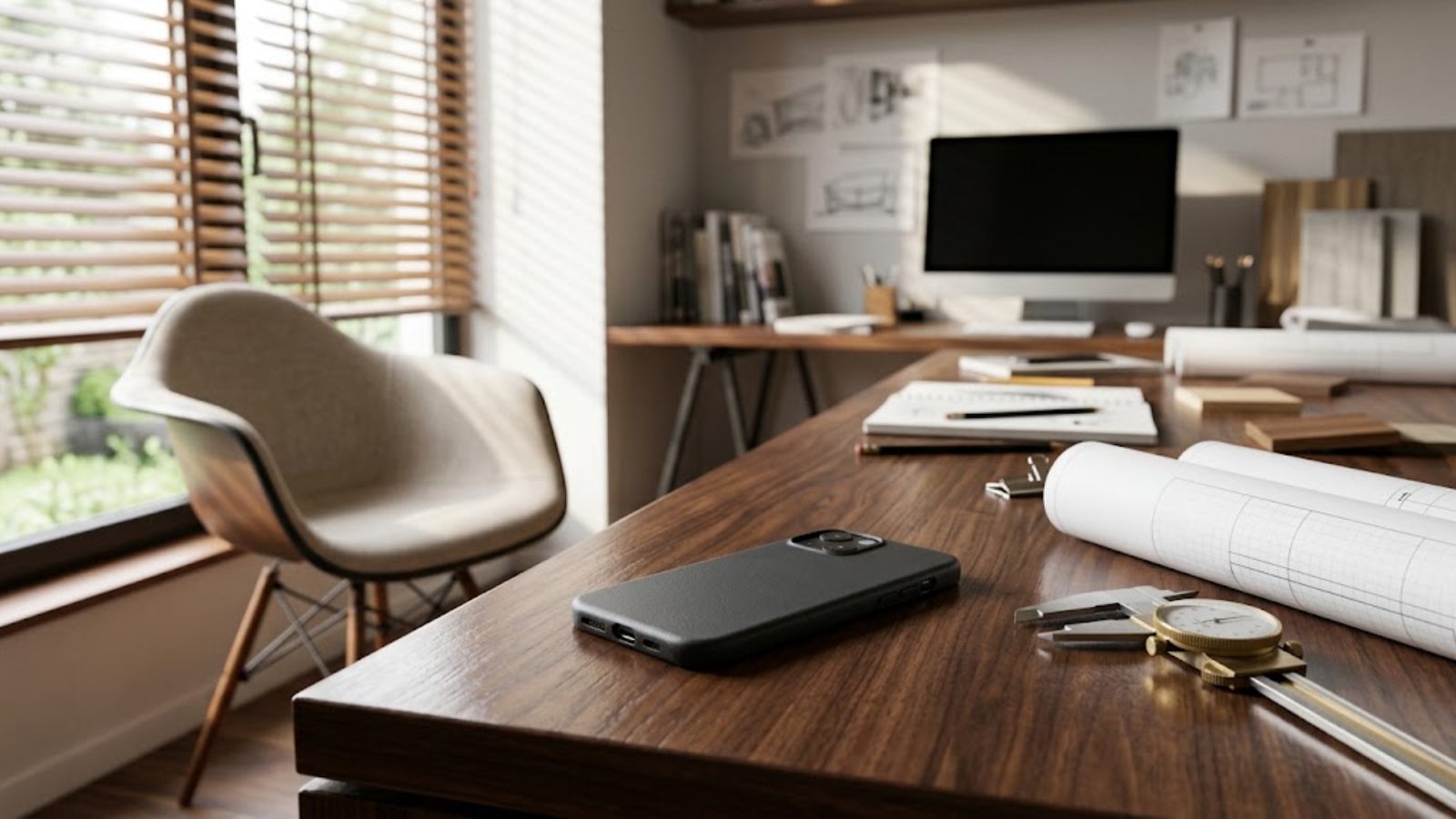
A sunny design studio with a face-down smartphone, rolled blueprints and dial calipers on a walnut desk, a molded chair nearby.
Apple’s iPhone Duo opens to a 7.6-inch screen with a barely visible crease. Closed, it’s chunkier than a traditional iPhone — and at $1,999, pricier too.
In one line: Apple’s $1,999 iPhone Duo nearly hides its crease and might replace a tablet, but it’s heavy, zooms only 2X and costs $800 more than an 18 Pro.

Nicole Nguyen has tested Android foldables since 2019, and her desire to own one sat at zero. Then she tried the iPhone Duo, the first foldable from Apple (AAPL), at Apple Park. Two thoughts arrived fast. Maybe her iPad Mini is redundant now. And, uh-oh: “am I about to spend $1,999 on a phone?” It ships Oct. 23, and she’s saving her verdict for a full review.

The crease nearly vanishes

Samsung worked hard to minimize the crease on its Galaxy Z Fold 8, the phone she’s used for months, but it’s still clearly there. On the Duo, it’s barely visible. A finger can feel it, yet the matte 7.6-inch inner screen cuts reflections, and the software slides content away from the fold as it opens.

The upside list runs longer than she expected. Battery life is about the same as the iPhone 18 Pro’s — up to 24 hours of regular use, pending her testing — with the same IP68 dust and water rating. The outer screen lets your subjects see the shot. Videos look good enough that you forget the inner screen is 0.7 inch smaller than an iPad Mini’s. She even jokes about watching Christopher Nolan’s The Odyssey on it, since the screenings she wanted sold out.

Heavy in hand and wallet

Closed, the Duo was harder to use one-handed than she expected. It weighs 254 grams and is 11.3 millimeters thick. Samsung’s Fold 8 is 201 grams and 9.7 millimeters, and the Pixel 11 Pro Fold from Alphabet’s Google (GOOGL) is 239 grams and 10.1 millimeters. It’s wider than a standard iPhone, too, so typing is a challenge. The camera has just 2X zoom, versus 8X on her Pro — not enough for the dozens of photos she takes of her kid every day.

Then there’s the price. The Duo costs $800 more than an iPhone 18 Pro, and Nguyen isn’t sure she wants to pay that premium for a first-generation Apple device. As an illustration, $1,999 spread over 24 months is about $83 a month; the premium alone is about $33.

The phone can wait for her full review. Sort out the umbrella before the gadget: fifteen minutes with a recent statement shows whether a $1,999 want fits the plan.

What It Means For Your Portfolio

Hold — let the full review land first

The Duo sounds genuinely tempting, but at $1,999 with first-generation trade-offs, the sensible budget move is usually to wait for the full review and buy with cash set aside.

General planning principles, not advice for anyone in particular: a premium gadget is a want, so fund it like one. Set the money aside ahead of time rather than financing it, and ask what it replaces. If it retires a tablet you’d otherwise upgrade, the math shifts; if it simply adds a device, the premium is pure lifestyle spending.

Apple (AAPL) is held in the Capital Wealth portfolios, as is Alphabet (GOOGL), and nothing changes because of one first look at one phone. Nothing new was bought after Friday’s hot core print, and we remain neutral on stocks.

Book a 15-Minute Review → Back to Edition No. 169 →