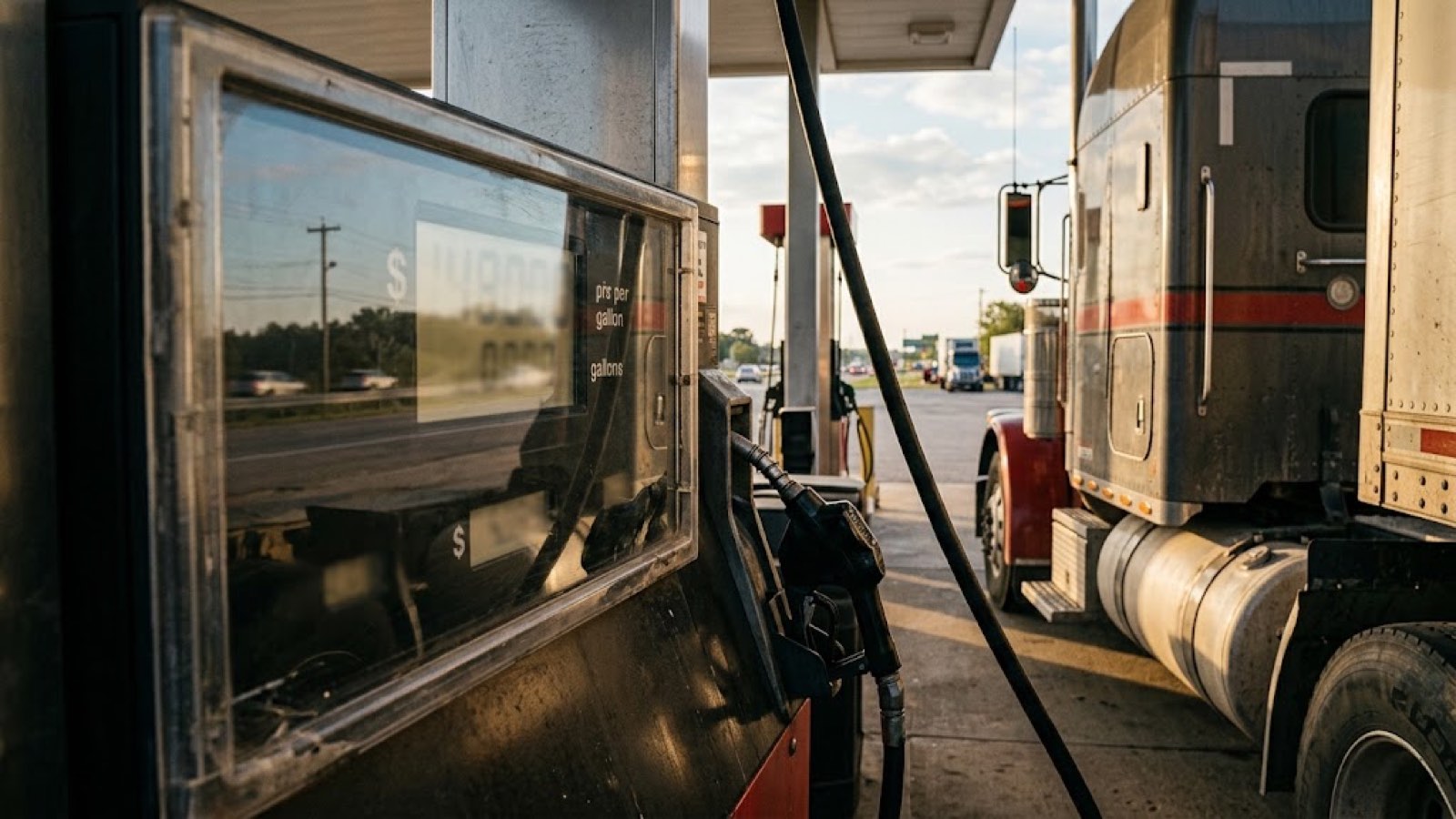
Here is the number that explains more about this week’s inflation problem than the Fed’s press conference did: diesel reached $6.29, up roughly 68% from a year ago.
Crude oil, meanwhile, closed Wednesday at $102.43 — down $3.40 on the day. So the headline barrel price fell and the fuel that actually moves the economy kept climbing. That gap is the story.
Why crude at $100 understates it
William Dudley, the former New York Fed president, gave the Journal the cleanest framing of it: crude around $100 a barrel understates what businesses are actually paying, because diesel is behaving as though oil were at $200.
The cause is refining, not drilling. There is a bottleneck between the barrel and the fuel, and Ukrainian strikes on Russian energy infrastructure have deepened it. You can have adequate crude and inadequate diesel at the same time, and diesel is the one that matters for freight, rail, agriculture and construction.
Dudley’s point to the Journal was that these costs are working into shipping and airfares, and the effects look likely to last longer than officials expected. That is the mechanism by which a fuel no household buys ends up in the price of everything a household does buy.
A trucking company put a number on it
On Wednesday, J.B. Hunt Transport Services (JBHT) told investors at a Morgan Stanley (MS) conference that third-quarter earnings will fall roughly 5% to 10% from the second quarter. Chief Financial Officer Brad Delco named three culprits: driver-related costs, the rapid rise in fuel prices, and higher claims as medical costs outpace inflation.
The specifics are worth keeping. At least a $10 million sequential fuel headwind. Roughly $25 million more in driver recruiting, advertising, onboarding, training and sign-on bonuses — a shortage of qualified commercial drivers that the Journal ties partly to federal efforts to control the number of immigrants eligible to drive commercially.
The stock fell 13% to $236.73. The Dow Jones Transportation Average fell 2.78%, the worst performance among the major averages on a day when the Nasdaq was essentially flat.
Why a transport selloff is worth your attention
Because freight costs are an input to nearly everything, and because transport stocks have historically been read as a tell on the broader economy — the theory being that the companies that move goods find out about a slowdown before the companies that sell them.
Treat that as a signal to watch rather than a rule to trade. But when the Fed raises rates to fight inflation while the diesel that drives inflation keeps climbing for reasons a quarter point cannot touch, it is worth understanding which part of the problem monetary policy can actually reach.
The honest answer is: not this part. Which is why the energy exposure in a portfolio is best understood as insurance against exactly this scenario — and insurance is something you buy before the weather turns, not during.