 Capital Wealth Daily
The Fed Raised Rates, the Ten-Year Settled Above 5%, and the Rule We Published Said Wait.
The Fed Raised Rates for the First Time in Three Years
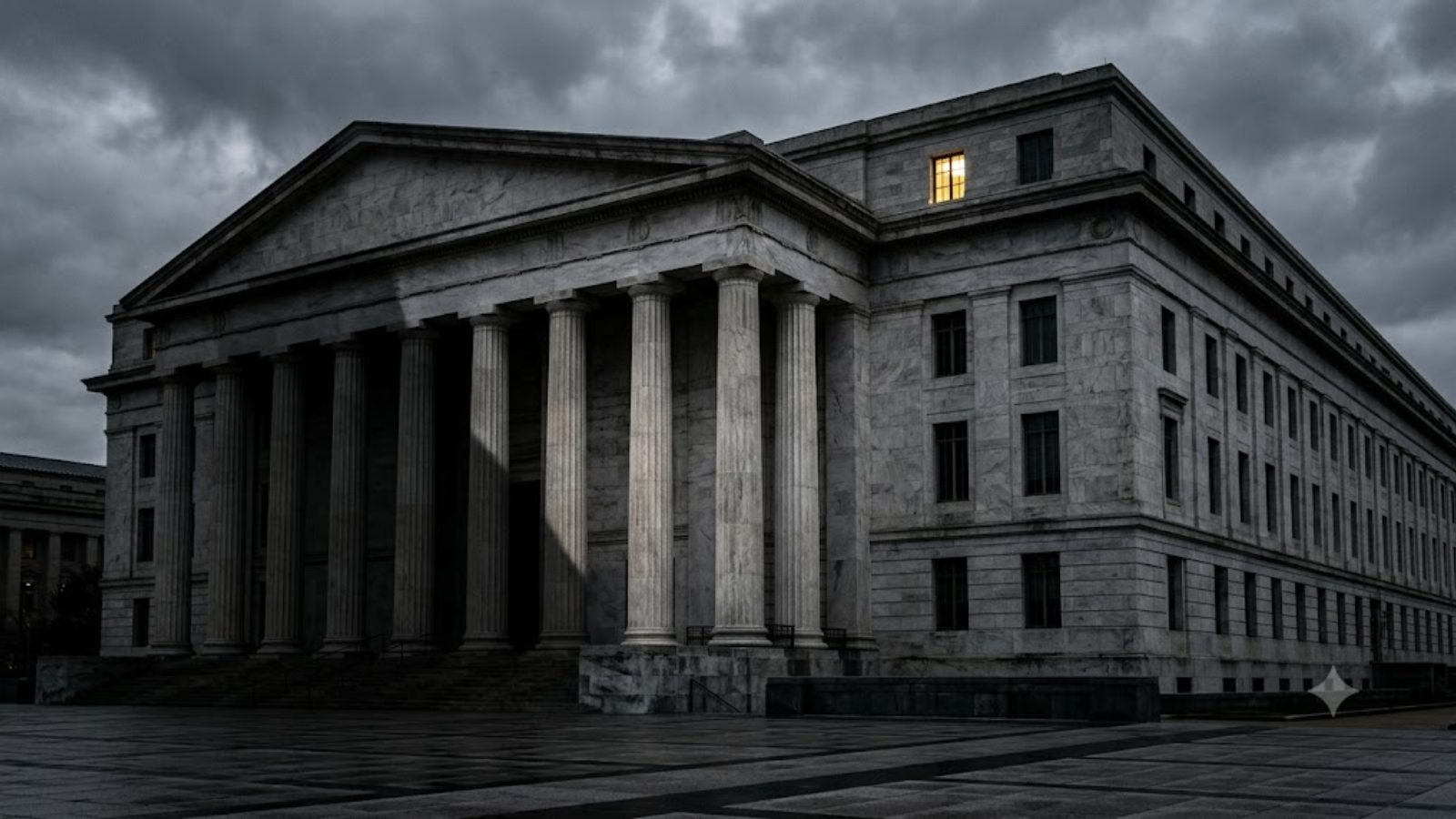
Officials voted a unanimous quarter-point increase to 3.75%–4%, and 16 of 18 of them signaled at least one more this year. The chairman said inflation has been too high for too long.
Our TakeA hike is not a reason to trade. It is a reason to check duration. Action: nothing new bought. The published rule failed two of its three tests, so the safe money stays short.
The Federal Reserve raised rates for the first time in three years. A quarter point, to 3.75%–4%, and the vote was unanimous. Three months ago the same committee voted unanimously to hold.
The 10-year Treasury settled above 5% for the first time since July 2007. The last eight times it closed above that line, it was back below within two months. The average stay was twelve trading days.
It is not meant to be the last one. Sixteen of eighteen meeting participants penciled in at least one more increase this year. Rate futures put roughly 90% odds on it. Goldman’s base case is December.
The inflation a quarter point cannot reach. Diesel hit $6.29, up 68% on the year. The former New York Fed president says it is acting as if oil were at $200. Transports fell 2.78%.
Nothing new was bought. The September letter set three conditions for new money. This week failed two of them outright. The safe money stays in bills paying near 3.8%, against a 0.44% national average.
Off Duty · The Human File
8 stories · 3 pictured · 5 listed
Genghis Khan had the rainiest decades in 2,000 years. Belichick had Brady.
Every track record is an unresolved argument between skill and weather. Ask what the climate was doing before you buy the record.
Hold
A sales manager in Indiana spotted the flaw a $5 million quarterback couldn’t see
Organizations scout opponents harder than themselves. Your transaction history is the film. Watch it.
Hold
100 million streams, one owner
Gross revenue is a vanity number. Who owns what, net of all fees, is the structure that funds a life.
Hold- Off Duty · The Human FileThe great classroom snack warHold
- Off Duty · Arts in ReviewA billionaire became his own curatorWatch
- Off Duty · The Human FileHe hadn’t eaten dessert in 20 years. Then came the wedding cake.Hold
- Off Duty · Consumer ProtectionHe paid $5,242 for business class and flew home in a middle seatHold
- Off Duty · ProtectionOne of the strongest El Niños on record is forming. It comes with a mapHold
Your Money & The Economy
6 stories · 3 pictured · 3 listed
‘We hand the money back and say good luck’
Borrowing the pension’s income certainty is a good idea. Borrowing its fee structure is not. The test is “net of all fees.”
Watch
Median income hit a record $87,460. Most people don’t feel it.
The gain came mostly from more hours worked, not higher pay. Hours run out, so run your own six-year number.
Hold
The cost of never being wrong
The main risk in most portfolios isn’t a crash. It’s outliving the money. Maximum safety has its own way of failing.
HoldMarkets & The Fed
9 stories · 3 pictured · 6 listed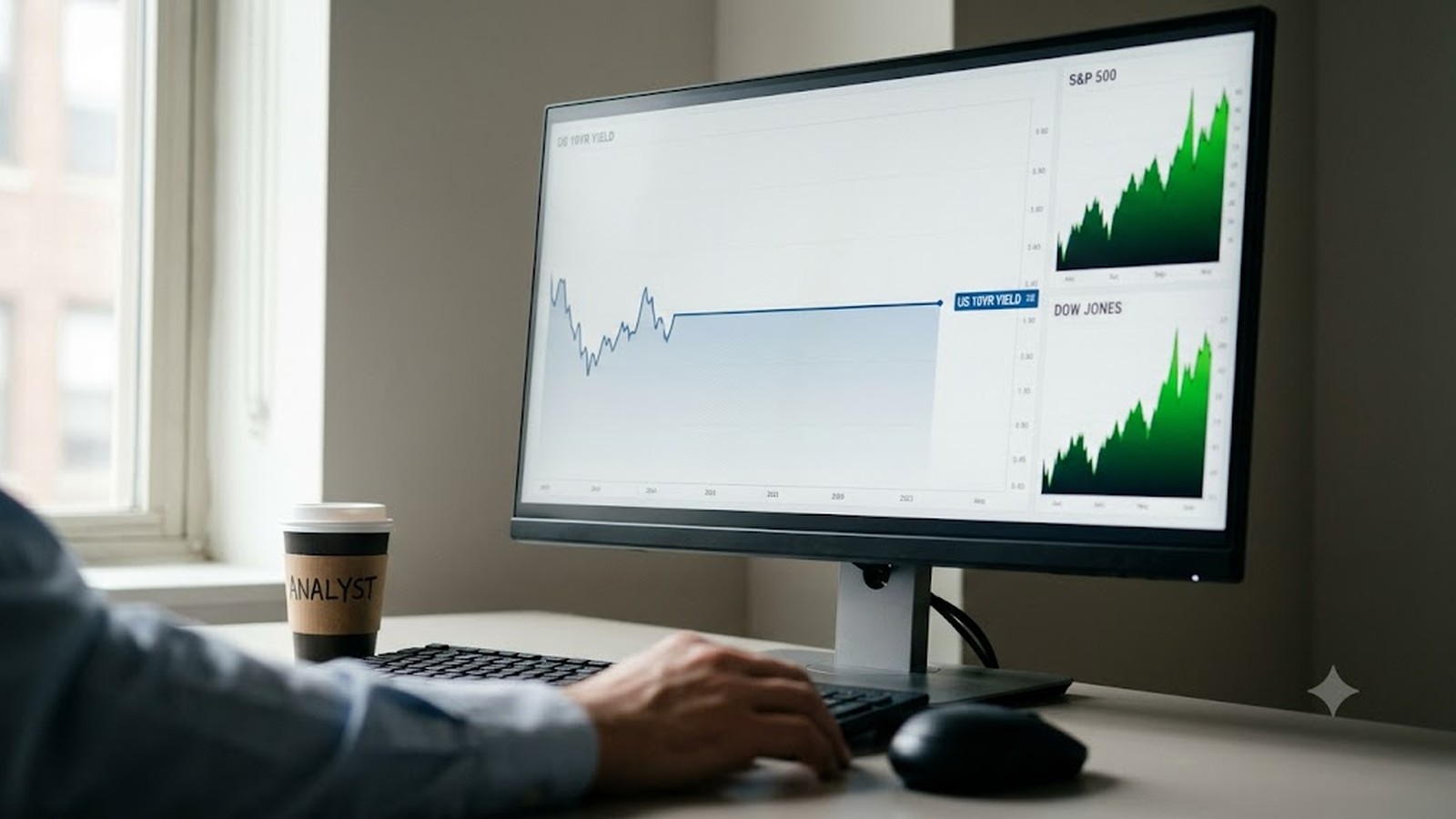
The 10-year closed above 5%. History says that rarely lasts
Five percent is the best starting yield in two decades. It is also the worst time to be accidentally long. The difference is duration, not opinion.
Hold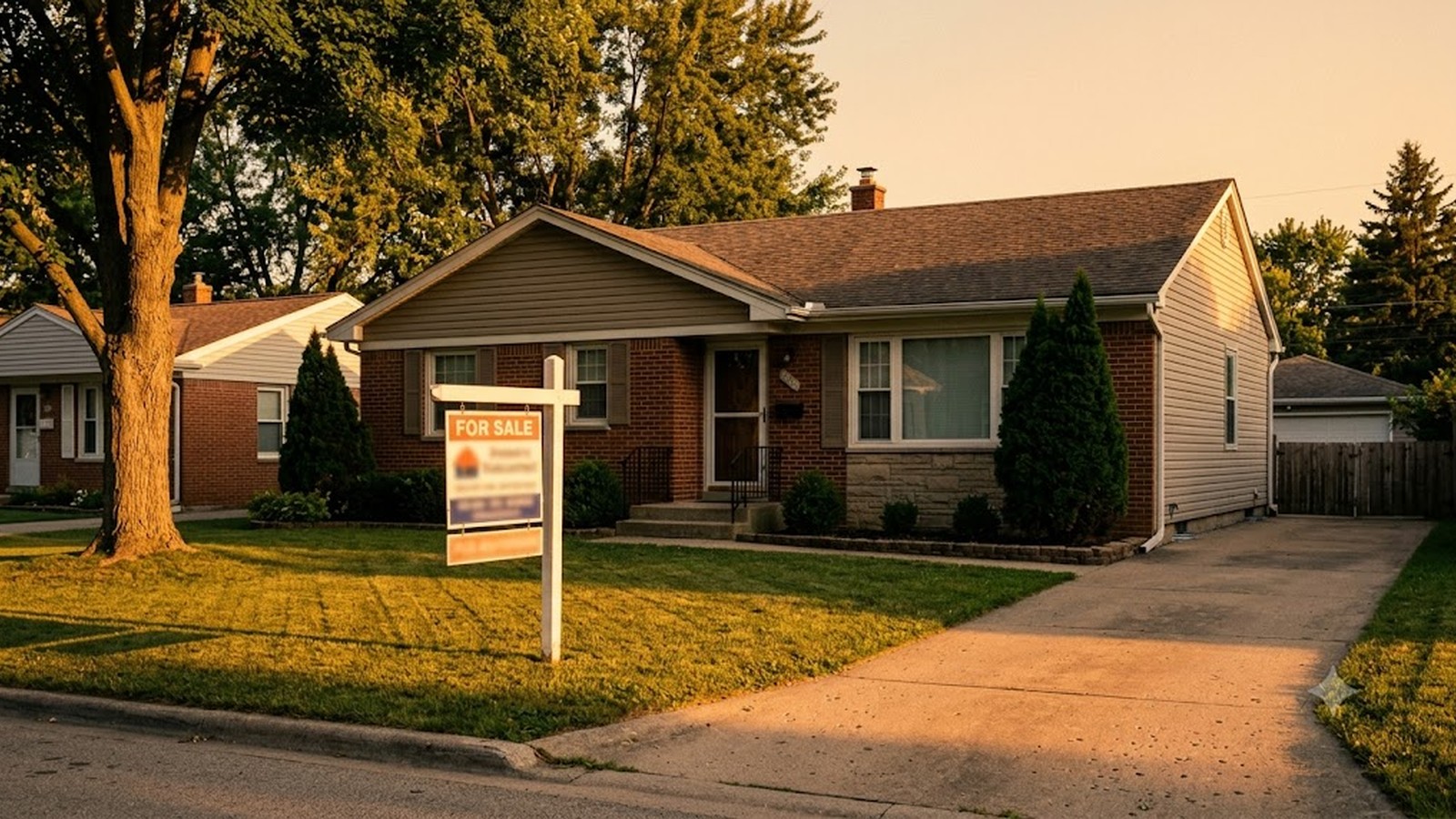
A quarter point costs you $1.38. The real damage is somewhere else.
The announced increase is small. The unannounced one in the 10-year is not. Run the payment at today’s rate before you sign anything.
Hold
Twelve to nothing: how a unanimous hold became a unanimous hike
When the Fed won’t pre-announce, you hold what survives a meeting, not what predicts one. An argument for plainer positioning.
Watch- The Fed · What’s Priced‘It’s never really a one-and-done’Hold
- Energy · The Input CostDiesel is acting like oil costs $200Hold
- Commodities · The CurveThe oil market is pricing $102 now and $72 laterAvoid
- The Economy · The ConsumerRetail sales fell, then rebounded. The Fed raised anyway.Hold
- The AI Build-Out · Physical LimitsAn AI slowdown was coming anyway. Copper and kilowatts would have forced itHold
- Energy · Venezuela‘Uninvestable’ in January, signing in SeptemberHold
From the desk Bias, the book, what’s priced, the planopen
One paper, one decision. The Federal Reserve raised its benchmark rate a quarter point on Wednesday, unanimously and for the first time in three years. The 10-year Treasury settled above 5% for the first time since July 2007. Around that sits the arithmetic. Where a quarter point actually lands on a card, a mortgage and a savings account. Why diesel is acting as though oil cost $200. What the last eight visits above 5% did next. Then the money pages, led by BlackRock naming the 401(k)’s design flaw out loud. Then the whole Personal Journal: a business-class ticket that ended in a middle seat, the great classroom snack war, a musician who kept the whole check. Then both Arts in Review pieces on the Lucas Museum, the Bookshelf on whether leaders matter, and Heard on the Street on the physical limits closing in on the AI build-out.
The paper’s own figures are Wednesday’s close, and they are the Fed’s. The Dow fell 631.21 points, or 1.21%. The S&P 500 gave up 0.45% to 7,551.81. The Nasdaq Composite finished about flat at 25,978.42. Under the averages, the day was cleanly sorted by rate sensitivity. The Dow Jones Transportation Average fell 2.78% on diesel and driver costs, the KBW Bank index fell 2.87%, and S&P Financials shed 1.63%. The semiconductor index rose 0.63% and biotech rose 0.69%. It was the seventh decline in eight sessions for all three major averages. The 10-year settled at 5.003% and the 30-year barely moved, which is what a fully priced decision looks like. That is a rate story sorting the market by duration, not a panic.
Signals still point to caution concentrated in long bonds rather than in shares. The volatility index closed Wednesday at 17.71, up 3% on the day and well inside its normal range. That is a market absorbing a decision, not fearing one. What has not resolved is the rate story. The 10-year settled above 5% and the 30-year held its level, so the pressure is in duration and in whatever borrows. The September letter’s three conditions for new money were tested directly this week and failed two outright. Core inflation ran 0.3% against a 0.1% test, and the Fed raised instead of holding, unanimously, with 16 of 18 officials signaling another. So the published answer is to wait, and waiting currently pays about 3.8%. None of this is a forecast. It is how the portfolios are positioned into the Bank of England and Bank of Japan decisions on Thursday.
Interest-rate futures put a nearly 90% chance on the Fed raising at least once more by the end of the year. The officials broadly agree. 16 of 18 meeting participants penciled in at least one more increase this year, which would take the benchmark just above 4%. Only four saw rates ending next year below that.
Goldman Sachs Asset Management’s base case is one more increase, in December, and that depends on coming inflation reports and the path of energy prices. Both sit outside the Fed’s control, and one of them is a war.
Read these as what is already in the price, not as a forecast. The practical use is narrow and real. When almost everyone expects the same thing, the risk sits on the other side of the trade.
Market-implied probabilities, not forecasts. They move intraday and have been wrong before. Not investment advice.
The crowd agrees the Fed is not finished, and disagrees with the futures market about how fast. A contract on a quarter-point increase at the December meeting sits at 67.5%, and one on the upper bound reaching 4.25% or higher before 2027 sits at 73.5%. Both point to one more move rather than a sprint.
Cuts are priced at close to nothing. A 50-basis-point cut after the October meeting is 0.4%, on nearly $915,000 of volume. The crowd has spent the most money in this set establishing what is not going to happen. The lower bound falling to 3.0% before 2027 is 0.6%.
Two counterweights. Inflation above 5% in 2026 is only 8.5%, so the crowd is not pricing a spiral. And WTI crude touching $85 this month sits at 22.5%, roughly one chance in four that the energy pressure behind this hike eases sharply and soon. Gold at $6,000 by end-December is 9.5%.
Crowd odds, not forecasts. They move intraday and they have been wrong before. Not investment advice.
Three things are worth fifteen minutes this week. First, where the safe money actually sits. The national average money-market yield is 0.44% and short Treasury bills pay near 3.8%, and Wednesday’s increase widened that gap rather than closing it. Second, the duration inside any bond fund labeled “core” or “aggregate” in a 401(k). A 5% ten-year is what reprices the long end. And per Heard on the Street, hyperscalers’ share of the leading investment-grade index grew 78% in a single year, which is an AI position most index owners did not choose. Third, if a purchase or refinance is on the calendar, the payment at 6.95% rather than the 6% of February.
Bring the statement and we’ll go line by line. Where the cash sits, how long the bonds are, and what Wednesday’s decision actually changed for you.
Book 15 minutes — phone or Zoom →Capital Wealth Daily · Vol. III · No. 172 · Thursday, September 17, 2026. Reported from the September 17, 2026 edition of The Wall Street Journal — including the Personal Journal pages, Arts in Review, the Bookshelf and Heard on the Street — and from the Capital Wealth Growth Portfolio review notes. The paper’s own figures are the Wednesday, September 16 close, the session in which the Federal Reserve announced its decision. Market-implied probabilities were read Thursday morning, Pacific. The eight-page Custom Content feature on pages A8–A9 is a paid advertiser section written by The Wall Street Journal Advertising Department; nothing in this edition is sourced from it. Written and edited by the Capital Wealth LG research desk.