Last December, Griff Washburn put down his guitar, picked up a shotgun and went out to hunt his first bird. He hiked more than 15 miles through eastern Oregon in the morning and dropped a grouse from 30 yards in the afternoon. Dinner.
He makes music under the name Goth Babe, which is a feint — there is nothing goth about his chipper electronic pop. What is genuinely unusual is the balance sheet underneath it.
The arithmetic
Goth Babe’s songs are not played heavily on the radio and don’t tear up the charts. They earned more than 100 million streams last year, which on Spotify typically generates around $300,000.
Now the important sentence: because Washburn writes and produces everything himself and effectively functions as his own record label, all that money goes to him.
That is the whole story. The same 100 million streams routed through a conventional deal would be split several ways. Ownership of the catalog, the production and the label function isn’t a detail — it is the difference between a nice gross number and an actual living.
He has diversified the revenue too. His tracks get licensed by shows and films, including “Hacks” on HBO Max and “Murder Mystery” on Netflix (NFLX). Outdoor companies — a speaker maker, a deodorant brand — use his music in advertisements or sponsor his YouTube channel, which has more than 133,000 subscribers.
His manager, Sean Patrick Sheahan, is refreshingly candid about the marketing model: “It’s very easy when you have somebody who’s living a unique life. Just point a camera at it.”
This is not just him
Spotify touts that more than 13,000 artists now generate at least $100,000 a year in royalties, though their record deals dictate how much they keep — which is precisely Washburn’s point. Household names account for only a small fraction of that group.
Zack Zarrillo, co-owner of Many Hats, which gives acts distribution infrastructure for a small cut, describes the shape of it: “We work with dozens of artists that own their catalog and are making an upper-middle-class income from streaming.” Many are relatively unknown and have built devoted followings by steadily releasing tracks, marketing cheaply on social media and touring.
As Sheahan puts it: “for Griff and other artists like him, there’s absolutely a business there that did not exist a decade ago.”
The costs, which are real
This is not a frictionless life and the Journal doesn’t pretend otherwise. Washburn was held up at gunpoint while living in his car. He suffered a vicious head injury surfing and now wears a helmet on the waves. The tiny home he built from scratch in 2020 — “I never thought I’d get so pumped turning a faucet on” — burned down.
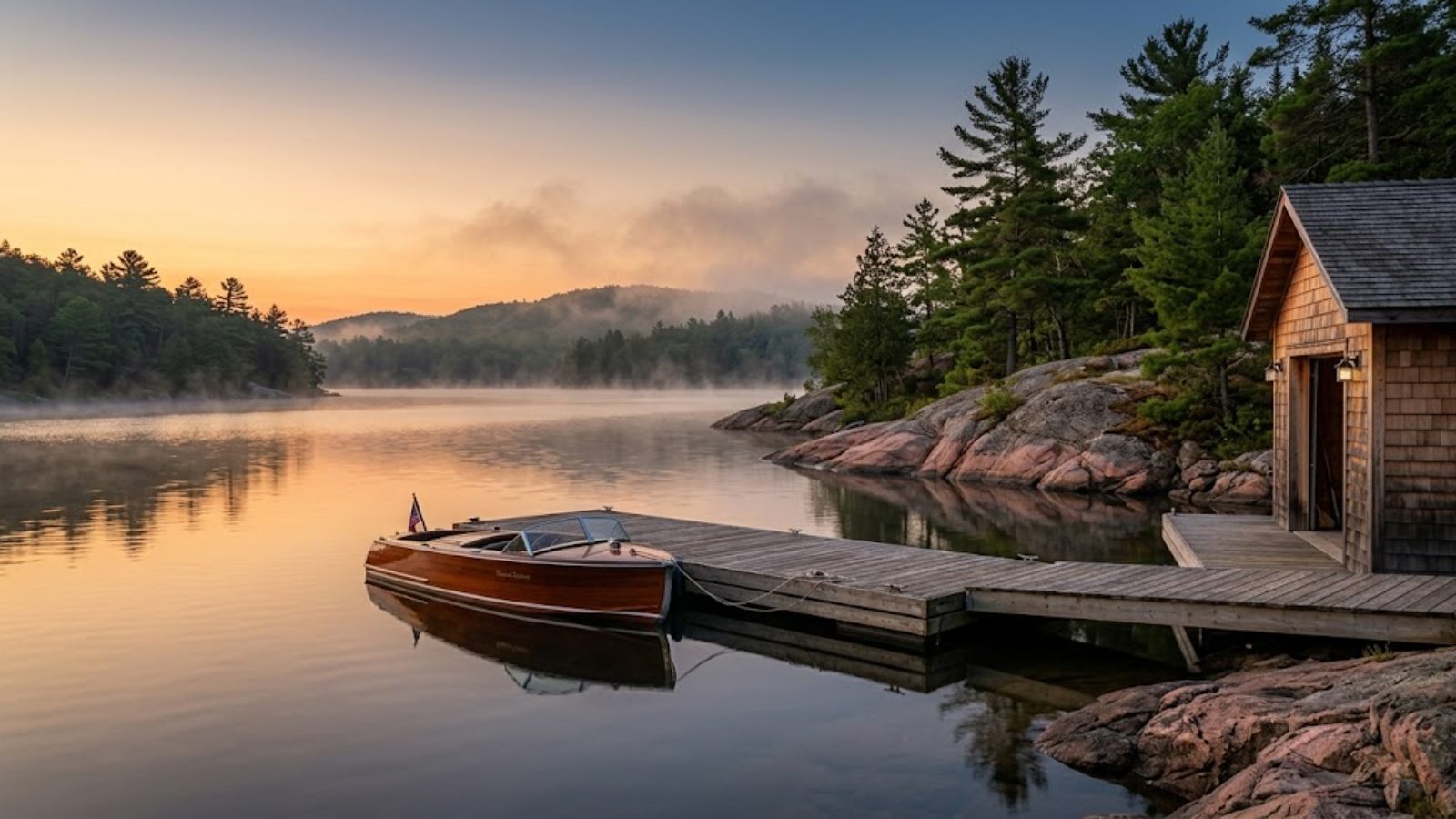
He remains relentlessly cheerful about all of it. This year he bought a 12-foot motorboat for $1,000 and transformed it with a roof and a wood stove; because it wasn’t very stable on the water, he named it the Shake Shack. “It’s not practical in any way,” he said. “But it makes me happy.”
The part worth stealing
Two things, and neither requires selling your house and buying a boat.
Ownership compounds differently than income. Washburn’s advantage isn’t that he is more popular than his peers. It is that he owns the asset and the distribution, so the same revenue converts to far more retained earnings. The household analogue is unromantic but real: equity in a business, in property, in a portfolio behaves differently from a salary, and fees and splits are the quiet difference between gross and kept.
“Net of all fees,” as BlackRock’s retirement chief put it elsewhere in this edition, turns out to be the sentence of the day.
He spends money to buy back time, deliberately. Washburn tours roughly half the year to fund the rest, and he knows the exact number he is working toward — he wants touring down to about 30% of his time. That is a financial plan with a unit of account that isn’t dollars, and most people never write theirs down.
Next up: sell the sailboat, buy undeveloped land in Appalachian Tennessee, build a treehouse for somewhere between $10,000 and $20,000. “That’s my next strange adventure,” he said happily. “What’s another weird place I can lay my head?”