“In two years, the Strait of Hormuz will be a worthless piece of water,” Treasury Secretary Scott Bessent said recently. By then, he predicted, oil would be rerouted through new pipelines and Iran would be defanged. Within days, drone strikes knocked out the pipeline that let Saudi Arabia bypass the strait entirely, and oil prices rose. Ed Ballard’s piece in Friday’s Journal takes the long view anyway, and it is worth reading precisely because the short view keeps embarrassing everybody.
The research comes from the McKinsey Global Institute, and it sorts the world’s response into four buckets. None of them is free.
Hoarding
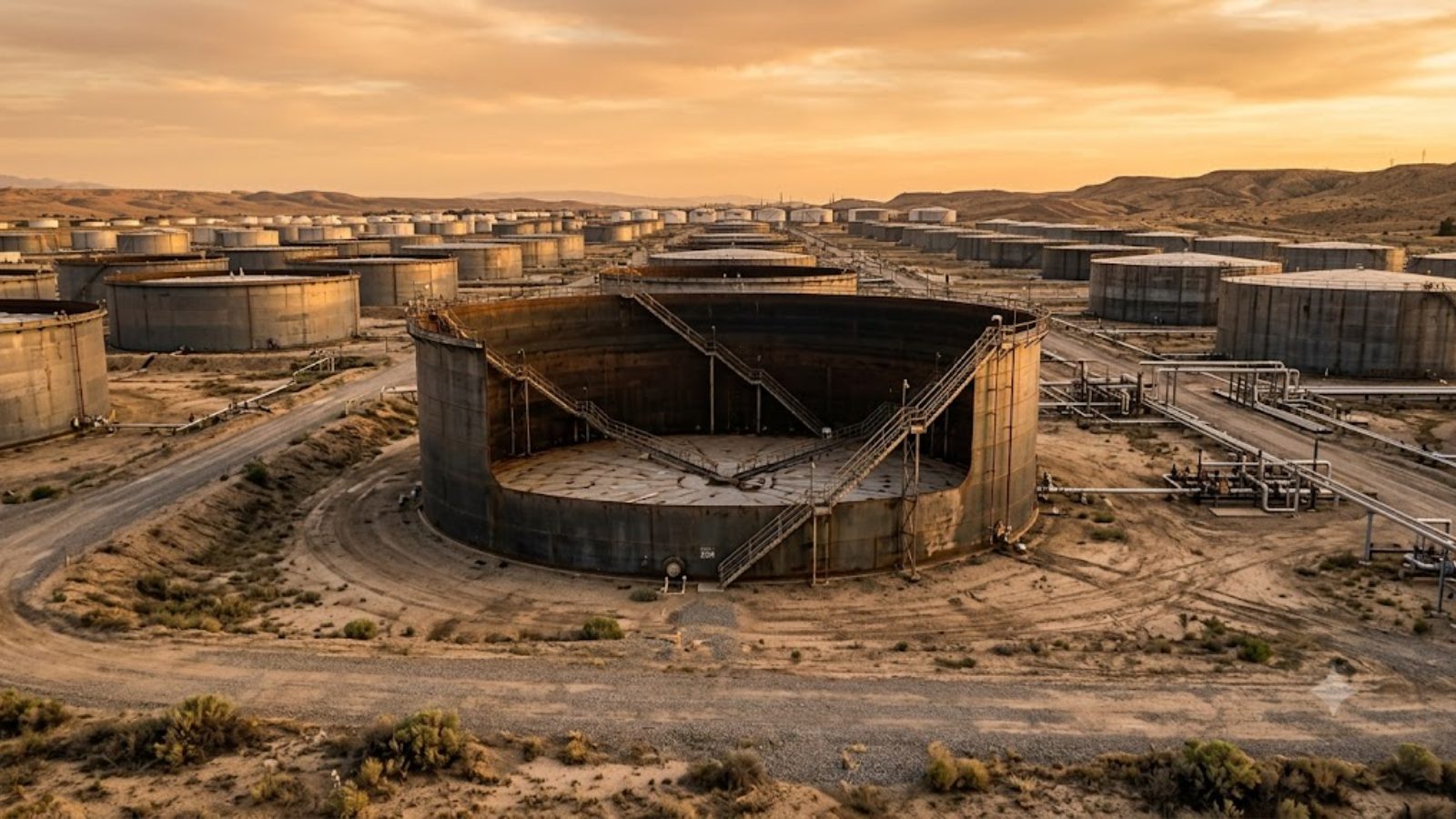
The initial shock was softened by a large release of stockpiled oil, most consequentially in the United States and China. Now hard-hit countries want their own buffers: McKinsey estimates the Philippines could take crude inventories from eight days of supply before the war to ten weeks. The catch is arithmetic. Hoarding buys time and nothing else, and the act of building a stockpile is itself extra demand — it pushes the price up while you do it.
Rerouting
The war has given pipeline projects new impetus: a new route inside the United Arab Emirates to move oil to ports outside the strait, and another that would export Iraqi crude through Syria. The trouble is the one on display this week. Like Saudi Arabia’s East-West line, every one of them could become a target. A pipeline is a fixed object with a known location, which is an advantage for logistics and a liability in a war.
New supply
Rising production elsewhere erodes reliance on the Persian Gulf. U.S. output has risen, and announcements of upstream development have accelerated in Argentina, Venezuela and elsewhere. Refining is harder: President Trump wants a new refinery, the Australian government is considering one, and the obstacle in both cases is persuading investors to finance a thirty-year asset when the long-run demand forecast is flat. That is a capital-allocation problem, not an engineering one.
Substitution — and the finding nobody expected
Switching to coal reduces dependence on Middle Eastern oil and gas. So does switching to renewables and electrifying with EVs and heat pumps. Both are substitution; they are not remotely the same choice.
And here is the result the researchers did not anticipate. Mekala Krishnan, the McKinsey partner who led the work, said the biggest surprise was the lack of consistent evidence that the crisis has boosted global growth in clean energy and electrification. Six months of a genuine oil shock — the textbook forcing function — and the transition data does not show it.
Our read
Add it up and the picture is neither reassuring nor catastrophic. Before the war these trends were on course to offset up to seven million barrels a day by 2030, about 35% of what passes through the strait. That could rise to 15.5 million barrels a day if governments deliver the plans currently under discussion — roughly 70% of the dependence. The strait won’t be worthless. It is, as the energy experts in the piece put it, a depreciating asset.
For a portfolio that phrase is more useful than any price target. It says the structural bid under energy is real but finite, that it is measured in years rather than quarters, and that the thing being repriced is not oil itself but the insurance premium on a single geographic chokepoint. It argues for owning energy at a strategic weight as an inflation hedge — which is how the sleeve is held here — and against building a position that only works if the strait stays shut.
It also quietly argues for owning the picks and shovels of substitution, whatever form it takes. Electricity demand grows in every one of those four scenarios. That is the least controversial sentence in the whole analysis.