 Capital Wealth Daily
The Market Made Its Peace With the Hike. The Bill Went to Somebody Else.

The Hike Landed. It Landed on Private Equity.
Investors want a record $349 billion back from buyout funds that cannot sell what they own. Wednesday’s quarter point makes the exit narrower.
Our TakePublic markets repriced the hike in a morning. Private markets will take years. Action: find the paragraph on your statement that says when you can get your money back.
The market made its peace with the hike. The S&P 500 rose 1.14% and the Nasdaq 1.69%, their biggest one-day gains since Aug. 4. Semiconductors led, up 3.14%.
The volatility index fell almost 13%, to 15.44. The 10-year Treasury had its first close above 5% since 2007, then gave it back after exactly one session, settling at 4.946%.
The bill landed somewhere else. Investors are trying to get a record $349 billion back from private-equity funds that can't sell what they own. Higher rates make those exits harder.
Nothing priced off the long end came back. The 30-year mortgage averaged 6.95%, up from 6.76% and the highest since January 2025. Prime went to 7.00%. The national average money-market yield stayed at 0.44%.
Nothing new was bought, for the second day. The September letter set three conditions for new money. Two failed outright this week. The third still can't be checked. One green session does not undo a rule written in advance.
Off Duty · The Human File
9 stories · 3 pictured · 6 listed
One phone call put a $1.9 billion tour at risk
A $1.9 billion touring business was at the mercy of a handful of venue owners. Relying on a few people is still concentration, and it never shows on a statement.
Hold
“Let us know when you’re done reheating our leftovers”
“They don’t feel brave enough” is the whole story. When a household stalls, the problem is permission, not the math.
Hold
The math geek who quit, and the week everyone panicked
Two pages later, the same paper uses the logs to piece together the incident behind the panic. Skip picking a side and ask what kind of evidence each one is.
Hold- Off Duty · The Human FileA king, a Vatican adviser and the chief executive of Nvidia walk into a castleHold
- Off Duty · The Human FileThey zoomed in on the ultrasound and found a Fiverr logoWatch
- Off Duty · The Human File$861,000, exactly on budget, and the itemized billHold
- Off Duty · The BookshelfThe cereal box was always a billboardHold
- Off Duty · The Human File666 pitches under 45 mph, and a first baseman who gave up seven runsHold
- Off Duty · The Human FileA urinal, a creek for the dog, and a pool nobody can seeHold
Your Money & The Economy
6 stories · 3 pictured · 3 listed
2032 is not a projection. It is a date in a statute.
Doing nothing is an action here, with a number attached. Run the retirement plan twice: once at 100% of the benefit, once at 78%.
Watch
A 67-year-old bought an annuity in April. Now there is a lawsuit.
An annuity is a promise, and the promiser’s balance sheet is the product. Find the issuing entity in the contract, its ratings, and your state’s guaranty limit.
Watch
England didn’t follow. Three of nine wanted to.
Three central banks, one oil shock, three answers. That split is currency risk, so check whether your international fund is hedged.
HoldMarkets & The Money
11 stories · 3 pictured · 8 listed
The market stopped arguing with the Fed and went shopping
Advancers beat decliners by better than two to one. New lows still beat new highs, 151 to 99. Two-thirds of the market rallied, and the tail kept sinking.
Hold
The 10-year spent one day above 5% and came back
The yield came back. The 6.95% mortgage and the 7% prime rate did not. The gap between what your cash earns and what your debt costs got wider this week on both sides.
Hold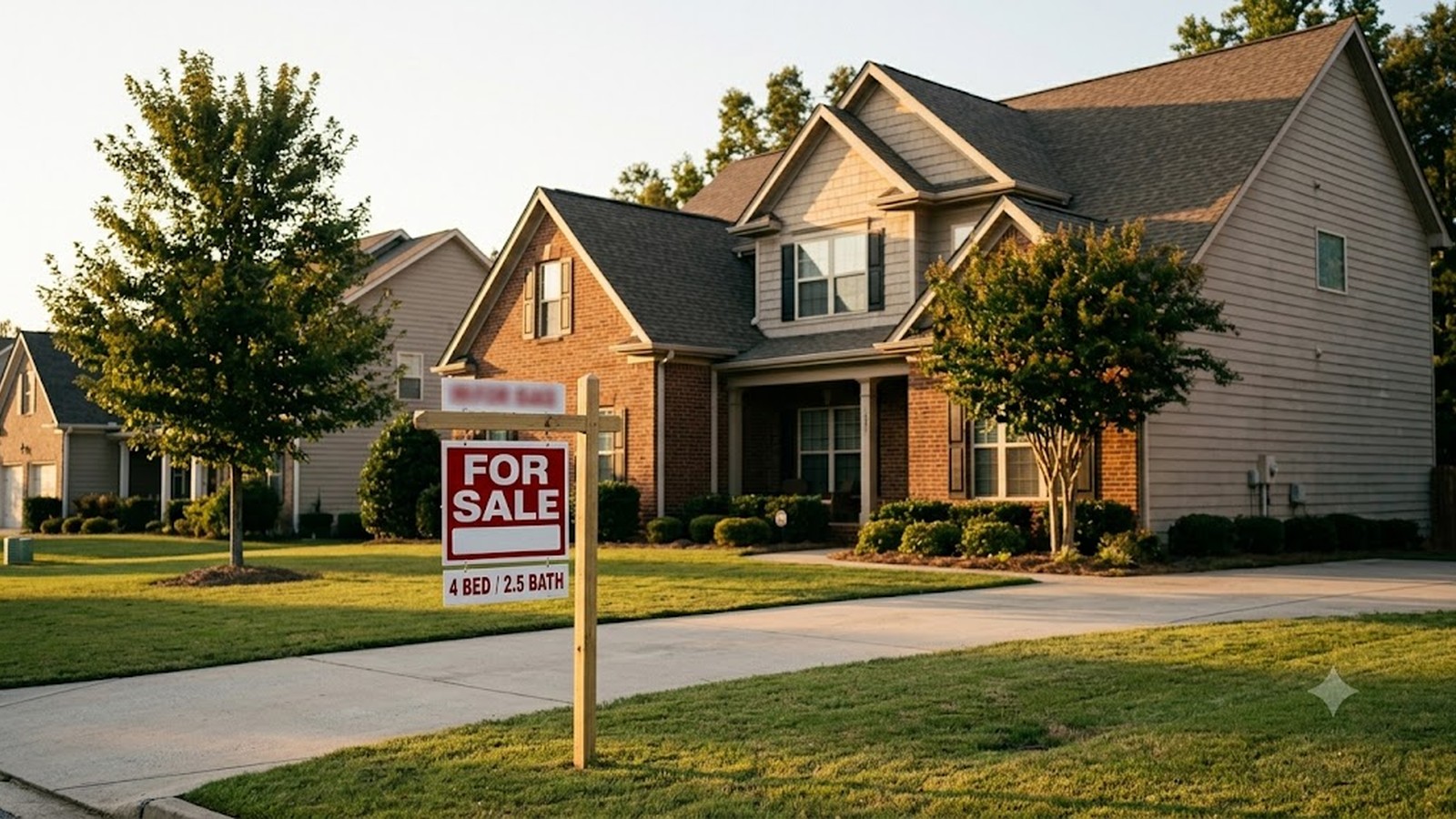
6.95%, the highest since January 2025, and a builder cut its forecast
The 10-year fell on Thursday, and the mortgage didn’t follow. Budget the purchase at 6.95%, and never build a plan around a refinance that hasn’t happened.
Watch- The Fed · Independence‘You might as well vote with the board’Hold
- Energy · The ChokepointMilitants blew up Saudi Arabia’s Plan BHold
- Energy · The Long Game“A depreciating asset”: how the world is trying to make Hormuz matter lessHold
- Markets · Who Is WinningThey cracked a sake barrel in SingaporeHold
- Investments & Risk · The UnwindThe nuclear trade is down by half and still expensiveWatch
- Markets · PlumbingThe SEC just opened a second front door to the stock marketWatch
- Industrials · DefenseGeneral Motors has entered the missile businessHold
- Technology · The Substitute“Huawei’s goal is to become Nvidia”Hold
From the desk Bias, the book, what’s priced, the planopen
The day after. The Federal Reserve raised rates on Wednesday for the first time in three years. On Thursday the stock market decided it could live with that. The S&P 500 rose 1.14%, the Nasdaq 1.69% and semiconductors 3.14%, and the volatility index fell almost 13%. The 10-year gave back its first close above 5% since 2007 after exactly one session. What did not come back is everything priced off the long end: a 6.95% mortgage, a 7% prime rate, and a 0.44% savings account. The lead is where the bill actually landed. A record $349 billion is stuck in private-equity funds that cannot sell what they own. Then the money pages, led by a 22% benefit cut written into law with a date on it, and a lawsuit over a 67-year-old’s annuity. Then the whole Off Duty file: the phone call that nearly canceled Ed Sheeran’s tour, Samsung’s fans watching Apple reheat their leftovers, the math prodigy who quit Anthropic, a faked sonogram undone by a Fiverr watermark, a custom house built for $861,000 exactly on budget, and 666 pitches thrown under 45 miles an hour.
A real relief rally with real breadth, and one internal reading that did not join in. The S&P 500 rose 85.95 points to 7,637.76, the Nasdaq Composite 439.87 to 26,418.30 and the Dow 316.14 to 51,778.04. For the first two, those were the biggest one-day gains since Aug. 4, after stocks had fallen in seven of the previous eight sessions. Leadership came from the high-beta names, the ones that swing hardest: the PHLX Semiconductor index rose 3.14%, biotech 2.28%, and gold and silver miners 3.42%. Advancing issues beat decliners 3,312 to 1,582, and the closing Arms index printed 0.59, a reading that shows buying demand. And yet new 52-week lows still outnumbered new highs, 151 to 99. That is the fingerprint of a long tail still grinding lower under the average. Rates helped. The 10-year settled at 4.946% against 5.003%, the 2-year at 4.688%, and oil fell for a second session, with Brent at $104.82 and West Texas Intermediate at $101.91. That is a market that has finished repricing a decision, not one that has stopped paying for it.
The signals point to a market that has absorbed the decision, not one that has escaped it. The volatility index closed at 15.44, down 12.8% and at the calm edge of its normal range. The breadth behind Thursday’s gain was real, with better than two advancing issues for every decliner. Against that, more stocks made a fresh one-year low than a fresh one-year high in the same session. That is what a rate increase does to the part of the market that borrows. The published September conditions for putting new money to work were tested this week. Core inflation ran 0.3% against a 0.1% test, and the Fed raised rather than held. The third condition, a vol-of-vol reading back under 90, is not printed in the newspaper and was not pulled, so it stays unverified. An unverified condition is not a met one. Nothing here is a forecast. This is simply how the portfolios are positioned into next week.
Most Federal Reserve officials projected at least one more increase this year after Wednesday’s unanimous quarter point to 3.75%–4%. Chairman Kevin Warsh repeated his concern about inflation, and investors responded by betting on more increases over the coming months. That is the unusual part of a day when stocks rose 1%.
The rest of the borrowing table moved with it. Prime went from 6.75% to 7.00% the moment the Fed acted. The 30-year mortgage averaged 6.95%, the 15-year 6.44% and the jumbo 7.07%. The national average money-market yield stayed at 0.44%.
No prediction-market pull was made for this edition. Polymarket’s site and its data API were unreachable from this desk’s network, and the figures we found by search did not agree across dates. Rather than print crowd odds we could not verify, this card carries only what the newspaper printed. The pulse returns when the pull does.
Market-implied expectations, not forecasts. They move intraday and have been wrong before. Not investment advice.
Three things are worth fifteen minutes this week, and none of them needs a forecast. First, the cash. Prime went to 7.00% and the funds target to 3.75%–4%, while the average money-market yield stayed at 0.44%. That gap is real money on a real balance, and it widened on both sides this week. Second, anything on the statement whose price is not set by a market. That means an interval fund, a private-credit sleeve, a non-traded REIT, or an annuity. Find the paragraph that says when you can get out and what it costs. A record $349 billion is waiting on exactly that paragraph somewhere else right now. Third, Social Security. The old-age trust fund is projected to empty around 2032. At that point the law cuts payouts to match receipts, about 22% in the first year. Pull your actual benefit estimate and run the plan twice, once at 100% and once at 78%. The gap between those two answers is the honest size of the exposure.
Bring the statement and we’ll go line by line: where the cash sits, how long the bonds are, and what you could actually sell next Tuesday if you had to.
Book 15 minutes — phone or Zoom →Capital Wealth Daily · Vol. III · No. 173 · Friday, September 18, 2026. Reported from the September 18, 2026 edition of The Wall Street Journal — including the Mansion section, Arts in Review, the Bookshelf, the opinion pages and Heard on the Street — and from the Capital Wealth Growth Portfolio review notes. The paper’s own market figures are the Thursday, September 17 close. No prediction-market pull was made for this edition: polymarket.com and its data API were unreachable from this session’s network, so rather than publish odds we could not verify, the market-expectations card carries only figures printed in the newspaper. The Mansion “Retirement Communities” spread on pages M5–M5D is sponsored content, one page of which is marked PAID ADVERTISEMENT; nothing in this edition is sourced from it. Written and edited by the Capital Wealth LG research desk.