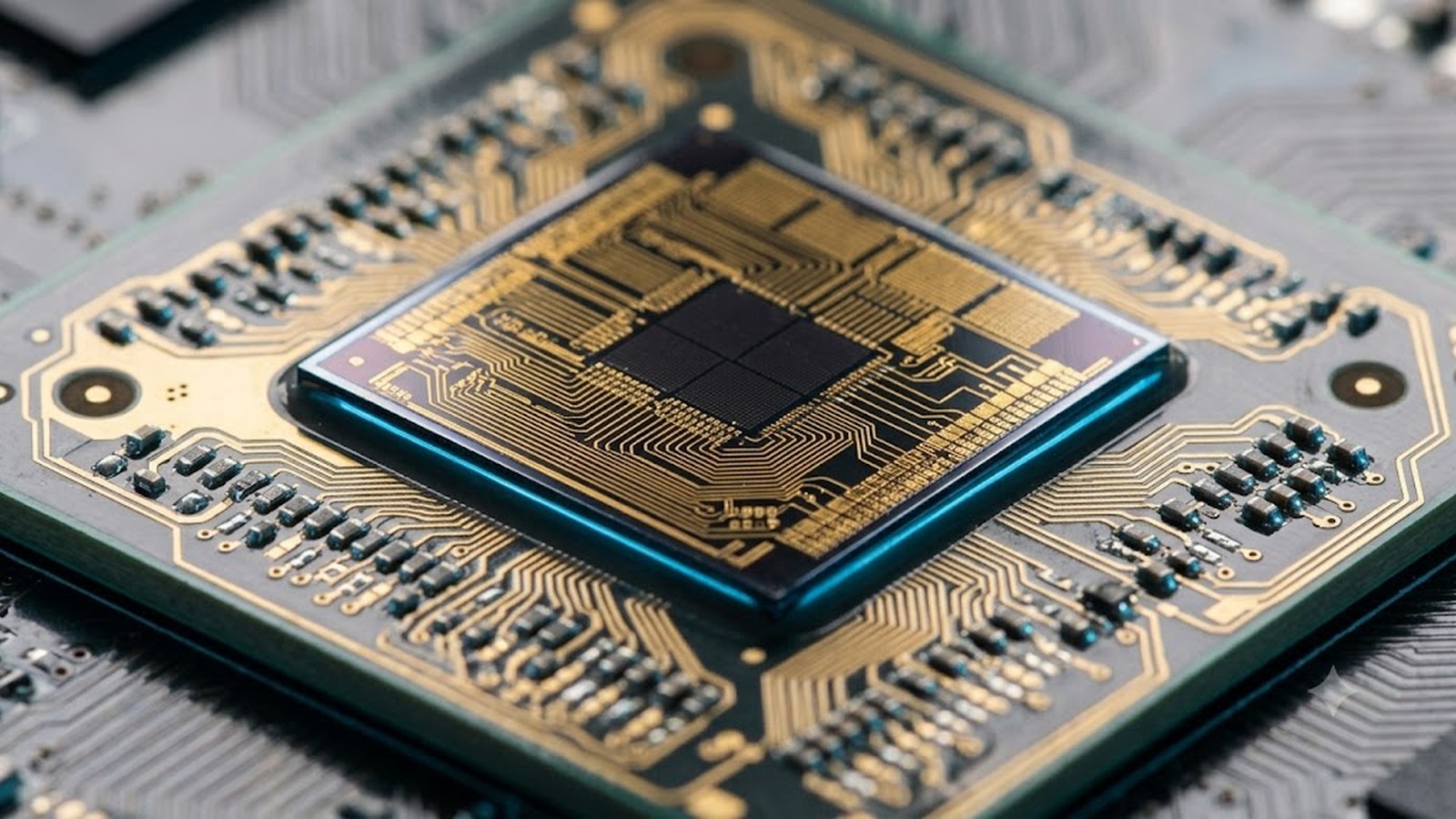
“Huawei’s goal is to become Nvidia.” That is Guo Ping, chairman of Huawei’s supervisory board, speaking to new employees, according to an official transcript quoted in Friday’s Journal. It is a useful sentence because it is not a boast about today. It is a statement of direction, and the direction has numbers attached.
Huawei said Thursday it will release two new AI chips next year — the Ascend 960DT in the first quarter and the 960PR in the third, both running ahead of their original timelines — with further parts planned for 2028 and 2029. It has already shipped more than 1,000 of its AI-computing systems, each bundling hundreds of chips, to over 370 customers.
Building around the wall
Since the Biden administration, the U.S. has barred Chinese companies from buying Nvidia’s best AI chips and blocked Chinese chipmakers from buying top-of-the-line manufacturing equipment. Huawei has been on a U.S. blacklist since 2019, so it faces additional curbs on top.
The response has been engineering around the constraint rather than through it. Traditional fabrication depends on ultra-precision machinery to squeeze more circuits onto a single chip — the machinery Huawei cannot buy. So it is trying to improve efficiency by other means: layering circuits within a single chip, and above all by chaining enormous numbers of weaker chips into clusters that function like one computer.
The technology for that is called UnifiedBus. In a conventional server, processors and memory units are like different countries speaking distinct languages — moving data between them requires translation, which creates bottlenecks. UnifiedBus aims to establish a universal language so chips can talk directly to one another, even across separate server racks. Huawei has also rolled out near-packaged optics to cut the enormous power cost of all that communication, an approach broadly analogous to the co-packaged optics Nvidia and Broadcom use.
Huawei’s rotating chairman Eric Xu gave the strategic logic without decoration: “We can’t be at the mercy of others forever — one day they say they’ll sell you a chip, and the next day they say they won’t. So even if the technology is a bit less advanced, at least we have something and aren’t living in constant uncertainty.”
The number that matters
Morgan Stanley projects China’s AI chip market growing to $67 billion by 2030, with domestic companies taking an 86% share — against less than half in 2025.
Huawei is candid that its manufacturing capacity remains constrained and that the cluster approach brings its own problems: chaining chips together demands far more precise and reliable communications and highly sophisticated software, hurdles some data-center operators warn are difficult to clear. The individual chips in the pipeline still trail the best Nvidia parts available today, on the specifications both companies have published.
Our read
Nvidia (NVDA) rose 2.5% on Thursday to $219.34 in a broad semiconductor rally, and nothing here changes what it is: the best product in the category, with pricing power. But this story is the clearest statement yet of the structural question hanging over the position, and it is not a demand question. It is a market-size question.
An export control does two things at once. It denies a competitor the best tool, which is the intended effect. And it guarantees that competitor a protected domestic customer base with no alternative, which is the side effect — and side effects compound. Morgan Stanley’s 86% is a forecast of how much of one large market is being permanently reassigned.
This is exactly why the AI build-out is owned in this book through the platforms that spend the money — Microsoft (MSFT), Alphabet (GOOGL), Meta (META) — and the grid builders that have to be paid regardless, rather than concentrated in the equipment suppliers that book it as revenue. A platform is agnostic about whose chips it buys. A supplier is not. That distinction was drawn for exactly this reason, and Thursday’s news is the argument for keeping it.