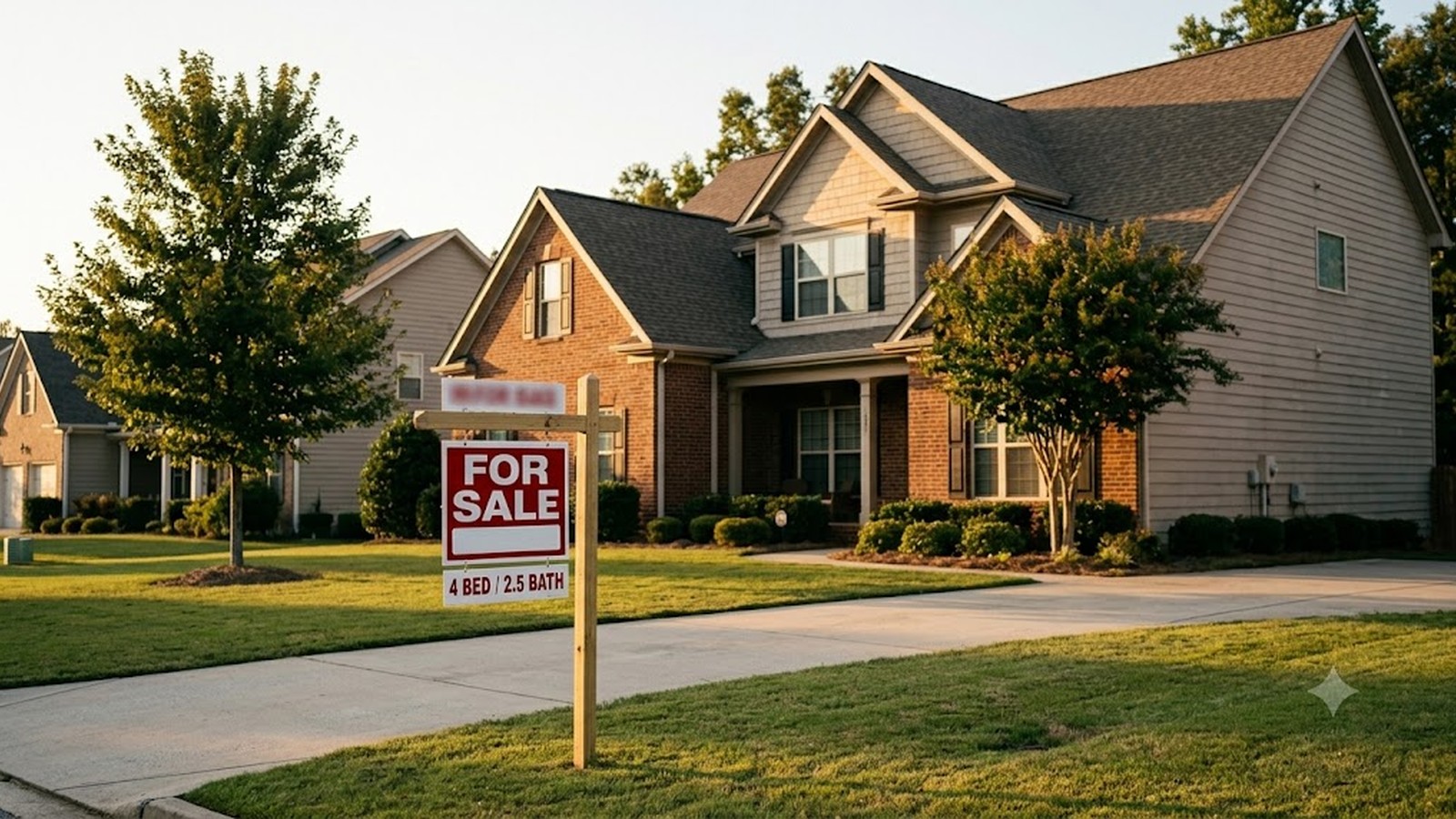
Nineteen basis points in a week is not the sort of move that makes a headline on its own. It is the sort of move that decides whether a specific family closes on a specific house. Freddie Mac’s weekly survey put the 30-year fixed mortgage at 6.95% this week against 6.76% last week — the highest reading since January 2025.
The rest of the borrowing table went with it. Bankrate’s panel of more than 1,500 online banks had the 30-year at 6.98%, the 15-year at 6.44%, the jumbo at 7.07% and the five-year adjustable at 6.13%. Every one of those is above where it sat a week ago, and the 30-year, 15-year and jumbo are all sitting at the top of their 52-week ranges.
The builder said it out loud
On the same day, Lennar (LEN) — one of the largest homebuilders in the country — cut its home-delivery target for the full year, citing interest-rate pressure and worsening conditions in the housing market. Revenue and profit both fell in the third quarter.
And the shares rose nearly 2%, to $79.70.
That is not a contradiction; it is how markets price bad news that everyone already assumed. A builder confirming what a 6.95% mortgage implies is information about the housing market and very little information about the stock. The useful signal in Lennar’s guidance is the first part, not the second: the company that sells the houses is telling you what it sees in its own order book.
The part that gets missed
Mortgage rates do not track the Federal Reserve’s overnight rate. They track the long end of the Treasury curve plus a spread, which is why the 10-year’s brief visit above 5% this week matters more to a homebuyer than Wednesday’s quarter point did.
Here is what makes this week unusual and worth noticing. The 10-year came back down on Thursday, to 4.946% from 5.003%. The mortgage did not. Survey rates lag, spreads widen when the market is nervous about duration, and a lender re-pricing upward is generally quicker than a lender re-pricing down. Anyone waiting for the mortgage to follow the bond lower should plan on the wait being longer than the bond’s round trip was.
Our read
Three practical things, none of which requires a forecast.
Run the payment at today’s number, not at the number you remember. The gap between 6.11% — the low of the past year — and 6.95% is roughly $220 a month on a $400,000 loan before taxes and insurance, and it is the difference between qualifying and not for plenty of borrowers. If a purchase is on the calendar for this autumn, the honest budget uses 6.95%.
Ask what the seller will pay for. In a market where builders are cutting delivery targets, rate buydowns, closing-credit concessions and financing incentives come back fast. Those are worth asking about explicitly, because they are frequently offered rather than advertised.
Do not lock a plan to a refinance that has not happened. The single most expensive assumption in housing right now is “we’ll refinance in a year.” That may well happen. It may also not, and the purchase decision should survive the version where it doesn’t.
Fifteen minutes with the actual amortization schedule beats an afternoon of predicting the 10-year. Bring the loan estimate.