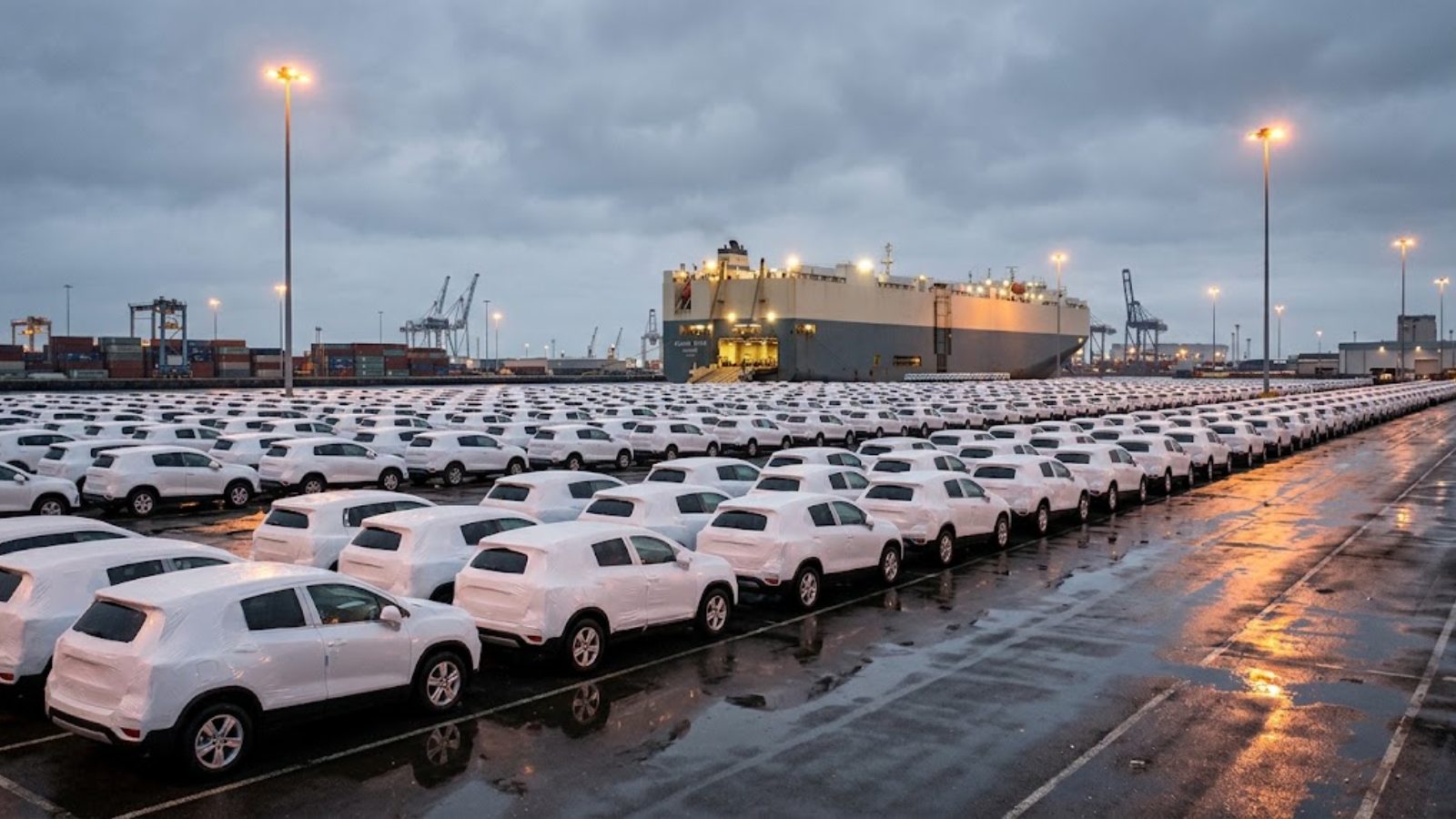
The cheapest Jeep on the internet is about to disappear. Not the Jeep — the price. Starting next month, Stellantis (STLA), parent of Jeep, Dodge, Ram and Chrysler, becomes the latest U.S. automaker to impose minimum advertised pricing on its dealers, a floor under the lowest price they can put in an ad. From the 2027 model year, that floor is generally the invoice price — what the dealer paid the factory, a number that isn’t publicized and usually sits a little under sticker. General Motors (GM), Mazda, Toyota (TM), Kia and Hyundai already do it. The industry’s word for this is transparency. Yours may be shorter.
The why is in the markdowns. According to CarEdge, Stellantis vehicles are discounted more than three times as deeply off sticker as the average car, and the company’s documents frame the rule as protecting the brands from fire-sale tactics ahead of an onslaught of new models by 2030. The rules police vocabulary, too: Unlock additional price and Ask about additional discounts are out; Get this price and Pick my payment are fine. Separately, the Federal Trade Commission is cracking down on ads that leave out mandatory fees and add-ons, with Cars.com (CARS) and Autotrader scrambling to comply.
The dealers mostly like it — read that twice
Jared Glover, who runs a Jeep-Ram store near Tulsa, Okla., told the Journal the cheapest price on the internet rarely ends up being the best overall deal; something always changes by the time you’re in the chair. GianMarco Taverna, a Fort Lauderdale-area dealer who typically advertises 20% or more off sticker, expects a higher negotiating start and more gross profit per car. Ronnie Flowers of Friendship Chrysler Dodge Jeep Ram in Johnson City, Tenn., says customers want transparency and don’t want a long, tumultuous negotiation. TrueCar founder and chief executive Scott Painter gave the other side its line: “There is no question it makes price discovery for consumers harder.” Meanwhile Tesla (TSLA) and Rivian (RIVN) have always sold direct at fixed prices, and Carvana (CVNA) is using fixed prices as it starts selling new Stellantis vehicles; some dealers see the rule as a step in that no-haggle direction.
Our read
This is a cash-flow story (M5), and the rule is simple: the advertised price is no longer the floor, so stop treating it as one. Get written out-the-door quotes — fees, add-ons, taxes, all of it — from several dealers, because the ad can’t tell you anymore and the FTC is cracking down on ads that hide the fees. Ask each dealer for the invoice price and research it before you walk in; it isn’t published, but from the 2027 model year it’s generally the floor for the ad, and it’s the reference point for the real negotiation. Then separate the price conversation from the financing one: settle the number for the car, then talk about the loan. A 48-month new-car loan averaged about 7% in the Bankrate table in Monday’s Journal, and the payment conversation is how a good price quietly turns into an expensive car.
The deeper habit is to fund the car from the cash-flow plan, not from the Pick my payment button. A payment you can afford and a car you can afford aren’t the same thing at 7% — one is the dealer’s arithmetic, the other is yours. If the number for the car is decided before you sit down, a minimum advertised price is just a rule about billboards. It’s only a trap for the buyer who lets the ad do the planning.