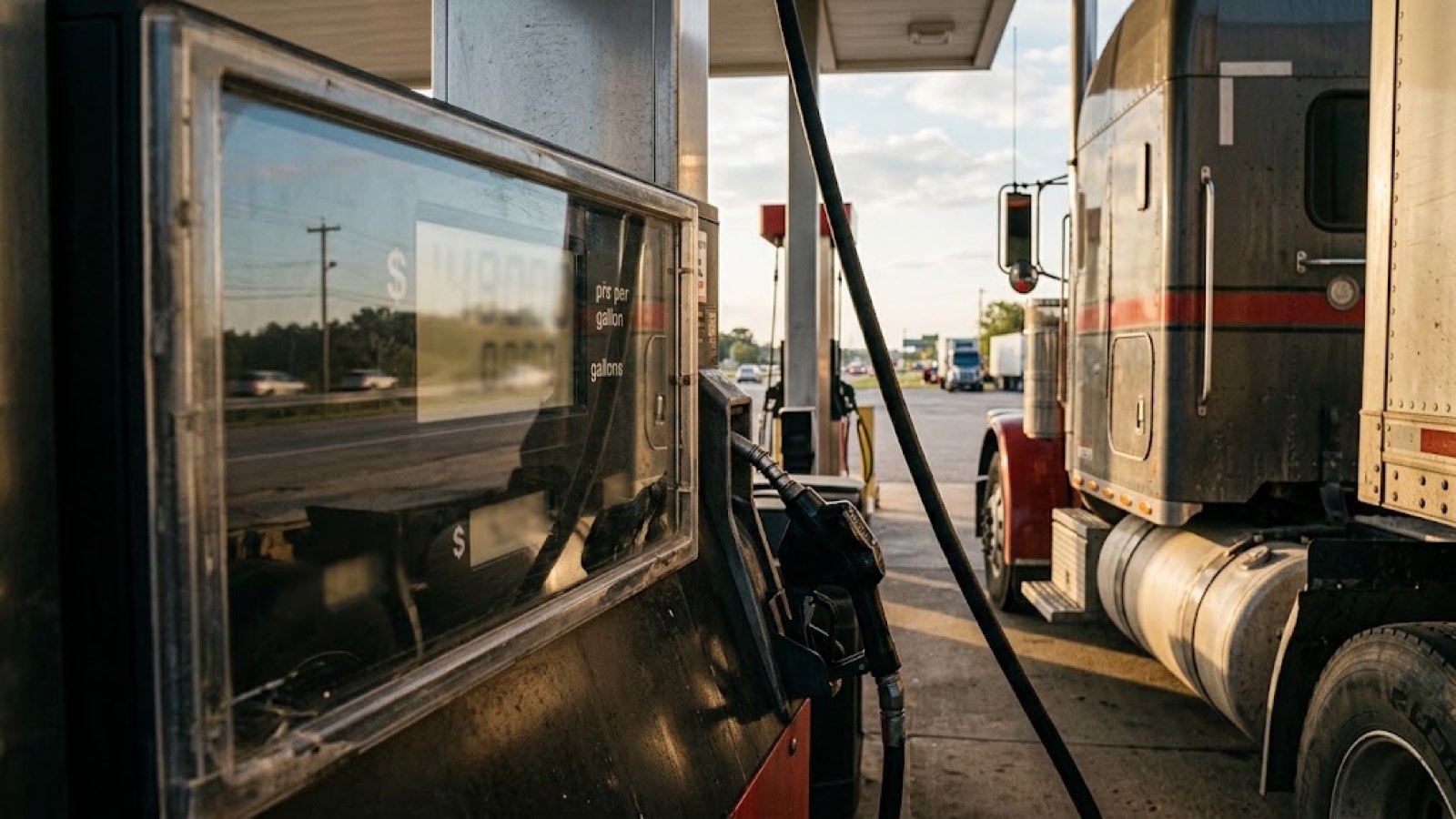
Diesel Hit $6.45. The Refineries Built to Keep It Cheap Sit in Two War Zones, and Washington Eyes the Export Valve
Gulf states and Russia spent tens of billions building export refineries. War has cut off both at once, and the U.S. became the supplier of last resort — with the midterms weeks away and a bill to shut the export valve on the table.
By Sean Anees Saifi · Capital Wealth · Published Monday, September 21, 2026 · Source: The Wall Street Journal, Monday, September 21, 2026 edition, whose market figures are the Friday, September 18 close
Key Points
U.S. diesel passed $6 a gallon for the first time this month and hit $6.45 on Friday, Sept. 18; shortages have appeared at gas stations in rural Brazil, Libya and some African nations, the Journal reports.
Rep. Tim Burchett (R., Tenn.) introduced a bill this past week to ban U.S. diesel exports, and Senate Majority Leader John Thune (R., S.D.) said he’s open to it; a ban would likely send prices elsewhere soaring and could push China, which has limited refinery exports, and India, which has taxed diesel and gasoline exports, to follow.
IEA data show diesel trapped in the Persian Gulf is about three times the shortfall from Russia versus pre-war levels, even as President Trump blames Ukraine’s refinery strikes for most of the disruption. Kuwait, the UAE and Iraq have slashed diesel exports; Houthi attacks have limited Saudi exports from its Red Sea refineries.
The gap between crude and diesel prices hit a record in many markets; the IEA’s David Martin calls it possibly the tightest diesel market ever. China, the one country outside the region with significant spare refining capacity, is holding back.
Ukraine launched more than 1,000 drones at Russia overnight into Sunday, hundreds at Moscow — the mayor called it the largest drone attack ever on the capital; a Moscow oil refinery and a residential building were hit, and the regional governor said two people were killed and 20 wounded.
$6.45
U.S. diesel per gallon Friday; it first topped $6 this month
3x
Gulf diesel shortfall vs. Russia’s, per IEA data
1,000+
drones Ukraine sent at Russia overnight into Sunday
$100.30
U.S. crude Friday; the crude-to-diesel gap hit a record
Diesel is the fuel that moves food and freight. At $6.45 a gallon, it’s a tax on everything with a truck in its supply chain.
In one line: Two wars have cut off the diesel that Persian Gulf states and Russia built export refineries to sell, so diesel, more than crude, is where the inflation is hiding, and a U.S. export ban would likely move it, not remove it.
Nobody fills up on crude. You fill up on what a refinery makes from it, and the fuel that moves food, freight and farm equipment — diesel — passed $6 a gallon in the U.S. for the first time this month and hit $6.45 on Friday. The Journal traces the squeeze to a bet that looked smart for a decade: Persian Gulf states and Russia spent tens of billions on export refineries to grab a bigger share of the world’s diesel market. Then war arrived in both places at once.
Before the Iran war, Middle East refiners shipped to Asia and Europe, U.S. diesel went to Europe, European gasoline came to the U.S., and Russian diesel went to Turkey, India and China. Now Kuwait, the UAE and Iraq have slashed diesel exports, Houthi attacks have limited Saudi shipments from its Red Sea refineries, and Ukrainian drone strikes have nearly halted Russia’s. President Trump blames Ukraine’s strikes for most of it, but IEA data show the diesel trapped in the Persian Gulf is about three times the shortfall from Russia.
Those strikes haven’t let up: Ukraine sent more than 1,000 drones at Russia overnight into Sunday, hundreds at Moscow; a Moscow oil refinery and a residential building were hit, the city’s mayor called it the largest drone attack ever on the capital, and the regional governor said two people were killed and 20 wounded. The gap between crude and diesel prices hit a record in many markets, and the IEA’s David Martin describes “a tighter diesel market than we’ve probably seen in any previous period.”
The supplier of last resort has an election coming
That leaves the U.S. as the producer of last resort, and a bill to shut the valve. Rep. Tim Burchett (R., Tenn.) introduced a bill last week to ban U.S. diesel exports; Senate Majority Leader John Thune (R., S.D.) said he’s open to the idea. A ban doesn’t make diesel; it would likely send world prices soaring and could push China and India — both already restricting fuel exports — to follow. China is the one country outside the Middle East and Russia with real spare refining capacity, and it’s keeping it on the bench — energy security and a wish not to bid up crude, Wood Mackenzie’s Alan Gelder suggests. Spare capacity exists; it just isn’t for sale.
Our read
Cash Flow (M5): diesel has a truck in every supply chain, so $6.45 diesel is a slow-moving tax on groceries, deliveries and anything shipped, and it tends to reach a household budget months after the truck stop. Crude fell a fourth straight day on Monday, according to market reports; that may change less than you’d think, because diesel trades in a separate, far tighter market. A retiree’s spending plan should assume sticky goods inflation this fall whatever the crude quote does. An export ban wouldn’t be a cure; it’d be a political choice with global price consequences.
The habits that work are dull, and that’s the point. Inflation-protected bonds — TIPS, I bonds — do the worrying for you. A cash buffer sized in months means a $6 fuel bill never forces a sale at a bad price. The day’s oil headline gets no reaction, up or down. If your grocery line still reads like 2024, that’s the fifteen minutes; bring the statement.
What It Means For Your Portfolio
Hold — plan for sticky goods inflation; don’t trade the headline
Diesel is the fuel that moves food and freight, and at $6.45 a gallon it’s a slow-moving tax on everything with a truck in its supply chain. A U.S. export ban would likely move that price around the world; it wouldn’t make it go away.
General planning principles, not advice for anyone in particular. Goods prices tend to follow diesel with a lag, so a household budget should carry a higher line for groceries, fuel and deliveries this fall regardless of what the crude quote does. Inflation-protected bonds such as TIPS and I bonds are built for exactly this, and a cash buffer sized in months keeps a fuel bill from forcing a sale at the wrong time.
The behavioral rule is to treat an export-ban headline as politics, not as a plan. Whether Washington closes the valve or not, the world’s spare refining capacity is either in a war zone or held back on purpose, and a plan that assumes cheap diesel soon is a hope with a date on it.