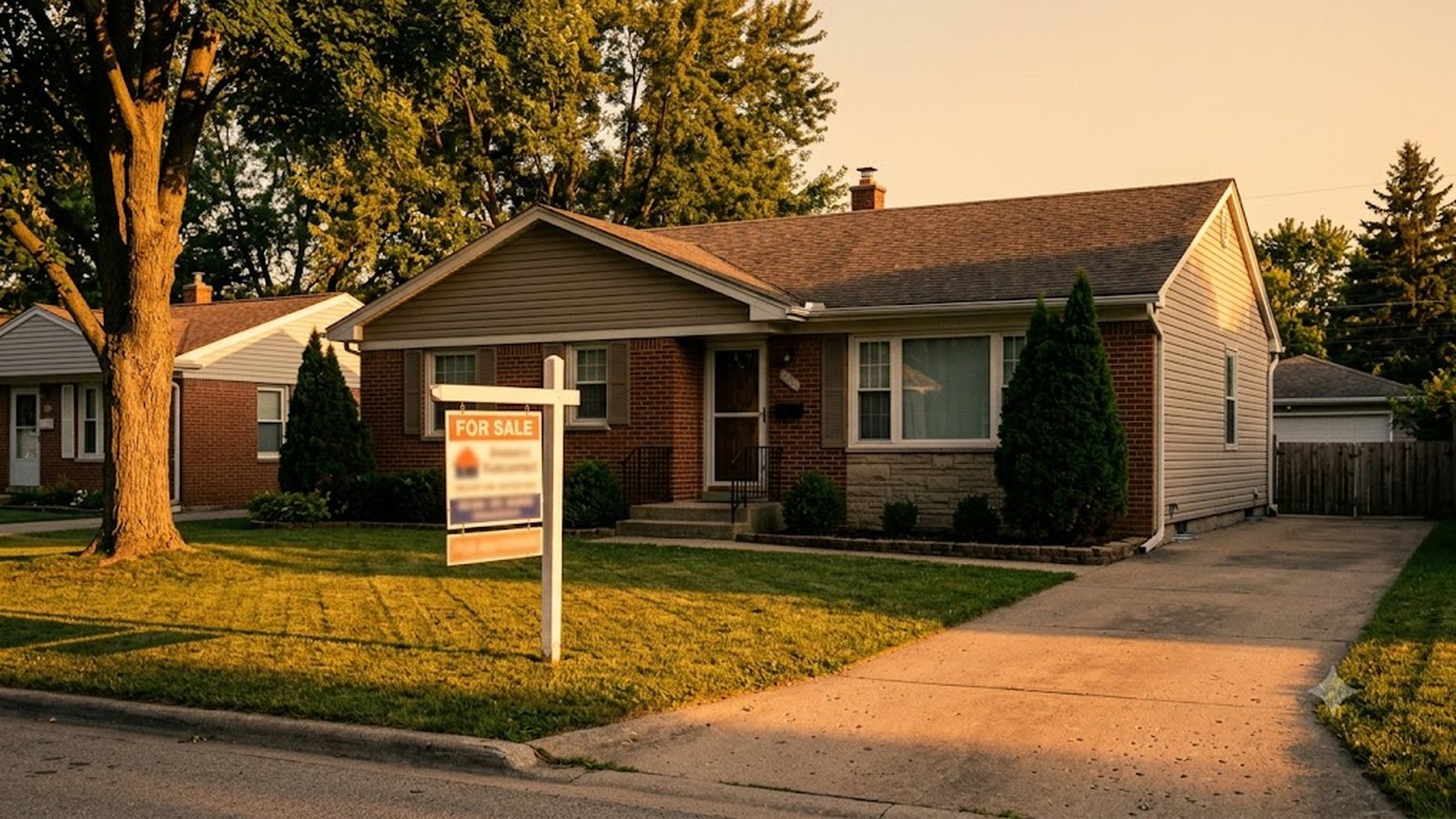
Vanessa Leimback has a diagnosis for her sellers. The Redfin agent in Lake Stevens, Wash. — Redfin belongs to Rocket Companies (RKT) now — told the Journal the biggest mistake sellers make today is thinking their home is better than the market. Five years ago, with buyers lining up for too few houses, it didn’t cost anything. Now the average 30-year fixed mortgage sits at 6.95%, Freddie Mac said Thursday, on the cusp of topping 7% for a fifth straight year; existing-home sales last month were the weakest in more than a year, and that was before the Fed raised rates Wednesday. Buyers walk from anything overpriced or tired, and the best house on the block doesn’t get a pass.
The paper asked agents what they tell sellers now that they didn’t five years ago; the answers all point away from waiting. Bill Kowalczuk of Christie’s International Real Estate New York tells sellers not to reflexively reject an offer that carries a concession — and here’s why. Representing a buyer on a Jersey City, N.J., home listed at $379,000, he steered the client from a $370,000 offer to $385,000 with 20% down, plus a $12,320 seller contribution to buy down a rate of about 7%. If it appraises at the higher price, the seller nets about $2,680 more before commissions and costs, and the buyer’s payment drops roughly $123 a month. Same house, two happier people.
Fix it, cut it, or keep it and rent it
Chris Wands of Douglas Elliman (DOUG) in Miami says South Florida buyers are already stretched by insurance, taxes, flood exposure, HOA dues and looming assessments, so an inspection surprise breaks the budget; he watched a $40,000 repair estimate kill a deal when the seller wouldn’t grant a $15,000 credit. In Cleveland, Allie Carr of Berkshire Hathaway (BRK.B) HomeServices wants baseboards, cabinet dings and mulch handled before the first showing — and still suggests a modest price cut, since buyers who could stretch to $600,000 early this year now shop closer to $500,000. Ben Dixon of Douglas Elliman, in New York and the Hamptons, goes further: if you locked in a 2% or 3% mortgage, maybe don’t sell at all. High rents can cover the carrying costs while you keep debt from a different era.
Our read
For anyone planning to downsize in retirement, the Jersey City arithmetic is the lesson. Cash Flow (M5): buyers don’t shop on price, they shop on the monthly payment, and a seller-paid rate buydown usually moves that number further per dollar than a price cut — that’s how a concession can leave both sides better off. Run both versions before answering an offer: the straight cut and the higher price with a credit. The one that stings less on paper is often the one that nets less.
Dixon’s option deserves a hard look, not a romantic one. Renting out a home with a 2%–3% mortgage can make it an income stream, but it also makes you a landlord — vacancies, repairs, taxable rent, depreciation to recapture when you do sell — and the capital-gains exclusion on a primary residence runs on a clock after you move out: you generally need two years of living there out of the five before the sale. A sold house is a clean number; a rented one is a second job with a spreadsheet. Both can be right. Bring the mortgage statement and the rent comps; the arithmetic takes fifteen minutes.