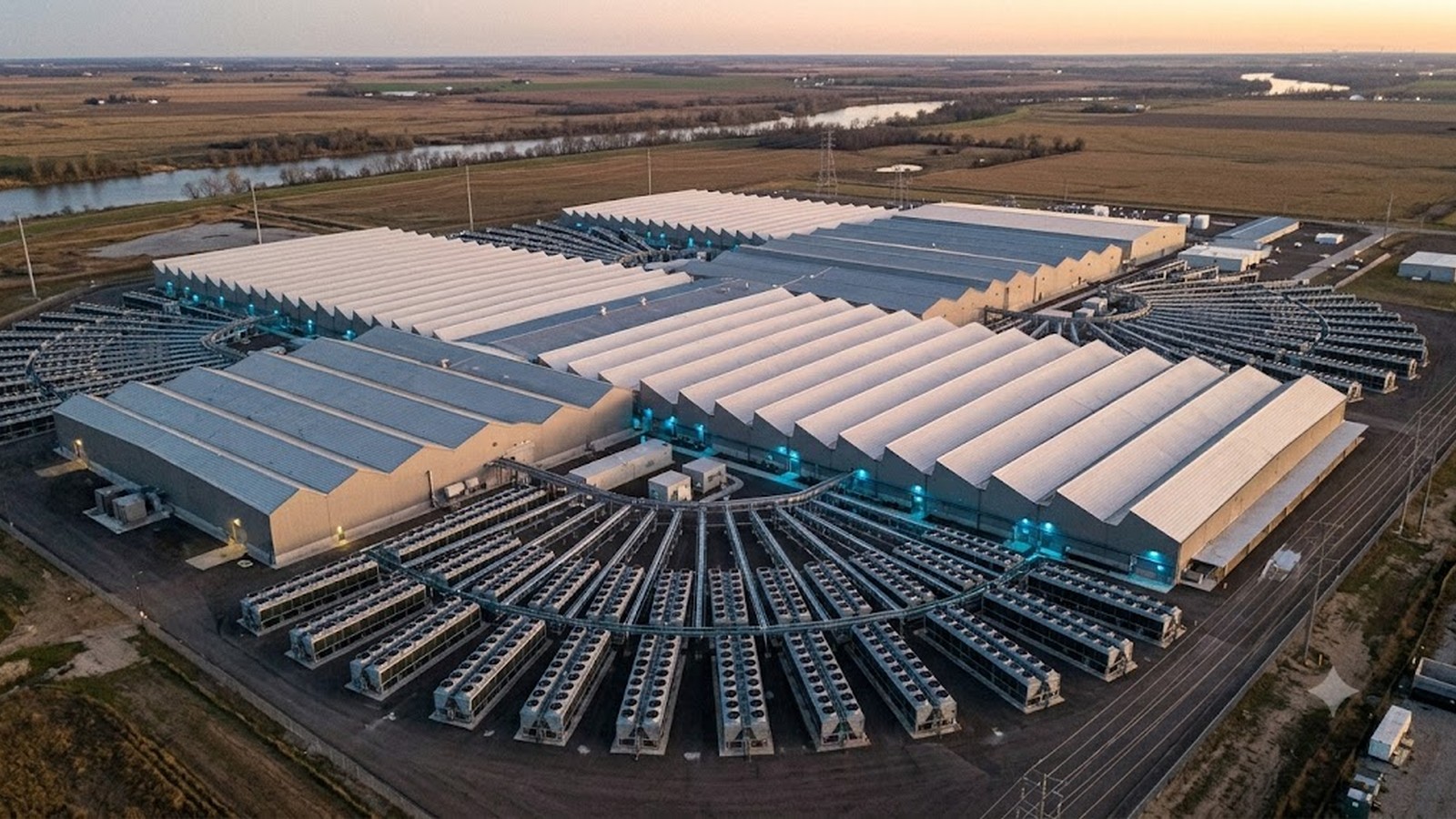
$10.3 Trillion: The AI Build-Out Is on Track to Be the Biggest Economic Bet in American History
Data-center investment is projected at $10.3 trillion from 2025 to 2032 — 3.6% of GDP a year, more than the railroads or the highways ever took. It’s creating jobs and billionaires, much of it rests on debt, and the Journal warns an abrupt slowdown could send shock waves through the economy.
By Sean Anees Saifi · Capital Wealth · Published Friday, September 25, 2026 · Source: The Wall Street Journal, Thursday, September 24, 2026 edition, whose market figures are the Wednesday, September 23 close
Key Points
Economist Stijn van Nieuwerburgh’s new estimates, published by the Brookings Institution, put investment in data centers and related infrastructure at $10.3 trillion from 2025 to 2032 — about 3.6% of GDP a year, a share no single industry’s build-out has ever claimed.
Goldman Sachs (GS) projects AI investment at 1.9% of GDP in 2026 alone — a share, the Journal notes, that no new industry’s build-out has topped since the railway boom of the late 19th century.
The spending is adding hundreds of thousands of jobs and new billionaires, but much of it is financed with debt, the paper notes — and an abrupt slowdown could send shock waves through the U.S. economy.
The same week’s papers carry the other side of the ledger: those AI bonds now compete with Treasurys for investors’ cash, one of the forces that pushed the 10-year to its highest close since 2007.
Projection humility, in the Journal’s own words: total spending “may well end up substantially lower.”
$10.3T
projected data-center investment, 2025–2032
3.6%
of GDP per year, on average
1.9%
of GDP from AI investment in 2026 alone (Goldman)
1800s
the railway boom — the last comparable single-industry bet
Brookings-published estimates put the build-out at 3.6% of GDP a year through 2032 — a bigger share than the railroads, the highways or the internet’s plumbing ever took.
In one line: The AI build-out is no longer a tech story; at a projected 3.6% of GDP a year it is the U.S. economy’s load-bearing wall, and it is mortgaged.
Every era gets one bet it can’t take back. The 19th century laid rail it couldn’t rip up; the 1950s poured an interstate; the 1990s buried fiber. Thursday’s Journal put a number on ours, from new estimates published by Brookings: $10.3 trillion for data centers and everything that feeds them, between 2025 and 2032. That’s 3.6% of GDP, every year, on average — a bigger share of the economy than the railroads, the highways or the internet’s plumbing ever claimed.
The bet is already paying people. Hundreds of thousands of jobs, new billionaires, and — as we covered Monday — a roughly 42% pay premium, per Indeed, for the hourly crews who install and maintain the halls. But the paper is blunt about the structure underneath: much of this is debt-financed, the projections “may well end up substantially lower,” and an abrupt slowdown could send shock waves through the whole economy. The bond market already noticed — Friday’s paper counts the flood of AI-company bonds among the pressures on Treasurys, whose yields just hit highs not seen in nearly 20 years.
Our read
When one theme is 3.6% of GDP, the honest question isn’t whether you own it — it’s how much of your plan quietly depends on it. Own an S&P 500 index fund? The build-out’s spenders and suppliers are among your largest holdings. Own your own employer’s stock in a tech-adjacent industry, plus the index, plus a growth fund? You may be three deep in the same bet wearing different name tags. Investments and risk (IN04) calls that concentration, whatever the labels say.
We own the build-out deliberately and at weight — the spenders and the makers — and we didn’t add this week, with the market within 1% of its record and two of the letter’s three conditions still failing. The railroads were real, and so were their crashes; the people who did best owned them at a size that survived the busts. Fifteen minutes with your statements will tell you your real AI weight. Many people are surprised by the number.
What It Means For Your Portfolio
Hold — owned at weight through spenders and makers; no adds
The build-out stays owned and sized: Microsoft (MSFT), Meta (META), Alphabet (GOOGL), Nvidia (NVDA), Micron (MU) and Taiwan Semiconductor (TSM) at their existing weights, with nothing added into what’s on track to be the biggest economic bet in U.S. history.
General planning principles, not advice for anyone in particular. A theme this large deserves a written maximum — a percentage of the whole plan above which you trim regardless of headlines — because debt-financed booms don’t announce their last inning. The Journal’s own caveat, that spending may come in substantially lower, is the sentence to keep taped to the monitor.
The second-order exposure matters too: power and utilities, construction and regional labor markets, the banks and private lenders financing data centers off balance sheet, and now the bond market all carry build-out risk. Knowing your total is the review; capping it is the plan.