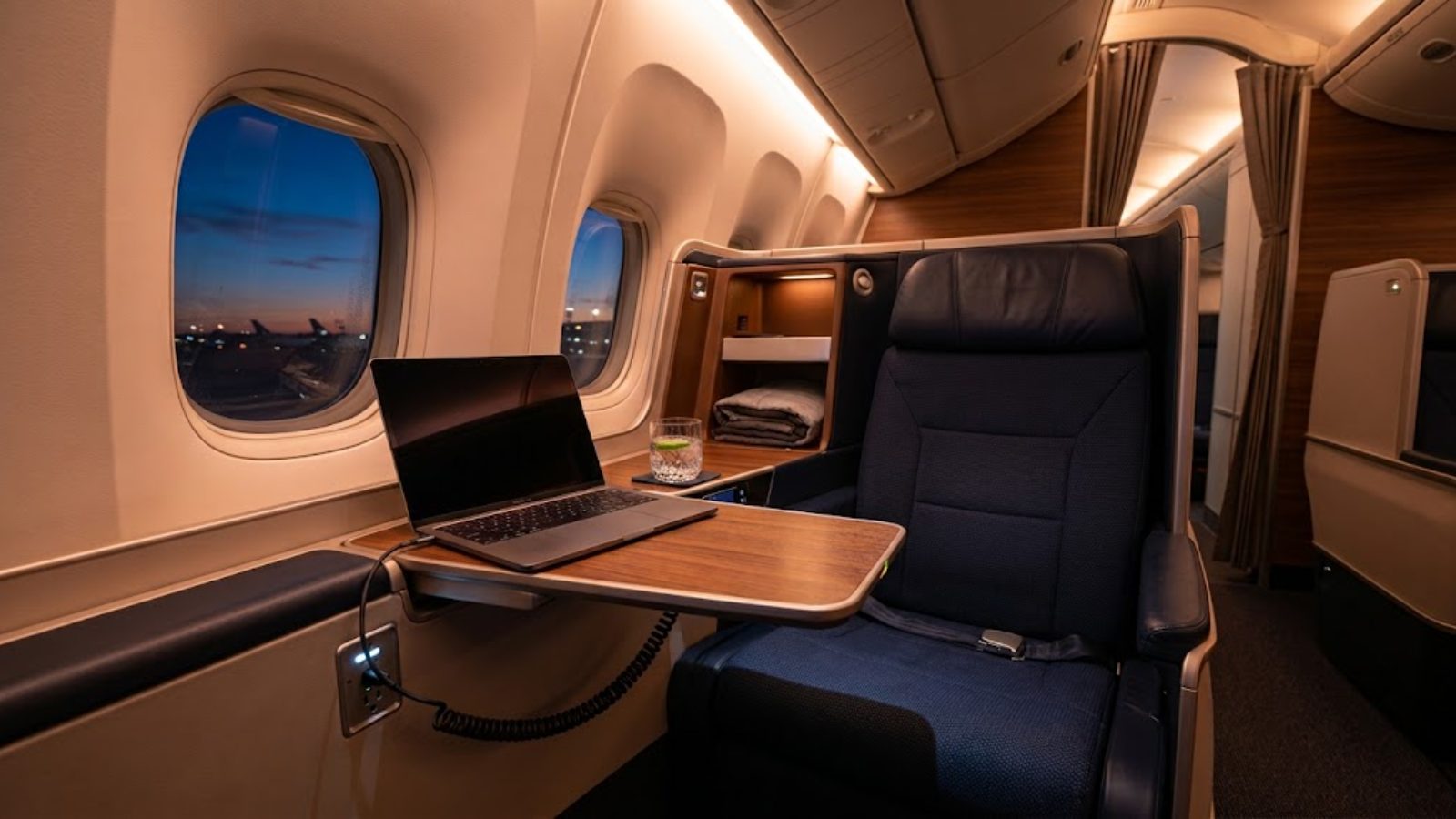
Halfway from Los Angeles to Chicago, the Journal’s travel columnist watched her laptop die. The power outlet at her first-class seat on American Airlines (AAL) didn’t work — the kind of indignity you’d expect in the back of the plane, not up front, and not in a seat that was bought instead of handed out for elite status. She complained. American sent 15,000 frequent-flier miles. Hold that thought.
Dawn Gilbertson’s test, in Thursday’s Personal Journal, arrives as airlines pile into the front cabin. JetBlue, Frontier and Allegiant are adding premium seats to lure big spenders, and American’s chief executive, Robert Isom, says half the airline’s revenue comes from the 30% of its seats that are premium. So Gilbertson paid her own way up front on American, then on United Airlines (UAL) from Chicago to Newark. The sure things: free bags, priority check-in, early boarding, a pre-departure drink with no wait for the cart and a seat roomy enough that her backpack never saw the overhead bin.
The longer the flight, the better the splurge
The shakier part is the math on short hops. Gilbertson paid $300 to upgrade on United — a bargain next to buying the seat outright — and still didn’t think it was worth it for a 90-minute flight: no meal service, just a snack basket, and the wheels come down just as the good life gets going. The longer American leg came with a hot meal of short ribs and mac and cheese. Her booking tip: skip the last couple of premium rows, the ones most at risk if the airline swaps in a smaller plane with fewer big seats. It isn’t foolproof, she concedes, since loyalty status also decides who gets bumped.
First class has its limits, though. On the United leg, Gilbertson left her wallet somewhere around her seat, and she figured a ticket up front, with priority everything, would speed its return. All she got was a form letter — until an agent called three days later to say it had turned up in a Newark gate area, of all places, and landed in American’s baggage office. Fetching it meant four hours on public transit and $41 in fares on her day off — a trip she couldn’t expense.
Our read
Gilbertson’s rule is really a cash-flow rule (M5): price comfort by the hour, not by the ticket. By our math, $300 for 90 minutes works out to $200 an hour of legroom, and at a fixed price the hourly rate only climbs as the flight gets shorter. Luxury isn’t the problem in a plan — reflexive luxury is. Decide ahead of time which trips earn the front cabin (the long haul, the red-eye, the anniversary), give that spending its own line in the budget, and it’s a pleasure you planned rather than an upsell you clicked.
As for those 15,000 miles: when a premium product fails, say so, promptly and specifically. A premium fare buys premium expectations, and you’re within your rights to hold the airline to them. Just don’t let the miles become the reason you fly up front next time. Points are a rebate on spending, not a reason for it.