Picture the pump total at a Love’s truck stop north of Missoula, Mont., where the Journal’s photographer found drivers filling up. A driver covering 500 miles a day, six days a week, has paid about $15,000 more for diesel since the Iran war began, by DAT Freight & Analytics’ arithmetic — and every pallet behind him carries that bill to a shelf near you. Trucking costs are at their highest since the pandemic, the paper’s Exchange cover reports; diesel is up 77% in a year and hit a record $6.53 a gallon on Sept. 22, per AAA.
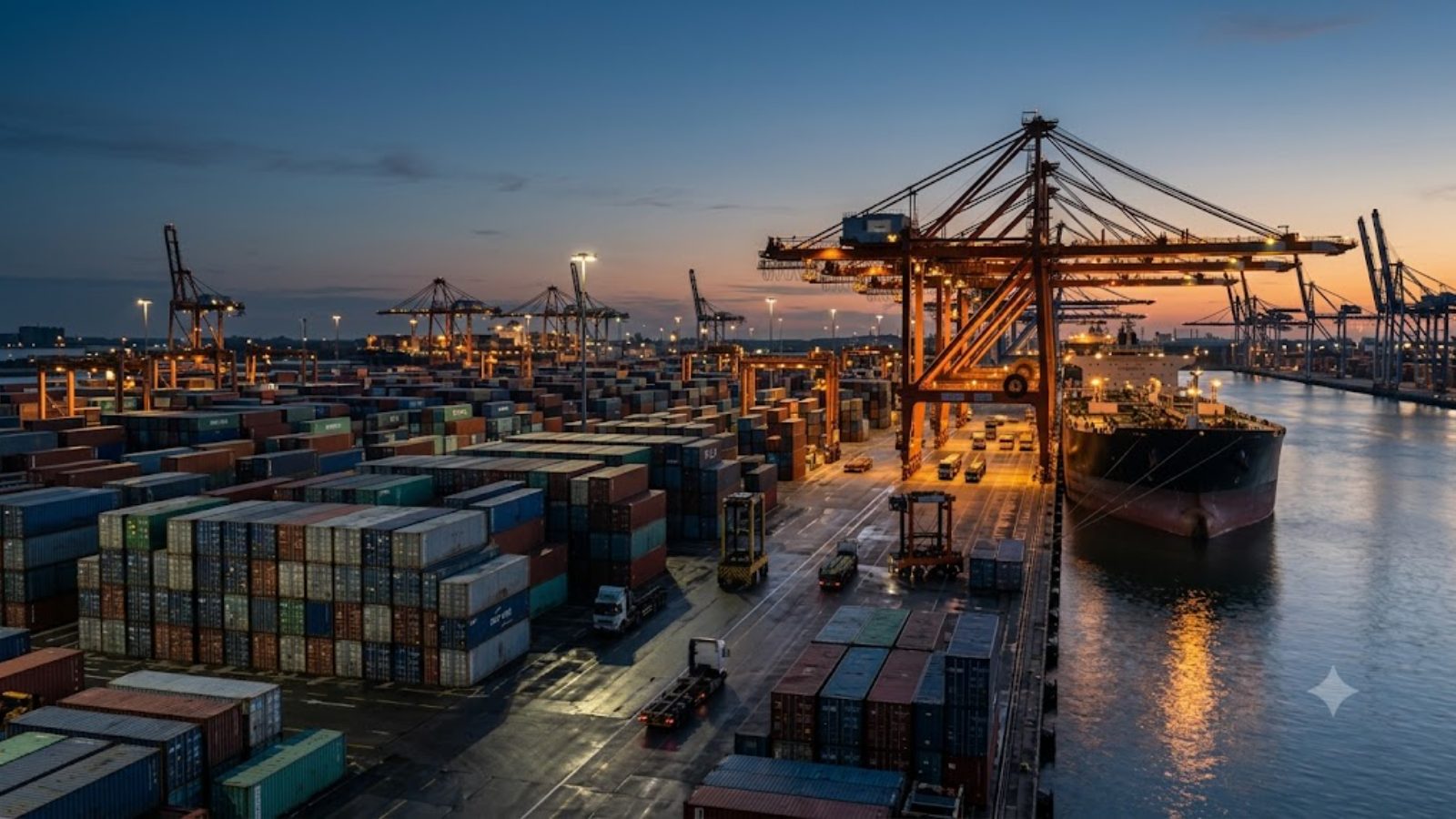
It isn’t one thing; it’s everything at once. Shippers paid $3.11 a mile for contract trucking in August, per DAT, 29% more than a year earlier and the most since August 2022, fuel surcharges included. The USDA puts the mid-September rail fuel surcharge on a railcar of grain at 48 cents a mile, up from 19 cents a year earlier. The Freightos Baltic Index had a Shanghai-to-Los Angeles box at $8,102 for the week of Sept. 18, its highest since mid-2022, and the Port of Los Angeles moved a record 2.9 million containers from June through August as importers beat a late-July tariff expiration. UPS (UPS) and FedEx (FDX) raised fuel surcharges, AFS Logistics has third-quarter ground-parcel costs up 5.2% from a year earlier, and even the Postal Service added one for the first time.
Fewer drivers, longer routes
Two forces sit under the price. One is a driver shortage the paper ties to tightened enforcement of commercial-license rules; the Transportation Department says it has pulled more than 28,000 drivers since early 2025 over failed English-proficiency tests. J.B. Hunt (JBHT) is hiring hard; CFO Brad Delco told a Morgan Stanley conference he expects hiring costs about $25 million higher this quarter than last, plus at least a $10 million fuel headwind. The other force is geography. With the Strait of Hormuz effectively closed, trade at Dubai’s Jebel Ali has fallen 90%, and DP World’s new chief, Yuvraj Narayan, told the Journal that rerouting through India, East Africa and the Red Sea can double a supply chain’s cost, a bill the world pays, not DP World. Clorox (CLX), Constellation Brands (STZ) and Primo Brands (Poland Spring) have told investors trucking is crimping margins, and Joseph Firrincieli of OEC Group New York doesn’t see it ending soon. “Chaos increases prices,” he said.
Our read
This is inflation you can’t read on the label — it typically hits the refrigerated aisle first, because milk can’t wait for a cheaper truck, and everything else later. It also adds pressure to an inflation test that’s already failing: August core CPI rose 0.27%, against the 0.1% the September letter demanded. Energy stays as the hedge, and this weekend the desk added Valero Energy (VLO) at 1.5% in ten model books — a refiner sits on the profitable side of a diesel squeeze. Its trim signal is diesel-export policy, not the price, and that call gets made in writing if a plan is published, never on a headline. The Journal reports a temporary export ban was weighed this past week before Energy Secretary Chris Wright played it down as voluntary. Nothing has been published or ordered.
For households it’s a cash-flow (M5) problem first: give the grocery and shipping lines slack this fall rather than pretending last year’s budget still holds. Owners face the choice the Journal lays out — absorb or pass through — and can’t make it without today’s freight cost per unit. The prediction markets were pricing Hormuz traffic back to normal by Sept. 30 at about 0.2% as of 9:48 p.m. PT Sunday; Narayan says a full return might take three months after any reopening. Plan on the longer route.