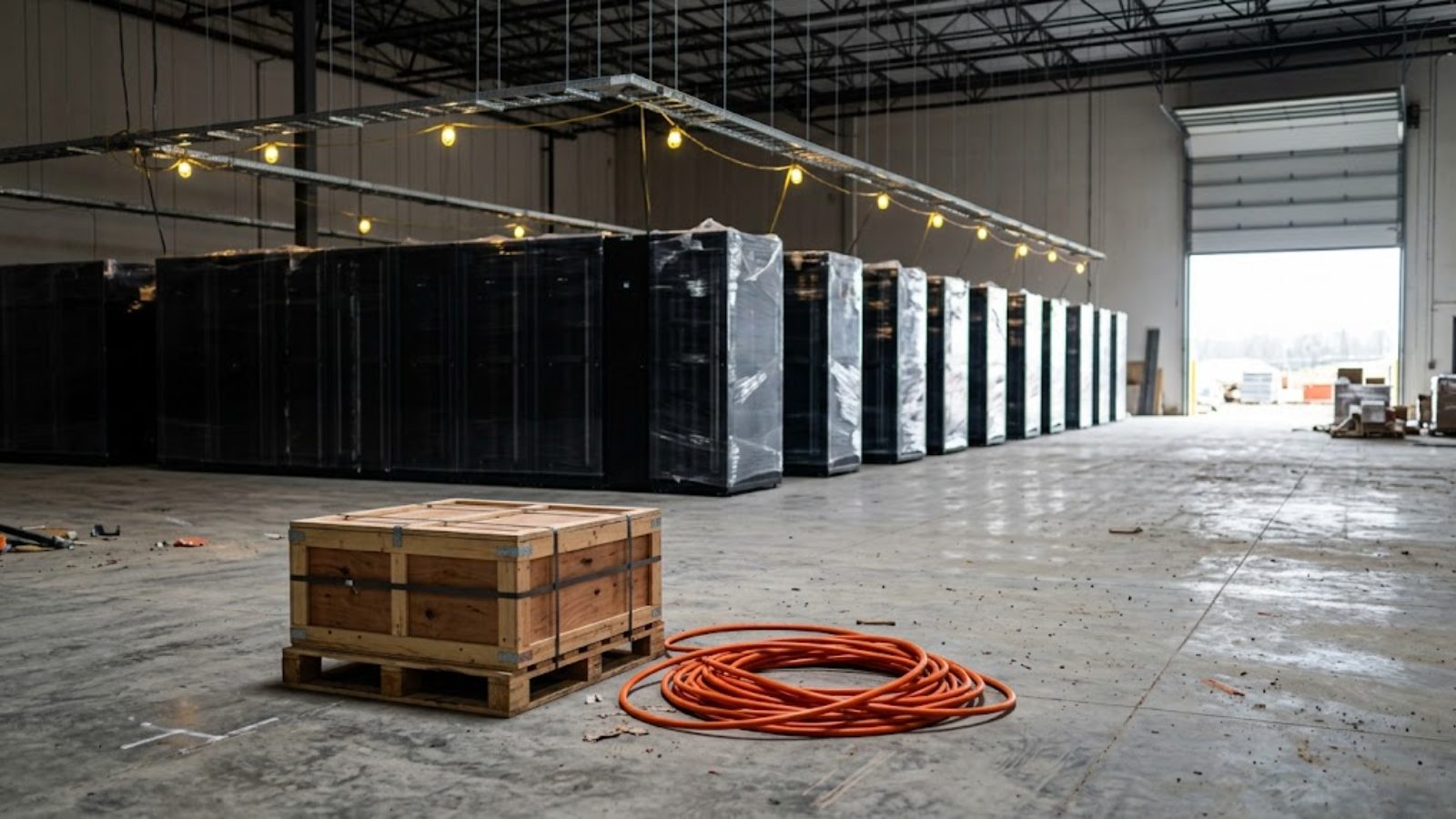
Oracle’s New Mexico Data Center Doesn’t Have Its Power Yet, but the Rent Is Owed and a Lender Sold Below 90 Cents
About 20 banks lent $18 billion to build it and Blue Owl funds put in $3 billion; OpenAI’s $300 billion cloud order is the reason it exists. AI capex has become a credit story, and the credit is one notch above junk.
By Sean Anees Saifi · Capital Wealth · Published Sunday, September 27, 2026 · Source: The Wall Street Journal, September 26–27, 2026 weekend edition, whose market figures are the Friday, September 25 close
Key Points
Oracle (ORCL) agreed last year to lease a massive AI campus in Doña Ana County, N.M. — Project Jupiter — one of several deals it rushed into to supply computing power to OpenAI. The lease is hell-or-high-water: no way out, and the rent is due whether or not Oracle ever secures the power to run it.
The site still lacks the air permits it needs from the state after Oracle reworked plans that called for gas turbines and diesel generators, and a small stretch of a proposed 17-mile gas pipeline crossing state land has been rejected twice. Oracle also removed a key land-and-power partner, BorderPlex Digital Assets.
This past week Oracle sent a force majeure notice to developer Stack Infrastructure, owned by Blue Owl Capital (OWL) funds, pushing back when it pays full rent; the lease allows up to three years. Deferral extends the lease, so the total owed doesn’t fall. Oracle says such notices are routine and the project is on schedule; Blue Owl says commitments are unchanged.
About 20 banks provided $18 billion in construction loans and Blue Owl funds about $3 billion of equity. At least one bank sold part of the New Mexico debt below 90 cents on the dollar, which puts the original lenders’ paper loss at $1.8 billion or more — though most banks hold such loans to maturity at cost.
S&P Global Ratings cut Oracle to one notch above junk in July, citing the AI build-out; capital spending has exceeded operating cash flow for several quarters. ORCL closed Friday at $137.10, down 29.66% this year, per the Journal’s tables.
$18B
construction loans from about 20 banks, New Mexico site
<90¢
where at least one bank sold part of the debt, per dollar
1 notch
above junk, where S&P put Oracle in July
−29.66%
Oracle (ORCL) year to date, per the Journal’s tables
The lease can’t be terminated and the rent can’t be skipped; the only thing the desert doesn’t have yet is the power.
In one line: The AI build-out is being financed like real estate, with leases that can’t be broken and a construction loan one lender has already sold at a discount, and an issuer one notch above junk can sit inside investment-grade bond funds.
Out in Doña Ana County, New Mexico, there’s a data center that doesn’t have its power yet and already has rent coming due. Oracle (ORCL) signed up for the campus — Project Jupiter — last year, one of a string of leases it rushed into so it could deliver computing power to OpenAI, and the terms are what the trade calls hell-or-high-water: no exit clause, and the rent is owed with or without the power to run the place, the Journal reports. The permits haven’t come. This past week Oracle reached for the lever the lease does give it.
That lever is a force majeure notice to Stack Infrastructure, the developer, which Blue Owl Capital (OWL) funds own. It delays the day full rent starts — the lease permits as much as three years of that — without shrinking the bill, because every month deferred is added to the back end of the lease and the total owed doesn’t fall. Oracle says such notices are commonplace and the project is on schedule; Blue Owl says the parties are aligned and the commitments unchanged. The trouble underneath is prosaic: Oracle still lacks state air permits after reworking a power plan built on gas turbines and diesel generators, a piece of a proposed 17-mile gas pipeline has been rejected twice, and Oracle recently dropped a land-and-power partner, BorderPlex Digital Assets.
Follow the money, then the rating
About a year ago OpenAI agreed to buy $300 billion of Oracle cloud computing over five years, and Oracle leased mega-sites in four states, around 4.5 gigawatts, to deliver it. For New Mexico, about 20 banks put up $18 billion in construction loans and Blue Owl funds about $3 billion of equity; Stack earns Blue Owl the equivalent of 9% annualized, with reserves for up to three years of delay, after which the forecast return rises to 11%. At least one bank has sold part of the New Mexico debt below 90 cents on the dollar; at that price the original lenders are sitting on a paper loss of at least $1.8 billion — paper, because most banks carry construction loans at cost until they come due. And in July S&P Global Ratings cut Oracle to one notch above junk, saying its “rapidly expanding AI infrastructure business is increasing its overall credit risk.”
Our read
The AI build-out is being financed like commercial real estate — unbreakable leases, construction loans, sponsor equity, a promised tenant — and real estate is where credit stories live, which makes this Fixed Income (IN02) first. One notch above junk is still investment grade, so Oracle’s bonds can still sit in the bond funds people own for safety; a cut into junk could push them toward a different kind of buyer. Oracle is held at weight in the desk’s growth and AI books; nothing’s been added to it, and the credit story is the thing to watch. The stock closed Friday at $137.10, down 29.66% this year by the Journal’s tables: the market asking the lenders’ question.
The practical check is Investments/Risk (IN04) housekeeping: what your bond funds actually hold at the bottom of investment grade, and how much of your equity index sits in the handful of companies writing the biggest capex checks — often more than you’d guess. With the 10-year Treasury at 5.17%, its highest close since 2007, borrowed money to build isn’t cheap. Fifteen minutes with the holdings list is the whole exercise.
What It Means For Your Portfolio
Watch — ORCL held, nothing added; audit your bond funds
No action — Oracle is held at its existing weight in the growth and AI books and nothing has been added; the credit story is the thing to watch, and the practical move is to audit what your bond and index funds already hold of the companies writing the biggest AI capex checks.
General planning principles, not advice for anyone in particular. Investment grade is a range, not a promise, and S&P now puts Oracle on its bottom rung; a bond fund labeled high quality can hold paper rated there. Read the holdings by rating, and know what the fund’s rules say about a downgrade.
Business owners will recognize the hell-or-high-water lease: it’s the logic of a commercial-property lease applied to a technology bet. Before signing anything that can’t be terminated, price the delay scenario — three years of rent with no revenue — and make sure the reserves to cover it exist on your side of the table, not just the landlord’s.