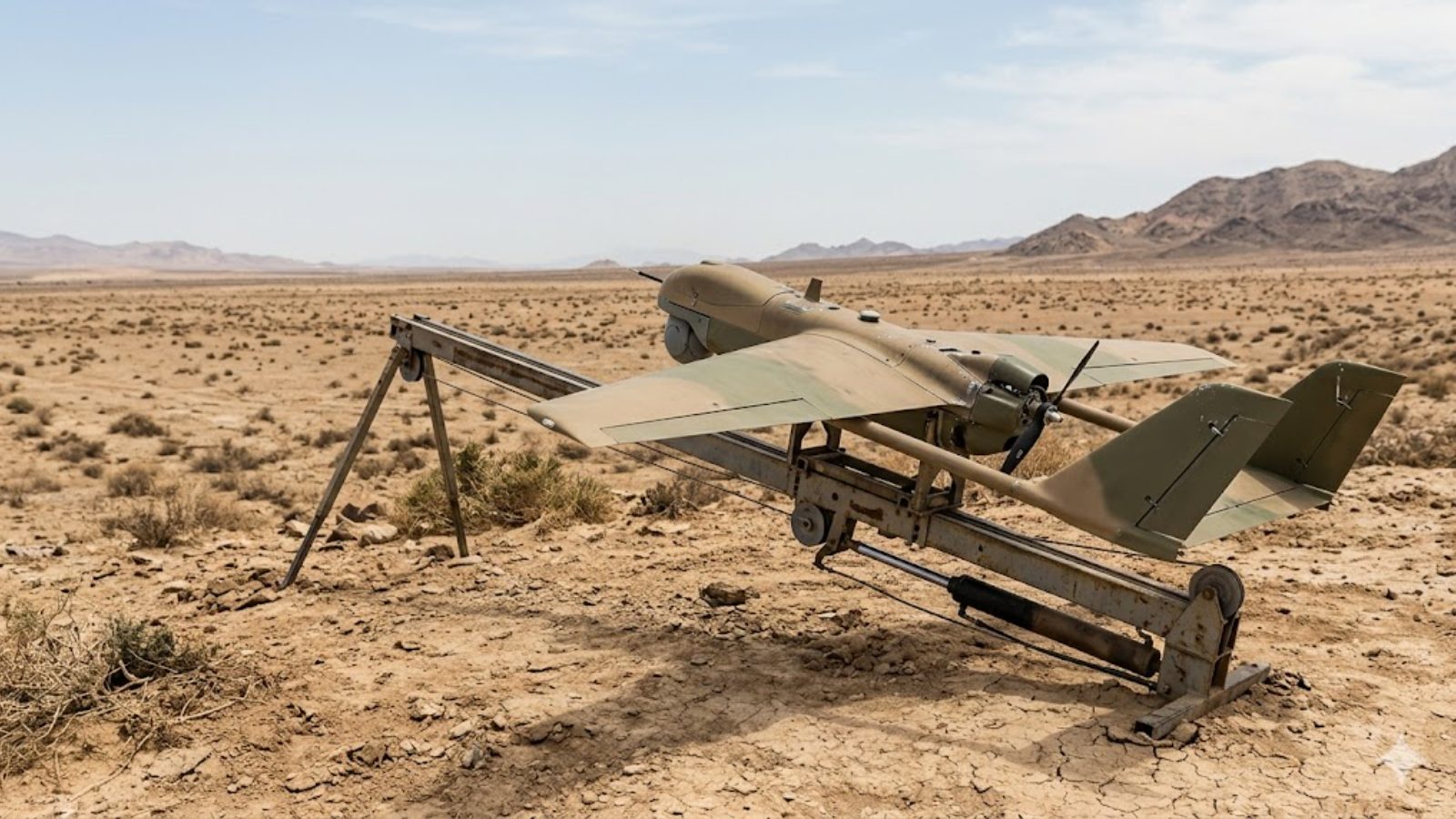
There’s a job ad on Avito, Russia’s answer to Craigslist, for a security guard who can scan the sky for drones and shoot them down. The pay starts at 240,000 rubles a month, nearly $3,000, with bonuses for signing on and for performance. The Journal’s Thomas Grove and Daria Matviichuk report that some companies are hiring gunners, and not entirely by choice: a Kremlin decree last month warned that a company that doesn’t see to its own drone defense could be taken over by the state, temporarily. When a Ukrainian drone hit steelmaker Severstal this year, owner Alexei Mordashov — Russia’s richest businessman — had an air-defense system installed at the company’s largest mill, on Moscow’s outskirts, according to people familiar with the matter. This isn’t a story about the war. It’s about what happens to a business when a risk it never priced becomes routine.
The scale is what makes it a business story. Rochan Consulting, a Poland-based defense specialist, counts some 200 Ukrainian drone strikes on Russian refineries since March, plus hits on at least 36 logistics centers — among them centers belonging to Ozon and Wildberries, the country’s biggest online retailers; Wildberries now wraps some of its warehouses in steel netting. Companies are leasing air-defense systems or building their own. A decree this month lets postal workers carry weapons against drones, and security guards — a fixture of Russian business since the 1990s — are expected to shoot at the sky as well. The Finance Ministry has floated tax breaks for defense spending and repairs, and Kaspersky now sells an AI-based antidrone package. Alexandra Prokopenko of the Carnegie Russia Eurasia Center says “the Kremlin is shifting more and more of the burden of protection” onto private business.
The gray zone
Then comes the part every owner should read twice. Moscow officially calls this a special military operation, not a declared war, and the Journal reports that the distinction opens the door to force majeure. That leaves a huge gray zone over what’s insurable or reimbursable; Prokopenko says some claims get paid and many don’t. New drone-insurance packages are finding buyers, and last week Russia’s central bank pledged $2 billion for the country’s chief reinsurer to help it cover rising drone claims. Ukraine has faced similar problems; there, the government helps businesses cover military risk of up to nearly $700,000 in the riskiest regions.
Our read
Strip out the geography and you’re left with an insurance (M11) principle that holds on Main Street as much as in Moscow: the exclusions page decides what gets paid, and the definitions decide the exclusions. In Russia, the government’s own vocabulary did the damage: it won’t call the fighting a war, and that opened the way for force majeure. Closer to home the same machinery runs on words like flood versus water damage, wear versus sudden loss, civil authority versus riot — and owners usually learn what those words mean on the worst day of the year, when the reading is expensive.
The practical habit: read the exclusions and definitions of your commercial property, business-interruption and liability policies before you need them, and ask who stands behind your carrier — Russia’s chief reinsurer was just promised a $2 billion lifeline. Families can run the same drill on a homeowners policy in an afternoon. Bring the full policy, not the brochure; fifteen minutes with the exclusions is worth an hour with the marketing.