 Capital Wealth Daily
The Mid-Week Review
Our read of the July 11, 13 and 14 Wall Street Journals (Monday, July 13 close). The weekend through now, every story with its tickers, and what the model books did about it.
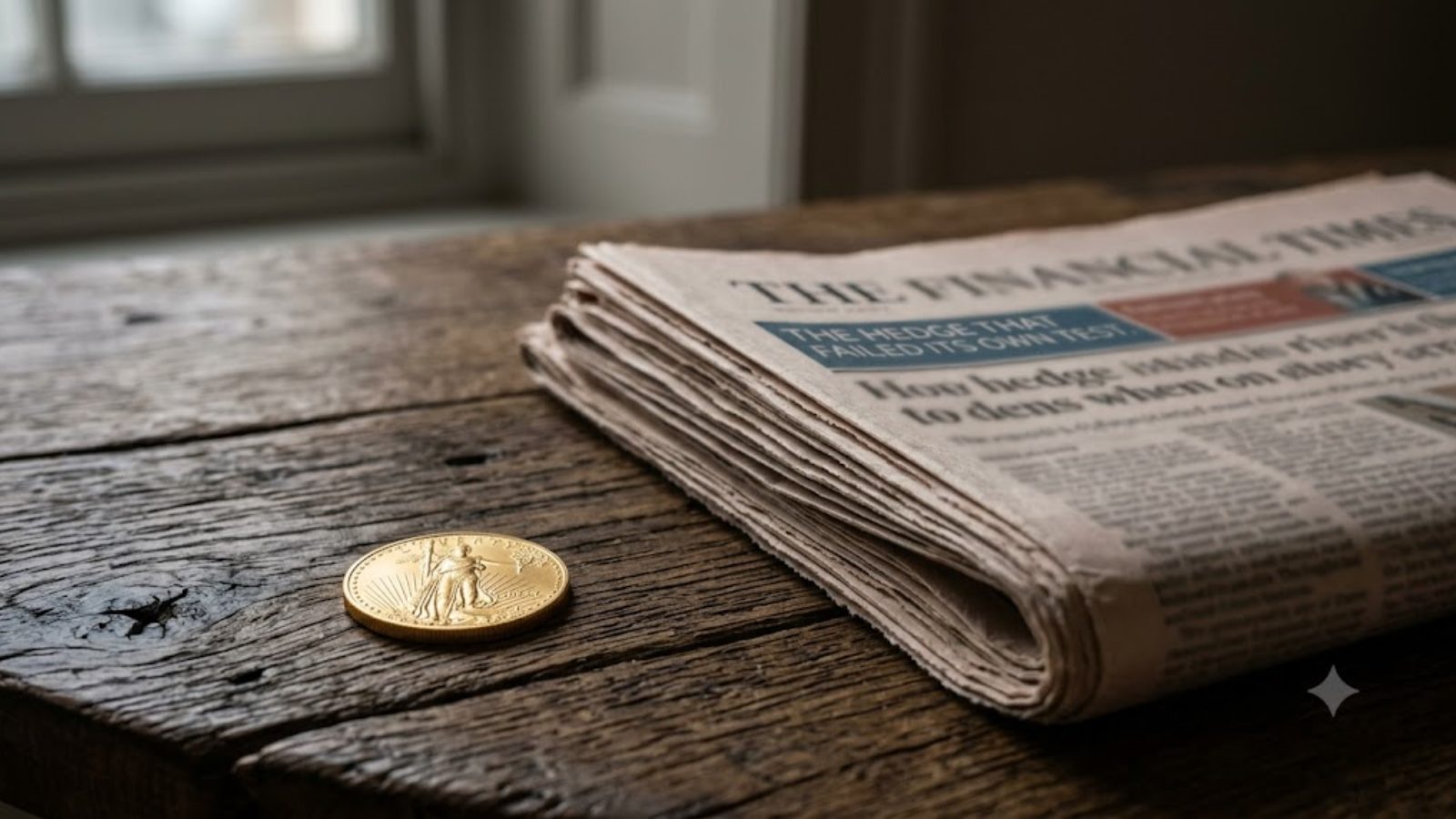
The hedge that didn’t work. Gold fell 2.6% on the exact news it is supposed to protect you from.
Fighting between the U.S. and Iran resumed over the weekend. That is the headline gold exists for. Yet on Monday gold fell 2.6% to $3,997 a troy ounce, about 25% below January’s record of $5,318. The reason isn’t the war. Higher energy prices keep inflation high. High inflation keeps the Fed from cutting. And gold pays no interest, so it loses to a two-year Treasury paying 4.261%. Standard Chartered’s Suki Cooper said the moment has “increased the opportunity cost of holding gold.” Two retired advisers in Tuesday’s paper own the metal, at 10% and about 3%. Neither traded Monday.
Our ReadGold stays held, and the chip moves to cool. We haven’t changed our mind about it. The evidence changed, and we said we’d follow it. A haven is a stated percentage you rebalance back to, not a conviction you ride. Nothing in the portfolios moves on a Monday. The tracker updates daily. The portfolios rebalance monthly or on a trigger. The honest planning note is mechanical, not directional. Gold pays no interest while bills pay 4%+, so a large position has a running cost worth naming out loud.
The Stories
5 stories · 3 pictured · 2 listed
The Fed debate moved from holding to hiking. If you were waiting for cheaper money, stop waiting.
Two review conversations, not two trades. Anyone holding a long-duration bond fund because cuts are coming is now betting against where the futures market is headed. Pull up duration on the statement and look. Anyone who put off a refinance or a downsize to wait for a better rate deserves to hear it plainly. The cutting cycle may already be over. Short bills keep paying while the argument runs.

Oil went up 9.42% in one day. That is a gas-pump number before it is a market number.
The energy sleeve is insurance, and it keeps earning the premium. No change, no chase. This week the chain from a war headline to a client’s grocery bill is sourced end to end. That is why this page exists. The counterweight is real and belongs in the same breath. Goldman Sachs analysts estimate new Gulf pipelines could shield more than 45% of prewar Persian Gulf exports by the end of 2027. A shock with an expiry date is still a shock.
Bonds cushion some shocks, not all. When the shock is inflation, the cushion isn’t there.
This is the page that explains why the portfolios hold more than two ingredients. Read the Future Fund’s answer, then note what makes it theirs and not ours. The column reports it is unusual among large funds because it is free to ignore benchmarks. It never suggests a retiree should copy it. For a household drawing income, the answer isn’t “more equities.” It’s enough cash and short bonds to fund withdrawals through a bad stretch without selling.
From the desk Bias, the book, what’s priced, the planopen
The question flipped. On Saturday the argument was how many cuts. A betting market put 78% odds on zero cuts for all of 2026, and 72 economists said oil would end December near $70. By Tuesday’s paper the market was pricing hikes, with 42% odds this month and 56% on two by year-end. The AI story did not do it. Fighting resumed. Trump reimposed the blockade on Iranian shipping. WTI jumped 9.42% in a session, and the hedge everyone owns for that exact headline fell 2.6%. Three papers, one lesson. A plan with a written allocation and a rebalancing date needed to change nothing.
- DJIA52,498.64 −0.26%
- S&P7,515.34 −0.79%
- NASDAQ25,873.18 −1.55%
- SOX −4.78% (+74.3% YTD)
- 10Y4.610%
- 2Y4.261%
- WTI$78.14 +9.42%
- Gold$3,997.00 −2.61%
- STOXX600 641.01
- VIX17.16 +14.17%
- Euro$1.1383
- Yen162.46
the week the question flipped from “how many cuts” to “how many hikes.” Own the sleeve, not the horse. Hold the haven at a stated percentage. And if you were waiting for cheaper money to make a decision, that wait is now a position.