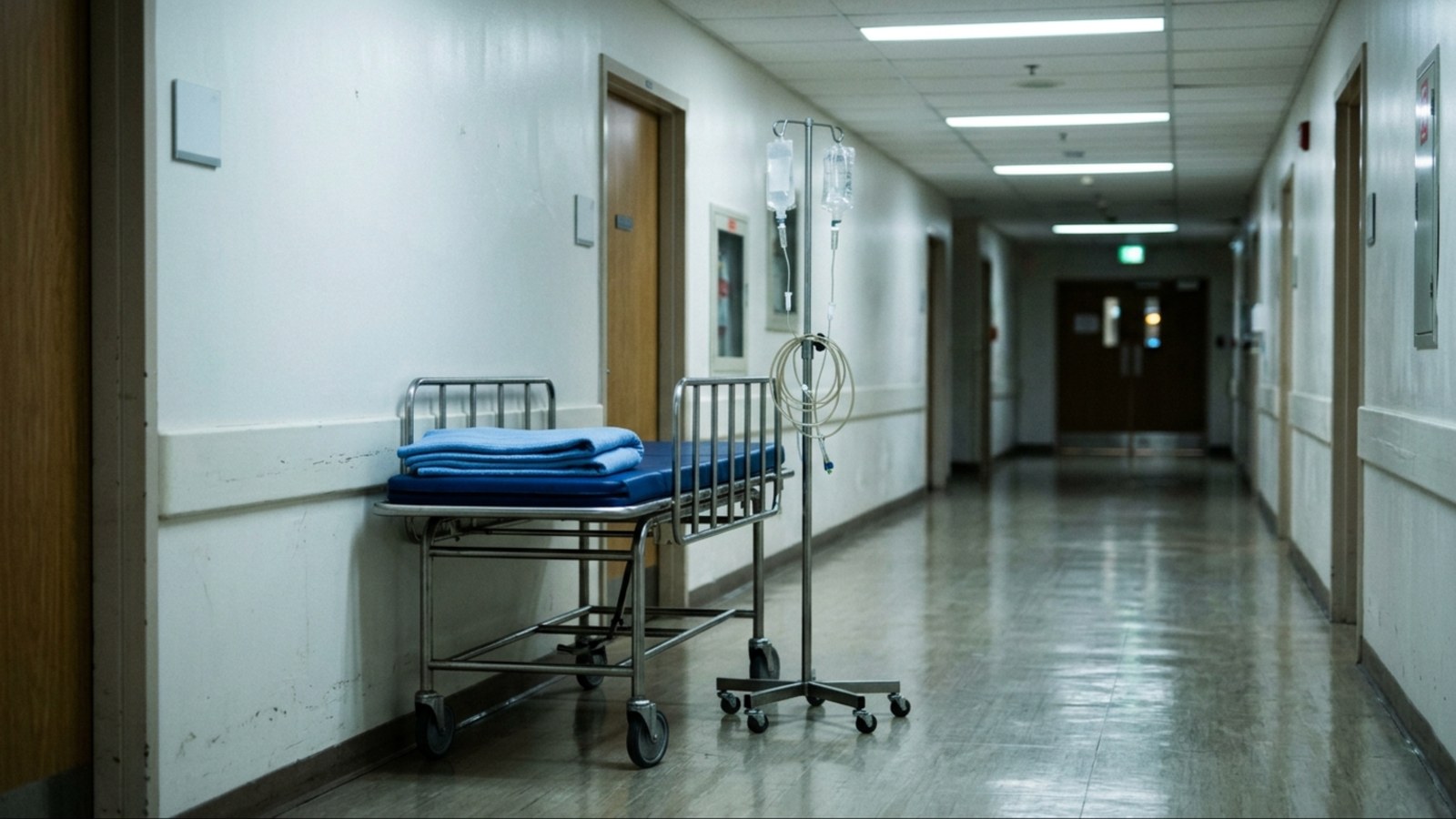
A mother in Massachusetts took her grown son to the emergency room one morning in August. He is severely autistic, and his stomach hurt. They waited six hours to be seen. Then the staff said he would be admitted. He got a room the next afternoon, more than 24 hours after he arrived.
He spent the whole night in the E.R. and changed rooms several times. For a while his bed was in a hallway. His mother didn't blame the staff. "It's the lack of rooms," she told Peter Loftus of the Wall Street Journal, in the paper of Tuesday, Nov. 10.
Hospitals call this boarding. You've been admitted, but no bed upstairs is open, so you stay where you are. In September 2024, one in four admitted patients waited at least four hours for a bed. In September 2017 it was one in eight. Those figures come from a paper in the journal Health Affairs. The share who waited at least 24 hours tripled. Newer numbers aren't better. From April through June of 2026, the median wait was five hours. That's up 25% from a year before, says the consulting firm Vizient.
Why the beds are full
Hospitals are short of staff. An older country means longer hospital stays. And patients who are ready to leave often wait for a spot in a rehab center. The wait carries risk. Studies link long stays in the E.R. to worse care. A patient who boards for many hours has a greater chance of missing a dose of medicine.
Some hospitals are fixing it. Geisinger runs 10 hospitals in Pennsylvania. It began scheduling scans and staff on weekends, so patients don't hold a bed until Monday. Its chief medical officer says boarding hours are down 40%.
Our read
This is Health Costs, with a side of Insurance (M11). Hospital services cost 0.8% more in October alone. That's the Labor Department's count, as the Journal's editorial page listed it on Wednesday, Nov. 11. So the care costs more and the wait is longer. A family can't fix the hospital. It can show up ready. The story gives patients two tips. Bring a list of your medicines, and speak up. "It's OK to advocate for yourself," one E.R. doctor told the paper.
A single check this week. See whether you, and each parent you'd sit beside, have a signed health-care proxy. That's the form that names who speaks for you when you can't. Keep a copy on your phone, next to a current list of medicines and doses. Then open your health plan and find two things. One is which hospitals are in its network. The other is the out-of-pocket maximum. That's the most you'd pay in a year for covered care inside the network. See whether your emergency savings could cover it. These are general planning principles, not medical or legal advice. You pack the bag before the trip. This bag holds three papers, the proxy, the medicine list and your plan's summary page. A review is a good time to make sure the forms exist and the right people hold copies.