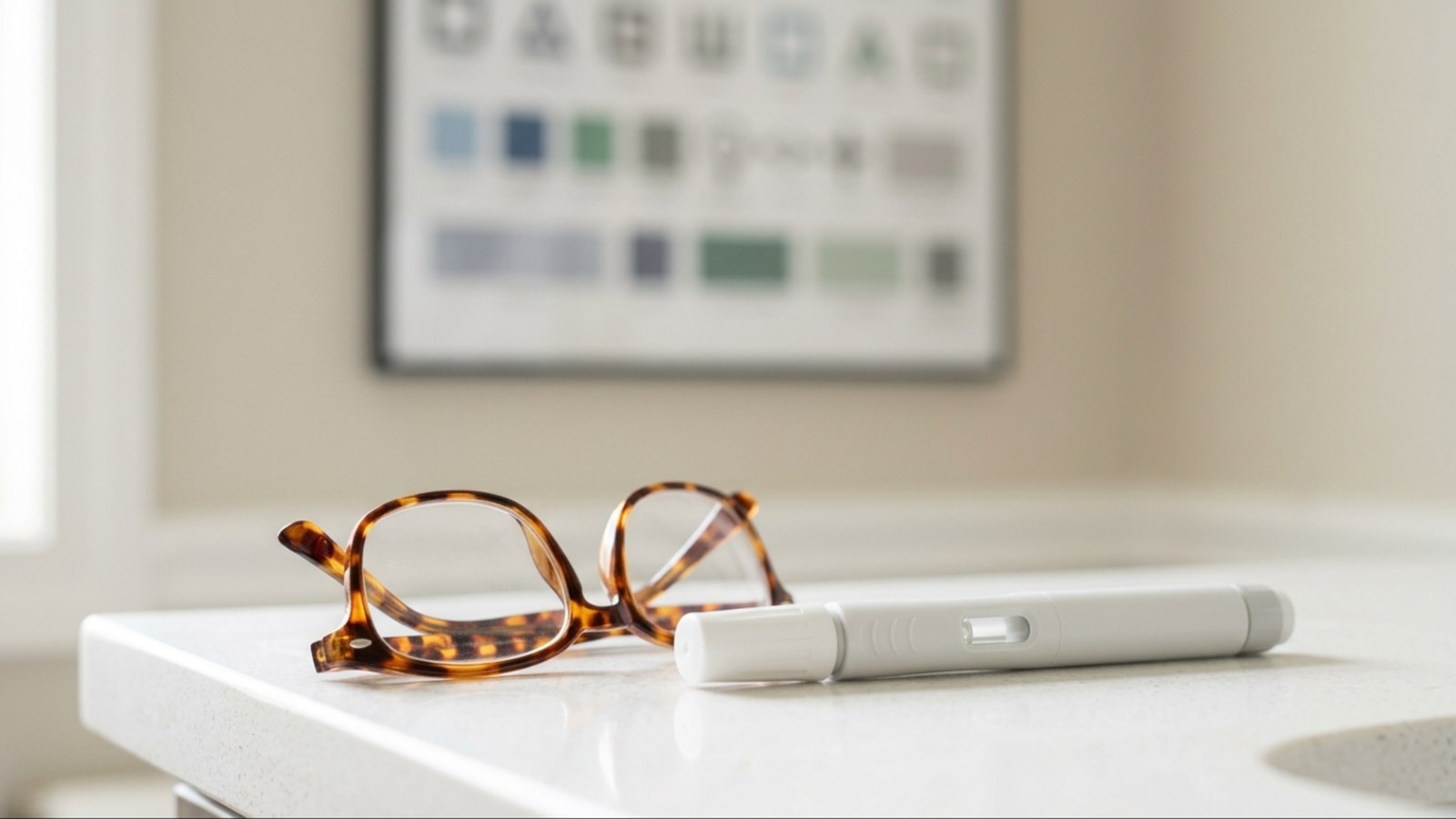
Millions of people take a weekly shot for weight or diabetes. The label on those shots just changed. The Food and Drug Administration told the companies behind Ozempic, Zepbound and similar drugs to add a warning. It covers a rare eye condition called NAION. It can leave a person with permanent vision loss. The agency announced it Monday, Nov. 9. The Journal's Alex Janin reported it Tuesday, Nov. 10.
Here are the numbers, because they matter more than the headline. The FDA looked at studies covering more than 134,000 patients, and at reports of side effects. It found about six cases of NAION per 100,000 people a year among those on GLP-1 drugs. Among people on a placebo, a dummy treatment, or on other diabetes drugs, it was about four. That's about two extra cases per 100,000 a year, by our own arithmetic. The agency calls it a potential increased risk. It hasn't found a biological reason for it.
The drugmakers push back. Novo Nordisk (NVO) and Eli Lilly (LLY) are the two biggest makers of these drugs. Dozens of patients have taken them to court over lost vision. The companies are fighting those cases. Their defense is that no study has shown the drugs cause NAION. A Lilly spokeswoman said the company is evaluating the FDA update. A Novo spokeswoman said the company remains confident the benefits outweigh the risks. Sanofi, which also sells a GLP-1, didn't respond.
Other countries got there first
The FDA began looking at this after a possible connection surfaced in late 2024. The U.K., Japan and Australia got there first. Their labels already carry a warning like this. The companies can push back on a label change. The FDA has the last word. In our model books, Eli Lilly is held at weight in 23 books and Novo Nordisk in 11. Nothing was added or trimmed.
Our read
This is a Health Costs story, module M11, and it's really a story about reading a risk. Six per 100,000 sounds scary next to four. Two extra cases per 100,000 a year is a small number. It isn't zero, and permanent vision loss is serious. Both things are true. The right response to a label change is a conversation with the doctor who wrote the prescription. The wrong response is to stop a drug because of a headline. That choice has its own risks, and they're not on any label.
Here's where it touches your own plan. If you or someone in your house takes one of these shots, the item is the drug line in your budget and the person who manages it. This week, write down two things. The prescribing doctor's number, and what that doctor says to do if vision suddenly changes in one eye. Then keep the appointment you already have. Nobody should learn the warning from a lawsuit ad. A check-up is cheaper than a surprise, and a review of your health costs works the same way.