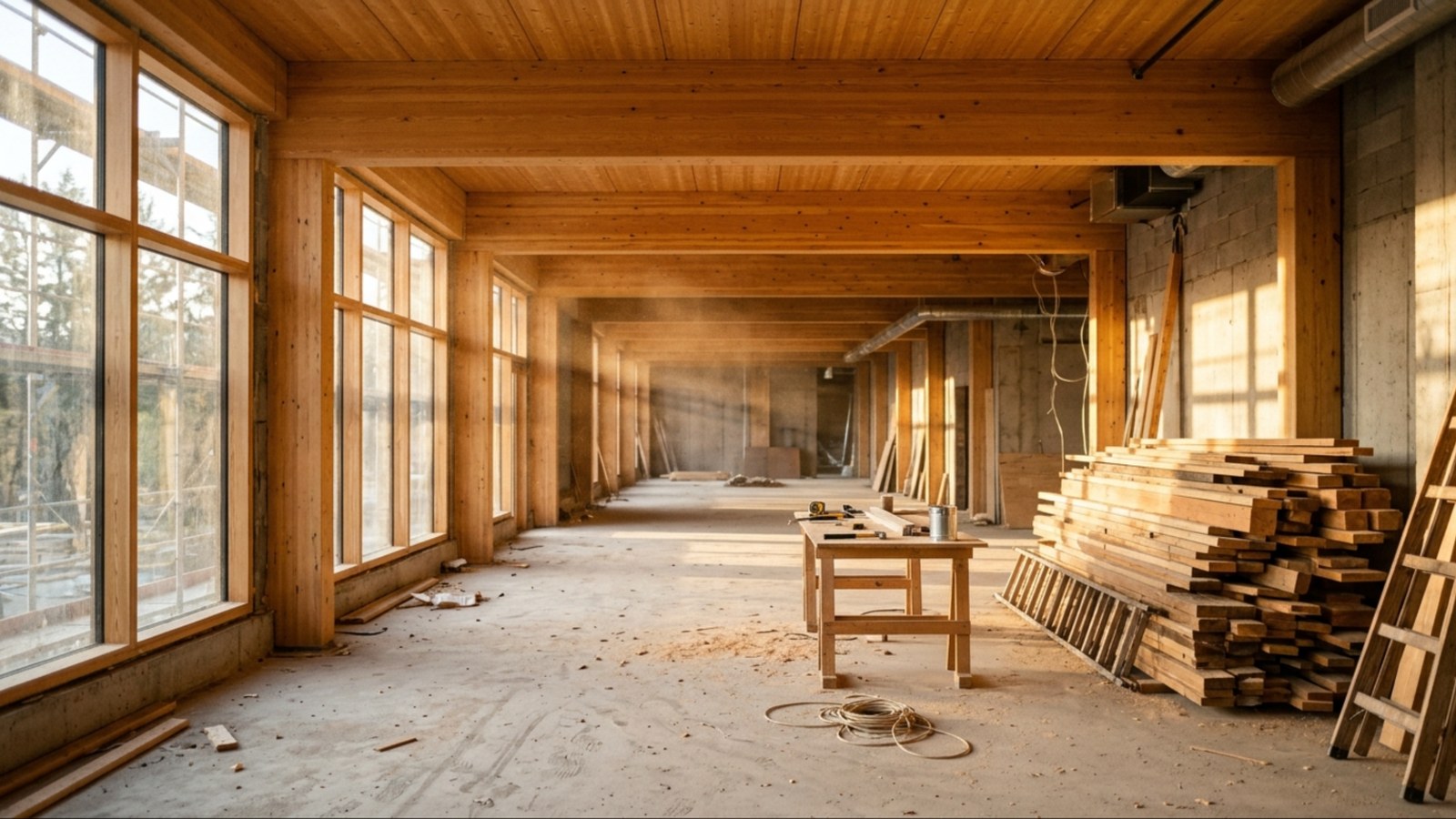
Patrick Shay designs hotels in Savannah, Ga. For years his job was to hide the steel and concrete that hold a building up. His newest hotel does the opposite. The frame is on display. It's Southern yellow pine, and he wanted people to see it.
Ryan Dezember told the story in the Journal on Wednesday, Nov. 11. The material is called mass timber. A factory stacks ordinary two-by-six boards in layers, then glues and presses them into thick panels and beams. A single slab does three jobs. It's the floor of one room, the ceiling of the room below, and part of what holds the building up. Shay picked it for the Sabal House hotel in Savannah's historic district, which opens next month. He also used it for a new public library in another part of the city. “They had me at hello,” he said.
He has company. Projects started this year will push the U.S. count of mass-timber buildings past 1,500, by the industry group WoodWorks. A decade ago there were fewer than 100. The country adds about 10 million square feet a year. WoodWorks says the possible market is about 1 billion square feet. A 2021 change to the building code opened the door. It allowed wooden buildings up to 18 stories, up from six. Since then a 25-story wooden apartment tower went up in Milwaukee, with a special exception to the code. Portland's airport got a nine-acre wooden roof. Walmart (WMT) built 2.4 million square feet of mass-timber offices in Bentonville, Ark.
Why the wood side wants this badly
Timber growers need a new customer. Pulp and paper markets have collapsed. Home building has slowed because loans cost so much. Sawmills are closing. A glut of wood has pushed prices down and put timberland at risk of being cleared for shopping centers and solar farms. Devin Stockfish runs Weyerhaeuser (WY), the largest U.S. timberland owner. He's pitching data-center developers, who have emission goals and are in a hurry. Both favor wood, he says.
The math is the interesting part. The wood alone is usually the pricier option next to concrete and steel. Shay's premium on the Sabal House ran 10% to 20%. But a six-man crew assembled the pieces, some about 60 feet long and 3 feet thick, made at a plant in Dothan, Ala. The same building in concrete and steel, he said, would have meant dozens of workers and a much longer calendar. Leaving the wood exposed cut the drywall and paint too. “You just show it,” Shay said.
Our read
This is Housing · M6, with a side of Investments/Risk · IN04. First the stock part, quickly. Weyerhaeuser isn't in our model books. Walmart is held at weight in 12 books; nothing added. This is a story about a material, not a trade. The bigger point sits in the Journal's chart. Prices for ready-mix concrete and structural metal have climbed sharply since 2020, pushed by data centers, wars and tariffs. That's part of why a new house costs what it does. Wood is a cheaper answer only when the crew is small and fast.
The check this week is simple, and it's about the house you already own. Open your homeowners policy and find the dwelling coverage line. That's the most the insurer would pay to rebuild the house. Many families set it years ago. Concrete and steel cost far more than they did in 2020, the Journal's chart shows, and labor hasn't gotten cheaper. Ask your agent whether the number would rebuild the house at 2026 prices, and whether the policy has an inflation guard. A plan review should include that line every year. Shay found a way to make the structure the finish. Your job is making sure the structure is covered.