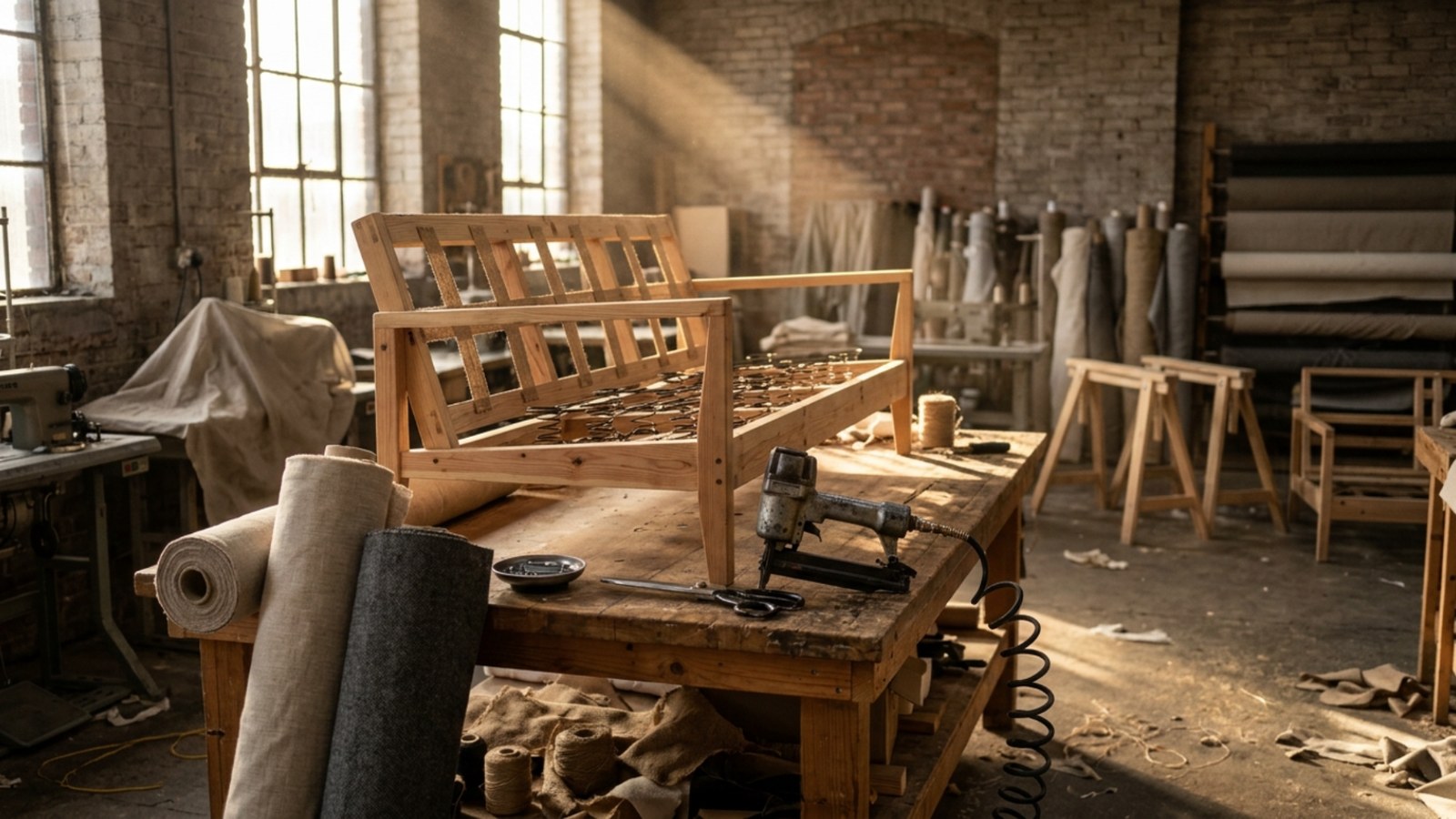
Bruce Krinsky built a business on one number. His sofas sold for $900. That was nicer than IKEA and cheaper than Crate & Barrel. Then the tariffs moved, and he moved his factories to keep up. The same sofa costs $1,500 now.
Stu Woo told the story on Page One of the Wall Street Journal. Krinsky is 44. He and his wife founded TOV Furniture, and it grew to more than $100 million a year. The sofas came from China at first. When tariffs hit China, he talked his top supplier into building a plant in Vietnam. It opened in March 2025. Weeks later a 46% tariff on Vietnam was proposed. His $900 sofa was already about $1,250 by then. Another 46% would have pushed it close to $2,000. "At $2,000, there's no reason for us to exist," he told the Journal.
The math on one couch
So he found a factory for sale in High Point, N.C. Before he bought it, he ran the numbers on a sofa priced at about $1,500. In Vietnam, labor and materials cost $280. Tariffs added $70, ocean shipping $75 and U.S. delivery $230. That's $655 in all. It left $845 for overhead, returns, marketing and profit. In High Point, labor and materials alone cost $1,000. Shipping brought the total to $1,230. That left $270. He thought he could make the plant run better. He bought it for zero dollars and agreed to keep it running and invest in it.
It got harder on the factory floor. Upholsterers in High Point started at roughly $45,000 a year. An upholsterer at the Vietnam plant earns about $8,000. The High Point crew finished two to three sofas a day. His partners in Asia finished 10. He was losing $100 or more on each couch. He closed the plant on July 31 and cut roughly 45 jobs. In 10 months, he said, he lost $3 million.
About 70% of his furniture comes from Vietnam now. The tariff on upholstered furniture stands at 50% from China and 25% from Vietnam. Both rates are scheduled to rise in January, to 55% and 30%.
Our read
This is a Cash Flow story (M5). We take no side on trade policy here. We're reading the arithmetic. Krinsky's factory had a price tag of zero, and it still cost him $3 million. The real price was sitting in the cost table. It showed $845 of room on a couch from Vietnam and $270 on one from High Point. A slow line and a costly crew used up the $270 and more. An owner who keeps that table up to date can see trouble early. An owner who doesn't learns it from the bank balance.
Here's where the story meets your own money. If you own a business, write the cost table for your best seller this week. Add a line for the cost you don't control, and see what's left if that line goes up by half. If you're a family planning a sofa, a bed or a dining set for early 2027, check the label for where it's made. The tariff rates in this story are set to rise in January, and a seller may pass that on. Price the piece now and put the number in your budget. It's easier to plan for a bigger bill than to meet one at the register. If a large purchase is on your list, bring it to your next review.