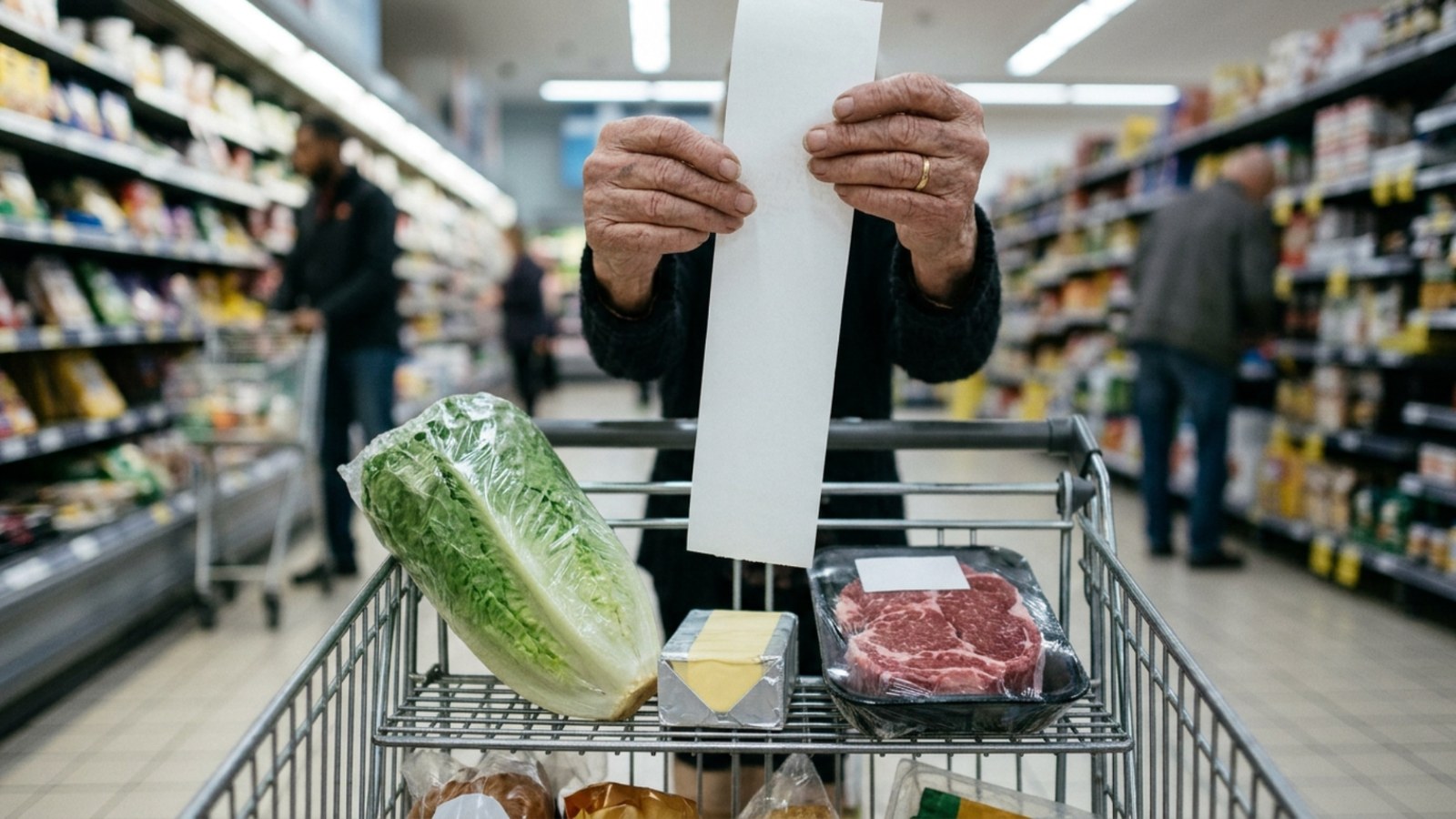
Lilia Vailikit is 71. She's a retired nurse in South Florida, and she lives on her monthly Social Security check. She used to fly home to the Philippines every year or two. She can't anymore. "Every time I go to the store, it's more expensive," she told The Wall Street Journal.
The numbers back her up. Food costs rose in October at the fastest rate in six months, the Journal reported on its front page. Grocery prices went up 0.4% from September, the Labor Department said on Tuesday, Nov. 10. Lettuce jumped 8% in that one month. Butter rose 2%. Beef steaks rose 1.7%. Thanksgiving is less than two weeks away.
Food rides on a truck
The truck runs on diesel. Retail diesel is up more than 66% since the war in Iran began. It hit a record $6.53 a gallon in September. At the big produce market in the Bronx, wholesalers can't soak up that cost anymore, the Journal reports. One chief executive there said a lot of it gets passed to shoppers. Kraft Heinz (KHC) sounded the same note. Its chief executive warned earlier this month that higher prices on its products are coming in 2027. Campbell's (CPB) told investors in September it had raised prices on 60% of its products.
The slow part is the part to plan for. A Scotiabank economist told the Journal that trucking costs move at once. The peak effect on the grocery shelf takes 12 to 18 months. He said it's too early to say if sellers have started passing the cost on. Economists also warn that one month doesn't make a trend. Food prices jump around.
The wider picture isn't calm either. Producer prices, what businesses charge each other, rose 0.3% in October. That was slower than September's 1.4% jump. Over the past year they're still up 6.5%. Many economists now expect the Fed's preferred inflation gauge to show a 12-month rate of 3.3% for October, the paper said. That would be the highest in nearly three years. The report comes at the end of November. Borrowing costs are up too. The 10-year Treasury yield, the rate behind many long-term loans, ended Friday, Nov. 13, at 5.152%. A year ago it was 4.111%.
Our read
This is a Cash Flow (M5) story first and a Retirement (M10) story second. For a retiree on a fixed income, groceries are the line that moves. A fixed mortgage payment holds still. Food doesn't. And the delay matters. If the full shelf effect takes a year or more, next year's budget may need a bigger grocery line than this year's. Kraft Heinz and Campbell's are in none of our model books. Nothing was bought or trimmed in this edition.
Here's where it touches your own plan. Pull up last October's bank or card statement and add up the grocery stores. Do the same for this October. The gap between them is your own food inflation, and it tells you more than any national average. Then pick a dollar figure for the Thanksgiving shop before you walk in. If the gap surprises you, bring it to your next review. It's easier to patch a roof on a dry day.