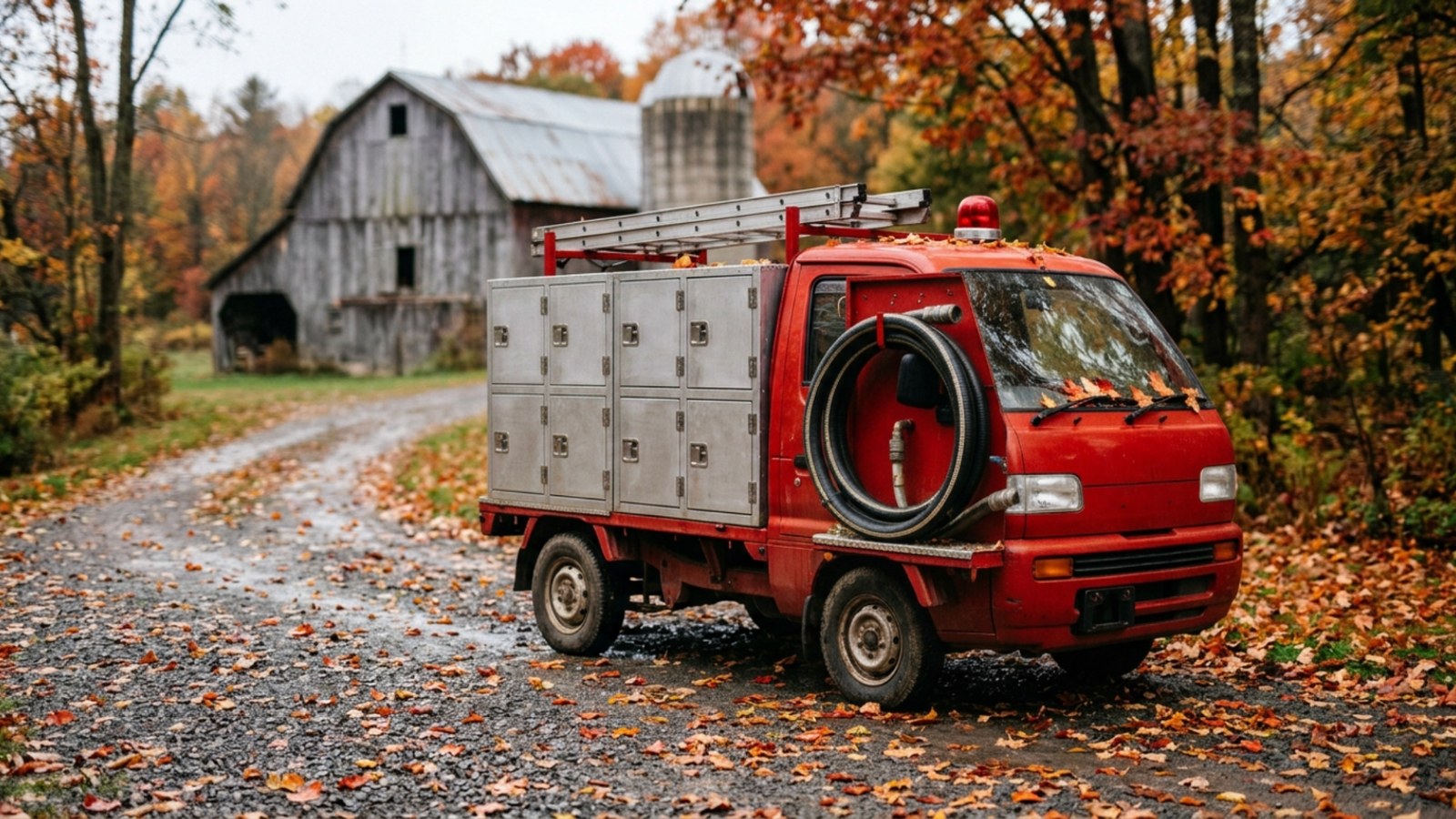
Christina Dravis bought a tiny Japanese firetruck from a dealer in Maryland. She hauled it 300 miles north to her home in upstate New York. Then she learned she couldn't legally drive it there. So she signed up to fight the rule.
That's from the offbeat page-one feature the Journal calls its A-hed. Owen Tucker-Smith wrote it. The trucks are called kei cars, short for a Japanese word that means "light vehicles." They top out around 11 feet long. Their engines are closer to a motorcycle's than a car's. Carmakers don't sell them here, so American fans buy used ones through importers. Safety and emissions rules say the cars must be 25 years old or older. They typically cost about $5,000 to $15,000.
New York is a hard place to own one. The state usually won't register them, and it isn't alone in that. Its DMV guidelines deny registration unless a vehicle met U.S. safety and emissions standards when it was built. The Journal says that is close to impossible to prove. The state DMV declined to comment. Enforcement has been uneven, and some owners told the Journal they registered their trucks with no trouble. Other states are tougher. Georgia and Maine are among those that keep the cars off the road entirely. Owners in states like Texas and Vermont fought the rules and won.
Letters from the driveway
So a group called the Empire State Kei Advocates is pushing state lawmakers. It's a mix of mechanics, farmers and small-business owners. Their online petition has more than 1,000 signatures. Dravis drives her truck up and down the driveway and writes letters to legislators. She says a friend registers a 1903 horseless carriage as a historical vehicle. "And I can't register my little truck?" she asked. We covered Toyota's (TM) plan for a new, slower kei truck in our earlier piece. Toyota is held at weight in 6 books, and nothing was added.
Our read
This is an Insurance and Consumer Protection story, M11 in our planning course. The truck was the cheap part. The rules were the expensive part. Dravis paid for a vehicle and a 300-mile haul, and now she's running a letter campaign. She learned the rules after the truck was home. Finding them first is the buyer's homework.
The connection to your money is the next unusual thing you buy. It might be an imported car, a tiny house, a boat or a golf cart for the neighborhood. Before you pay, make three checks. Ask your state's DMV whether you can register it. Ask your insurer whether it will write a policy, and what that costs. Then look up what used ones sell for where you live. If you already own something like this, pull the policy this week. Make sure it describes the thing the way it really is. That last caution is ours. The Journal doesn't raise it. It's easier to read the map before the 300-mile drive than after. Bring the odd purchases to your next review too. These are general planning principles, not advice.