700,000 Blocks a Year: the French Butter That Flies Home in Checked Luggage
At La Grande Épicerie in Paris, which sold more than 700,000 blocks of butter in 2025, tourists hunt Maison Bordier’s €6 demi-sel and fly it home in checked bags. The maker calls the craze “completely irrational” and has no plans to scale up — a $7 lesson in scarcity by choice.
By Sean Anees Saifi · Capital Wealth · Published Friday, September 25, 2026 · Source: The Wall Street Journal, Thursday, September 24, 2026 edition, whose market figures are the Wednesday, September 23 close
Key Points
La Grande Épicerie de Paris — the LVMH-owned food hall attached to Le Bon Marché — sold more than 700,000 blocks of butter in 2025, about three every minute. Out of 200 offerings from 30 brands, the top seller is Maison Bordier’s 125-gram demi-sel, about €6 ($7).
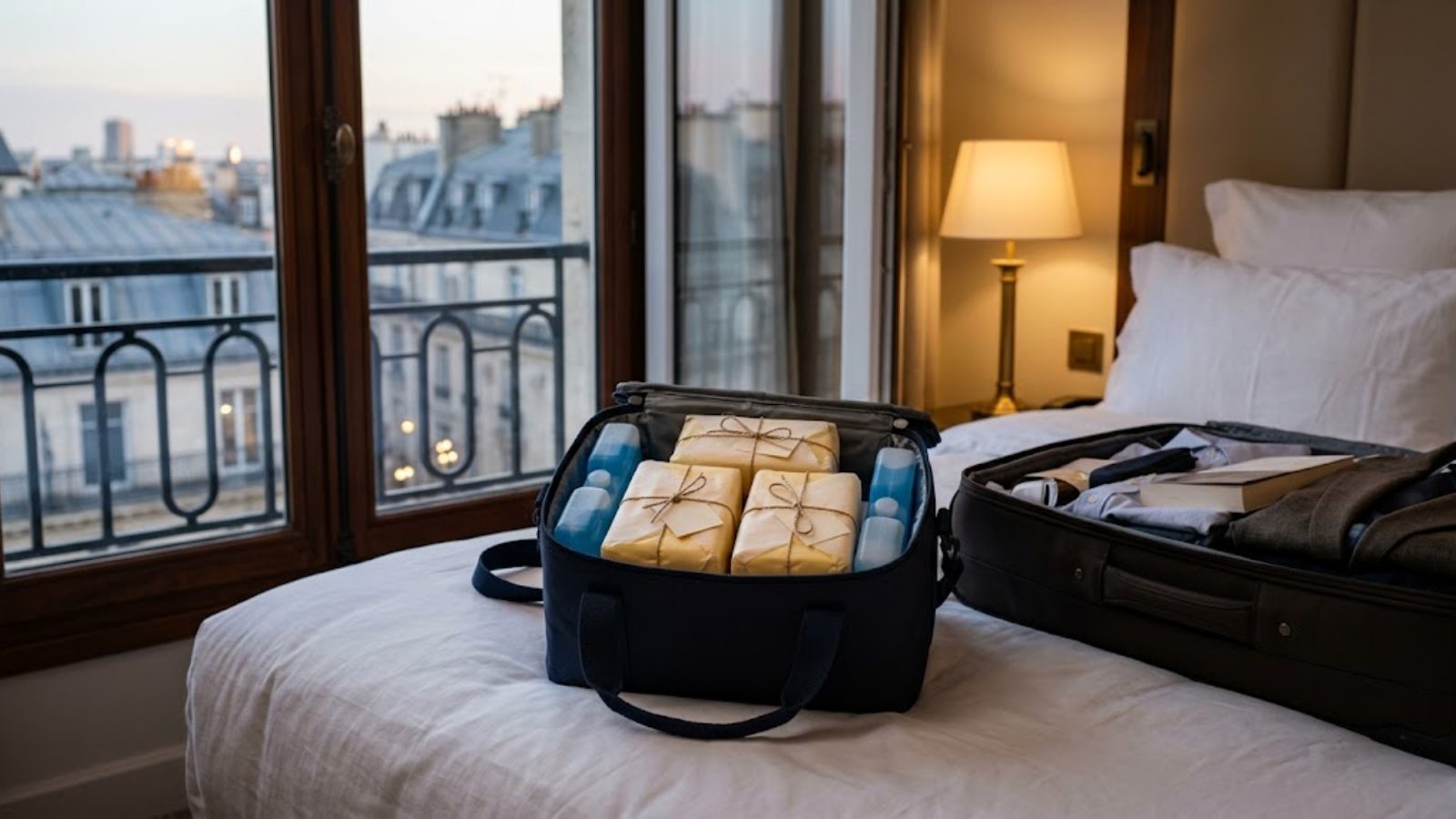
Tourists approach the dairy aisle with Louvre-level reverence, the Journal reports, and social media plus the 2024 Paris Olympics turned a long-running foodie habit into a craze. Toronto singer and content creator Shawn Molko packed four blocks in his checked luggage last summer and worked through them slowly.
The supply side is the punchline: Julie Sugliani, Bordier’s own head of product and communications, calls it a “completely irrational” craze — and production has hit a ceiling the company has no intention of raising, to protect how it works and what it makes.
Packing is where it goes wrong: airport security took all eight blocks a Miami chef had frozen and packed in her carry-on — Charles de Gaulle and the TSA both treat butter as a spreadable, frozen or not. Customs is the easy part: commercially pasteurized butter is generally allowed up to 5 kg (11 lb) for personal use.
700K+
blocks sold at one Paris store in 2025
3/min
the rate the dairy aisle moves
€6
a 125-gram block of the top seller
0
planned production increases — by choice
A 125-gram block of Bordier demi-sel runs about €6 in Paris. The scarcity is real: the house refuses to raise production.
In one line: A $7 block of butter keeps selling out because its maker won’t chase the demand — scarcity by choice, and a reminder that what a business turns down can say as much as what it sells.
Somewhere over the Atlantic right now, a checked bag holds four blocks of Breton butter packed in cold gel, and its owner considers this entirely rational. Thursday’s Journal visits the epicenter: La Grande Épicerie de Paris, the LVMH-owned food hall where tourists work the dairy aisle with Louvre-level reverence and the store moved more than 700,000 blocks last year — three a minute. The grail is Maison Bordier’s demi-sel: 125 grams, about €6, higher in fat than most American butter, and the top seller of the 200 on offer. The Toronto singer whose butter-tasting video helped light the fuse says he ate like royalty while his four blocks lasted.
Here’s what makes this a business story wearing a bib: the company is turning down the money. The craze is “completely irrational,” Bordier’s head of product and communications, Julie Sugliani, told the paper — about her own product! — while confirming that production has hit a ceiling the house has no intention of raising; it doesn’t want to disrupt its work or cut corners on quality. That’s the luxury playbook in two sentences, run at seven dollars a block. Here the scarcity isn’t an accident of supply chains; it’s part of the product.
Our read
There’s no ticker in this one, but the mechanism is worth noticing. A producer that caps output to protect the product is making a deliberate trade — growth given up for quality — and the empty shelf says customers are rewarding it, for now. When you size up any company, or any fund manager, ask what growth are they turning down, and why? The answer can tell you as much as the growth they report.
And for the travel budget: a €6 block that one New York buyer was still enjoying a year later — she froze it — is a lot of memory per dollar. Some indulgences are budget leaks; small, deliberate ones like this usually aren’t. Just learn the rules before you pack: security took all eight blocks a Miami chef carried on, while customs generally admits up to 5 kg of commercially pasteurized butter for personal use. Check it, don’t carry it.
What It Means For Your Portfolio
Hold — a $7 lesson in scarcity by choice
No portfolio action. The principle travels, though: a maker that won’t chase volume is trading growth for quality on purpose, and what any business turns down can tell you as much as what it reports.
General planning principles, not advice for anyone in particular. Scarcity a producer chooses can be a strategy; scarcity imposed by circumstance (see: diesel, elsewhere in this edition) is a cost. It’s worth learning to tell them apart in the companies you own.
On the lighter ledger: deliberate small luxuries with high memory-per-dollar are the antidote to the large reflexive ones. A €6 souvenir that’s still being enjoyed a year later beats most of what duty-free sells — as long as it rides in the checked bag.