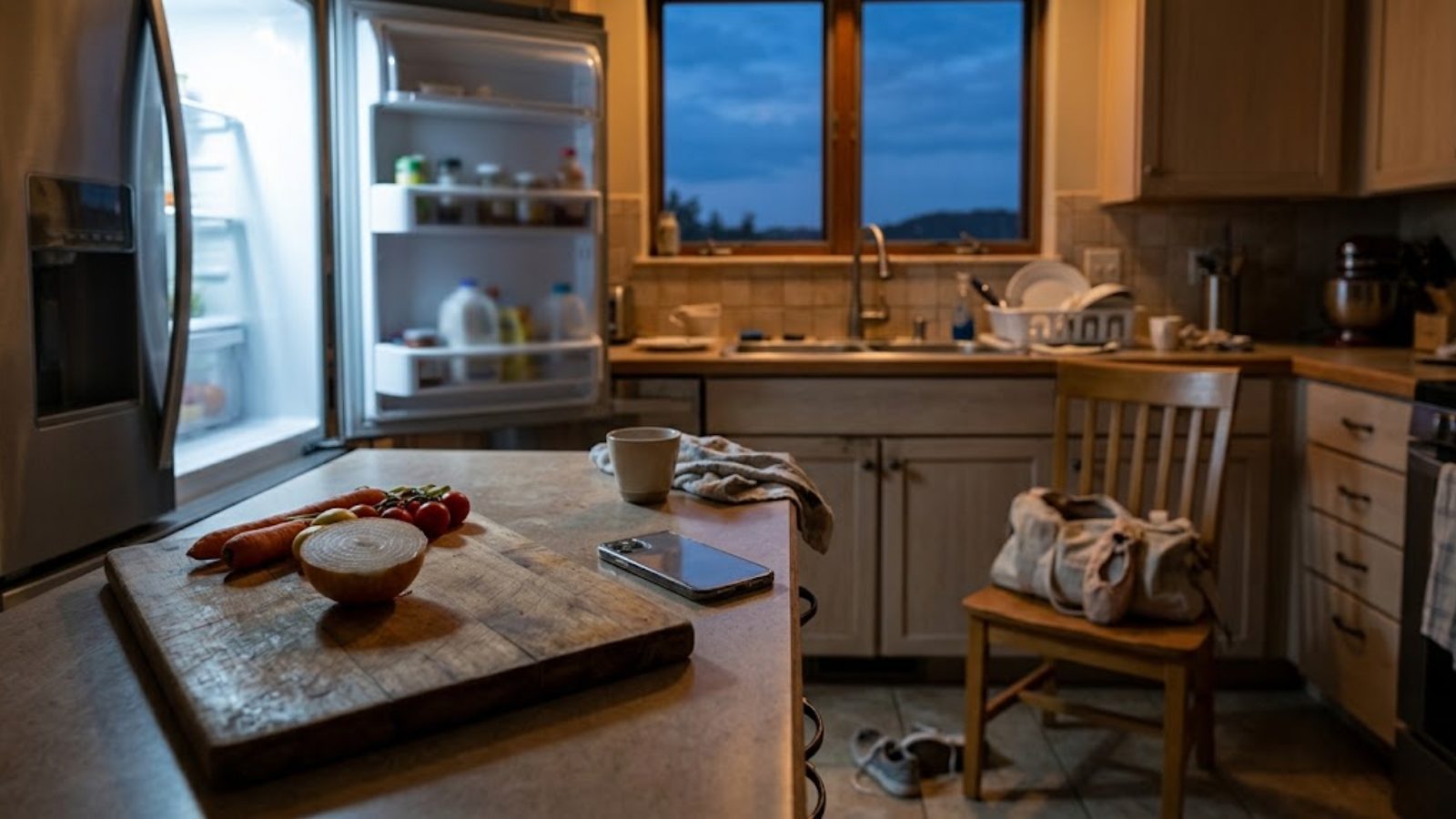
It’s 5:30 p.m., and Kelly Mitchell is working the same puzzle she worked yesterday: two full-time jobs, an 11-year-old with a dance schedule, two gluten-free eaters and whatever’s in the fridge. “The hardest part is having to solve that problem over and over again,” she told the Journal. Anyone who’s stared into an open refrigerator at dusk knows exactly what she means.
Tuesday’s Personal Journal makes the case that dinner may be the most stubborn problem in American family life. At 4 p.m., about 80% of Americans still haven’t decided what they’re eating, says Lauren Fitzgerald of the Mom Complex, a firm that helps companies build products for mothers, and one in five meals gets eaten in the car. About half of U.S. families have had two parents working full time since 2020, per a Pew Research Center analysis. And the old escape hatch, eating out, got pricier as restaurant prices shot up.
Groceries aren’t cheap either: prices in July ran roughly 26% above their level five years earlier, according to the Labor Department. And Americans are logging more kitchen time than at any point in more than two decades — 43 minutes a day on prep and cleanup last year. Much of the increase comes from men, whose time has doubled since 2003, to 31 minutes a day. (Women still put in 55.)
Selling the fix
Food companies have noticed. Mars bought Kevin’s Natural Foods, which sells refrigerated meals that are ready in minutes, in 2023, and the company expects the brand to reach $500 million a year in sales within a few years — powered, unusually for packaged food, by millennial men. Amy’s Kitchen has rolled out family-size versions of dishes like vegetable lasagna and pad thai, and Nestlé (NSRGY) has marketers following shoppers home to watch them unload groceries. But convenience isn’t cheap: when New Jersey accountant Anthony Fumo’s grocery bill climbed, premade meals were the first thing he cut.
Our read
Dinner is a time problem, as the Journal shows. It’s also a cash-flow problem (M5) wearing an apron. The expensive dinner is rarely the one you planned; it’s the one decided at 5:30 with nothing thawed — the delivery app, the drive-through, the extra run to the store. What works for Luba Golosinskiy, a South Carolina nurse feeding a family of five, isn’t nightly heroics. It’s deciding once: Costco (COST) hauls turned into big batches of soup, a rotation of slow-cooker meals, dinner settled before the rush starts.
So budget the food line the way you budget the mortgage: one weekly number, set once, not renegotiated every evening under pressure. Convenience meals can live inside that number; when time’s the scarcer resource, they’re a fair trade. What leaks is the nightly improvising. And drop the guilt — nobody’s plan requires the dinners your mother made, only the ones you can keep making.