 Capital Wealth Daily
The $2.5 Trillion Thursday

The Nasdaq lost $2.5 trillion in one day. A few giant stocks carried the whole index down.
On Thursday, Nov. 5, the Nasdaq lost about $2.5 trillion in value. That is the biggest one-day loss in its history. The S&P 500 fell 4.36% to 7,353.73, and the Dow fell 1,833 points. The chip index fell 12.25%, its worst day since the depths of the pandemic. Nvidia gave back its whole gain for 2026. The Journal lays out why. Debt-heavy corners of the AI trade cracked first. Amazon and Alphabet reported weak results. Then the vote put AI skeptics in power, and new governors promised limits on data centers. Every sector fell. The equal-weight S&P 500 fund fell 2.89%, while the regular one fell 4.41%.
Our TakeA few giant chip and AI stocks carried the index up this year, and on Thursday they carried it down. Look up the ten biggest holdings in your largest index fund this week, and decide how much of that lean you want.
The biggest loss ever. The Nasdaq lost about $2.5 trillion in value on Thursday, Nov. 5, the most in one day in its history. The S&P 500 fell 4.36%.
Chips took the hit. The chip index fell 12.25%, its worst day since the depths of the pandemic. Nvidia fell 9.26% and turned negative for 2026.
Texas changed the math. Texas's governor-elect wants new data-center approvals paused until lawmakers meet next year. Vistra fell 6.15% to a 52-week low. CoreWeave's bonds traded as low as 74.75 cents.
Jobs ran hot Friday. Employers added 165,000 jobs in October, far above forecasts, the Labor Department said Friday. The crowd puts about 77% odds on a December Fed increase, by our own pull.
The life side. A 6-year-old in Hanoi who hunts tourists for English practice. Stallone turning down $360,000 unless he could star. Homes built around surf lagoons. And your 2027 tax brackets.
Off Duty · The Human File
5 stories · 3 pictured · 2 listed
Two tourists braced for a scam at a Hanoi lake. The 6-year-old only wanted their words.
The family's best investment is a boy's skill, funded with flashcards and Saturdays. Find the learning line in your own budget this week. If it's zero, start one.
Hold
A broke unknown turned down $360,000 for his script unless he could star. It became Rocky.
Stallone could refuse the sure money because his downside was a flophouse. Before refusing a lump sum for a stake, write down what you'd live on if it pays nothing.
Hold
He put $600,000 down to surf a lagoon across the street from the ocean. The waves cost extra.
The lot is a one-time number. The HOA and the hourly wave fees follow you every month. Add up a year of fees and ask who's funding the lagoon before any deposit.
Hold
Your Money & The Economy
5 stories · 3 pictured · 2 listed
A couple gets $3,250 more room in the 12% bracket for 2027. Here are the new tax lines.
Most families save a few hundred dollars from the new lines. Put last year's taxable income next to the 2027 12% line, $104,050 joint or $52,025 single.
Hold
Paychecks send close to half a trillion a year into stocks. The threat to that flow is a lost job.
The automatic contribution is the steadiest buyer in the market and in your plan. Confirm your contribution and match are on, then count the months your emergency fund covers.
Hold
Her employer's owners ran the bank. It failed, and her $16,000 and her paycheck froze with it.
Savings, paycheck and job from one group, and all three froze at once. Check each bank against the insurance line and keep your emergency fund away from your employer.
Avoid

Markets & The Money
4 stories · 3 pictured · 1 listed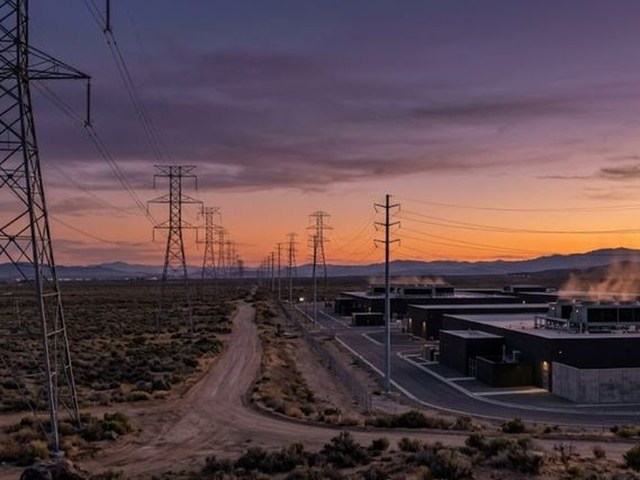
Wall Street bet Texas's data-center pause was for show. The governor-elect wants it kept.
Wall Street had bet the Texas pause was for show. Texas power stocks fell when the bet broke. Count the Texas power names in your utility fund this week.
Watch
A 3x chip fund fell 39% in a day. Small investors were on pace to sell the most since Covid.
A triple-leveraged fund resets every day. It's built for one-day bets, and Thursday took a third of it. Search your accounts for 2X or 3X funds you've held for months.
Avoid
A star hedge fund was up 40% in June and down 7.5% by October. The plain index is still up.
The pros borrowed, bet against stocks and paid for research, and still trailed the plain index. Compare any fund you pay extra for with the plain index fund this week.
Hold
From the desk Bias, the book, what’s priced, the planopen
No. 194 comes from the Friday, Nov. 6 paper, and the close of record is Thursday's. We kept it to the 15 best stories. Start with the lead: Why the Nasdaq lost $2.5 trillion in one day, and why the spread-out fund fell less. The Human File has a 6-year-old in Hanoi who hunts tourists for English practice and Stallone's $360,000 no. It also has homes built around surf lagoons, the Jets' lucky week and Daniel Radcliffe at home. Your Money has the 2027 tax brackets, AI and your 401(k), a failed bank in Paraguay, rates and Cigna's premiums. Markets has Texas and the data centers, a 3x fund that fell 39%, the hedge funds that got caught and Senator Warren's new job. Election results are reported as results, with no side taken.
The Journal, Thursday, Nov. 5, the close of record. The S&P 500 fell 4.36% to 7,353.73, 5.95% under its Oct. 6 record. The Dow fell 1,833.06 points, or 3.44%, to 51,523.06. The Nasdaq fell 5.52% into a correction, and the chip index fell 12.25%. Every sector fell, with tech down 7.30%. On the New York Stock Exchange, decliners beat gainers about 5.7 to 1. Money ran to Treasurys. The 10-year yield eased to 4.836% and the 2-year to 4.475%. Oil rose $2.40 to $90.52 and gold $41.40 to $4,102.50. The VIX jumped 69.66% to 28.18. Friday, by our own pull after the close, stocks steadied. The S&P 500 rose 0.31% to 7,376.86 and the Nasdaq 1.09%, while the Dow slipped 0.46%. The October jobs report showed 165,000 new jobs, far above forecasts.
Expected volatility by horizon on Thursday, Nov. 5 (the 30-day is the Journal's close, the others our pull). The line slopes down, with short-term fear above long-term fear. That is the shape of acute stress.
- North Star first third (written level 7,175) — bought Sat., Oct. 17, ahead of the levelPASS
- North Star second third: the week of Nov. 3 — bought Fri., Nov. 6, after the openPASS
- The last third at 6,863 — 6.67% below Thursday's close (computed)FAIL
- The October Letter's 7% line (7,272) — 1.1% below Thursday's close; not touchedPASS
Signals point to stress that is easing, not gone. The VIX, Wall Street's fear gauge, jumped 69.66% to 28.18 on Thursday, the Journal reports. Over 25 is real stress. By our own pull, the short-term fear readings sat above the longer ones, the shape that shows acute worry right now. Friday they eased, with the VIX at 25.64 after the close, but the 9-day reading, 27.29, was still on top. Vol-of-vol, a gauge of demand for crash protection, stayed above 120. Breadth was very weak on Thursday. On the Nasdaq, 851 stocks hit new lows and 232 hit new highs. Yet the equity put/call ratio, 0.89, stayed under the 1.0 that often marks real panic. What would ease the read is a VIX close under 20 with the curve back in its usual upward slope. What would deepen it is a VIX close over 30.
The Journal's own crowd market (Polymarket, as printed): the world's largest company at the end of 2026. Apple 62%, Nvidia 37%, as of 2:30 p.m. ET Thursday. Nvidia's odds had led for most of the year, by the Journal's chart. Crowd prices, not forecasts.
Our own Polymarket pull, after Friday's close: a quarter-point Fed increase on Dec. 9 at about 77%, no change about 21%. Another increase this year, about 77%. A U.S. recession by the end of 2026, about 4.5%. Taken together, the crowd is betting on a strong economy and a Fed still fighting prices.
The borrowing table (the Journal): the 30-year fixed mortgage averaged 7.26% at Bankrate and 7.18% in Freddie Mac's weekly survey. Both fell on the week. Fed funds sit at 3.75% to 4.00%. A bank money-market account averages 0.46%, and a five-year CD 1.77%.
Market-implied expectations, not forecasts. They move and have been wrong before. Not investment advice.
Three short sittings this weekend, none a forecast. One, open your 401(k) or IRA and find the S&P 500 or total-market fund. Read its ten largest holdings. If most are the same tech and chip names, decide how much of that lean you want. Two, set last year's taxable income next to the 2027 lines. The top of the 12% bracket is $104,050 for a couple and $52,025 single. Do it before you plan a Roth conversion or a year-end gift. Three, search your accounts for any fund with 2X or 3X in its name, since one fell 39% on Thursday. If you are retired and drawing income, check that the next year or two of withdrawals sits somewhere that did not move this week.
Thursday was a hard day for the biggest stocks in the market. You don't wait for the first drop to find the umbrella. You check now what your index fund owns and, if you are drawing income, where the next year of it sits. Fifteen minutes with your statement is enough to see both.
Book 15 minutes — phone or Zoom →Capital Wealth Daily · Vol. III · No. 194 · Friday, November 6, 2026. Reported from The Wall Street Journal of Friday, November 6, 2026 (Page One, U.S. and World News, Arts in Review, the opinion pages, Sports, Business & Finance, Heard on the Street and Mansion). The paper's market tables are the Thursday, November 5 close, the close of record. The volatility readings by horizon, vol-of-vol, the put/call figures, Friday's quotes and the October jobs report figures are the desk's own pull, labeled where they appear; prediction-market odds are the Journal's own Polymarket box as printed and the desk's own Polymarket pull at 1:20 p.m. PT Friday, Nov. 6, each labeled. Election results are reported as results, with no partisan framing. The North Star buy levels and the October Letter's odds are the desk's opinions, stated so they can be graded, and are not forecasts. Written and edited by the Capital Wealth LG research desk.