Intelligence.
Every daily edition and specialty deep-dive — our read of the Journal, connected to the themes and the books. Filter by topic.
 Capital Wealth · Markets
Where the evidence stands.
Updated Jul 14, 2026New: Investment Commentary №1 — where is the market headed? (prediction-market odds vs our books) · decoder ring: Reading the Numbers.
Every morning’s Journal read moves these needles — the tracker is how a headline becomes (or doesn’t become) a portfolio move. Discipline: the tracker updates daily; the books rebalance monthly or on a ±trigger, never headline-by-headline. Two weeks of hotter inflation prints tilt new money toward the dividend books first; the full reweight waits for the rebalance date.
IBM fell down the stairs, and other stories.
A 112-year-old company had its worst day ever (−25%), Uber bought the food-delivery wars for $14.8 billion, Merck’s new cholesterol pill got the FDA nod, and the consumer slowed to 0.2%.
IBM fell down the stairs.
A 25% single-day drop — the worst in 112 years of trading. Why the AI trade was really two trades wearing one trenchcoat, and why a flooded car is also 25% off.
Uber just bought the food-delivery wars.
$14.8 billion, paid in stock, for Delivery Hero. The interesting part isn’t the size of the check — it’s the currency. A knife fight just became a toll road.
The Big 7 and the Mag 7 — when a few names carry the field.
Concentration in the index, concentration in the standings. What a top-heavy market and a top-heavy tournament have in common.
Life, books, and the price of everything.
Texas built a stock exchange and almost nobody came, Shein got Beijing’s blessing at a third off, and gold — the cushion — sits 25% below January.
Gold was supposed to catch you. Gold is down 25%.
The hedge everyone bought for the crisis lost a quarter of its value without a crisis. An honest accounting of the metals sleeve — and the one cushion that never argued.
The Mid-Week Review: the week the question flipped from “how many cuts” to “how many hikes.”
Saturday through Tuesday in one issue — oil +9.42% in a session, gold down 2.6% on the news it hedges, and 42% odds on a Fed increase this month.
The hedge that didn’t work.
Gold fell 2.6% to $3,997 on the exact news it is supposed to protect you from. Two retired advisers who own it did nothing about it.
The Fed debate moved from holding to hiking.
Traders put 42% odds on a rate increase this month, up from 18% at the start of July. If you were waiting for cheaper money, that wait is now a position.
Oil went up 9.42% in one day.
Hormuz traffic fell to 19 ships a day and the reserve sits at a 1983 low — but Goldman says new pipelines could route around the strait by 2027.
An editorial floats making Medicare Advantage the default.
One sentence in a Journal editorial, no bill behind it, and the same editorial says the will isn’t there. What the sentence says, and what it doesn’t.
There is AI money in your bond fund’s benchmark.
Six companies sold about $244 billion of bonds this year, up from $17 billion in 2024. Pull the top holdings on the “safe” sleeve.
Bonds cushion some shocks, not all.
The 60/40 shock absorber assumes bonds rise when stocks fall. That fails when the shock is inflation — which is this week’s shock.
Their forecast ran Monday. The market ran the other way.
Seventy-two economists finished answering July 7. By the time it printed, oil had jumped 9.4% and traders were pricing a hike.
SPF 100 isn’t three times SPF 30. It’s 99% versus 97%.
The first new sunscreen ingredient since the late 1990s is cleared Aug. 9 and may take a year to reach the shelf. Reapplying is the whole game.
The best four teams left, for the first time in modern World Cup history.
France–Spain in Dallas, England–Argentina in Atlanta. In 20 years at the top, Messi has never faced England.
23 years driving a UPS truck in Bakersfield.
Watermelon, two pickles, and up to 20 bottles of water a day. Our clients live in the valley he drives, and his heat advice beats ours.
The average bank money-market account pays 0.44%.
The Fed’s target is 3.50%–3.75%. The benchmark’s 52-week range spans a full point; the deposit average’s spans four hundredths of one.
The funds made money. The investors lost 5.8% a year.
Morningstar’s Jeffrey Ptak estimates owners of the first bitcoin ETFs trailed their own funds by 14.30 points a year. It isn’t about bitcoin.
Thirty-five of the forty kept playing.
A Norwegian soccer club, a years-long line to clean the subway, and a fly-fishing school. Three Saturday stories, one idea — and it lands on the CalSTRS pension.
Investment Commentary №1 — where is the market headed? Ask the people betting on it.
The odds board: Fed holds July (80%) but hikes sometime in 2026 (62%); Hormuz priced as a months-long problem; WTI $95 just 8%. What the books did about it — and deliberately didn’t.
Reading the numbers, in plain English — Sharpe, beta, drawdown, yield, decoded.
What a low Sharpe actually means, why beta 0.40 is a feature in an income book, and how we read the WSJ market tables — with live examples from our own models.
Three Records, Cheap Oil, and a Deal Frenzy
Stocks closed May at all-time highs as the worst month for oil since 2020 turned into rocket fuel for everything else. Here’
Three Things Broke Today That The Dow Didn't Notice
The headline tape barely moved. Don't be fooled. OpenAI quietly told its own people it can't pay for the data centers it
Iraq Crisis Lifts Crude To $94, DOJ Drops Powell Probe Clearing Warsh, And Meta's AI Job Reckoning Tells Us To Trim Tech
Saturday/Sunday paper anchored by three structural shifts: (1) Iraqi oil at 1.6 mb/d vs 4.9 pre-war means a 9-month supply deficit
Phelan Fired As Hegseth Keeps Trump's Backing, U.S. Seizes Iranian Tanker, Marijuana Reclassified, Intel Beats Q1 — Setting Up Saturday's Bigger Story
Friday paper covers Thursday's mixed close (NASDAQ -0.81%, S&P -0.49%, DJIA +0.42%) and three structural shifts: (1) the
Financial Independence Day.
Our July 4 edition — what real financial independence looks like, and the portfolio discipline that gets you there.
U.S. jobs report blows past expectations — 115,000 added in April.
Retail, transport, warehousing and healthcare all hired into an Iran war and near-record-low sentiment — a labor market defying the mood.
Your grocery bill just won the argument with your paycheck.
CPI 3.8%, real wages negative for the first time this cycle, and the Fed has stopped talking about cuts — what it means for fixed retirement income.
Oil just had its worst month since 2020 — and that’s exactly why stocks hit records.
The cheapest energy in years became a tailwind for everything else — how falling crude powered the record tape.
The Peace Trade Issue: the AI trade changes lanes, the oil shelf runs bare, and $80 billion walks into Hollywood.
Our read of the July 10 Journal — Micron jumps on a $250B U.S. plan while the hyperscalers sit out, semis hit +83% YTD, the S&P closes within 1% of its record, and Buc‑ee’s sues a moose.

The AI trade changed lanes: out of the giants, into the suppliers.
Micron (MU) +4.5% on a $250 billion U.S. manufacturing plan, memory names leading, hyperscalers lagging — the market is re-picking its AI winners, and the suppliers get paid first.
“Once the shelf is bare, there’s nowhere to turn” — America’s oil cushion is thin.
The SPR at a 1983 low, diesel at two-decade lows, gasoline $3.85 vs $2.98 prewar. Oil fell on peace hopes — and the supply math is why we keep the insurance anyway.
An $80 billion debt pile walks into Hollywood.
Paramount–Warner closes at 6.5x leverage with bonds paying 8.43%, while Netflix’s viewing share hits a 14-month low. The streaming wars’ bill has arrived — we buy cash flows, not synergy slideware.
The Medicare Advantage fight is back — what retirees should actually compare.
A bill would cut MA payments; an op-ed calls it the best program we have. More than half of enrollees choose it. The even-handed checklist — doctors, drugs, travel, and the switchback window.

The $354 IKEA chair that’s worth $12,000 now.
Vintage flat-pack is a real collectibles market — a 1971 Impala chair has 36x’d. A fun read with a serious footnote: collectibles are fun money; the plan runs on assets with cash flows.
When your whole friend group turns 70.
Dinner at 6:00, one dessert with six forks, the fifteenth grab-bar lecture — and the quiet planning truths hiding in the jokes: falls, stairs and isolation never show up on a statement.
Buc-ee’s is suing a moose.
The Texas beaver empire vs. Mickey the Moose of Ohio — “a moose is not a beaver,” reply the lawyers. Under the joke: brand moats get defended in court precisely when they’re worth the most.
Messi is three games from football’s “unbreakable” record.
Eight goals in 410 minutes at his sixth World Cup; Just Fontaine’s 13 from 1958 in sight. Records fall when the structure changes — a lesson that applies to more than football.
They sold everything for the Arctic dream. Three years later, they’re selling the dream.
A Montana couple’s Norwegian island farmhouse lists for $1.5 million — double their cost. The dream worked; the logistics didn’t. The expat spreadsheet needs the soft lines too.
The Hike Issue: nine of eighteen Fed officials pencil in hikes, and Hormuz traffic stops.
Our read of the July 9 Journal — the first Warsh-era minutes put hikes back on the table, WTI jumps 4.4%, Apple hands Broadcom $30 billion, and a Costco cashier has a $1 million 401(k).
The minutes say the quiet part: hikes are on the table.
Nine of eighteen officials pencil in at least one hike by December — from zero in March — and futures price 80%+ odds. What higher-for-longer gives a retiree, and what it taxes.
The cashier with a million-dollar 401(k).
Forty years at the same Costco, $32.90 an hour, and a seven-figure balance built from deferrals that never stopped — through 1987, 2000, 2008, 2020 and 2022. The whole playbook in one man.
They retired. Then they opened the business.
Incorporations by 55-to-64-year-olds are up 22% in a decade. Five case studies with real numbers — and the two adviser rules that make an encore business safe: cap it, and plan the exit.
Tanker traffic through Hormuz has “essentially stopped.”
WTI +4.4% on a day inventories actually rose — a pure risk-premium bid. Diesel up 72% this year, refiners at 52-week highs, and the discipline of not chasing war headlines.
The 28% health-insurance letter is coming.
Centene’s 2027 asks hit 28%; the median across 77 filings is 14%. If you retire before 65, this is your bridge-insurance bill — model it, manage the subsidy cliffs, use the HSA.
The $100 air bag that kills: a used-car warning.
Counterfeit inflaters sold on marketplaces are tied to at least 10 deaths, and the recall is nearly impossible — no import records. The checklist before anyone you love buys used.
The replay booth is ruining the World Cup — and your portfolio does the same thing.
Jason Gay’s war on VAR, Messi’s 77% penalty record vs. Kane’s boring 89% — and why checking your account intraday is the market’s version of reviewing every blade of grass.
A golf club built a secret 20-foot seawall. Rhode Island noticed.
Two football fields long, built in the dead of winter, zero permits — and a 999-day path to the lawsuit. The coastal-property fight of the next 20 years, in one par-5.
The safest money in America pays 4% right now — and that window is closing.
Money markets, one-year CDs and Treasury bills are all paying north of 4% with no market risk. But floating rates reset the day the Fed cuts. What a retiree should lock now, what to leave liquid, and how a simple ladder does it.
What Ozempic is doing to your grocery aisle — and your Medicare bill.
Nestlé is reformulating its whole food line around GLP-1 drugs. When the world’s biggest food company adapts to a drug, that drug is a fixture — and a line item in your retirement. The Medicare catch to check before you re-enroll this fall.

The Blink Issue: $710 billion of AI capex, an 11% chip slide, and Iran loses its oil license.
Our read of the July 8 Journal — Meta hints at renting out its compute, the U.S. strikes 80+ targets and pulls the oil waiver, SpaceX stumbles into the Nasdaq-100, and value’s comeback gets its label read.
$710 billion and rising: who blinks first in the AI spending war?
Big Tech spent $168B on AI in one quarter while chip stocks had their worst two days in months — and your index fund is quietly an 18% chip bet.
The license is revoked: Hormuz gets hot again, oil reprices in a day, and the hedge earns its keep.
After Iran hit three ships near Hormuz, the U.S. struck 80+ targets, Treasury pulled the June 21 oil license, and WTI jumped 2.76% to $70.44 — the energy sleeve is insurance that pays a dividend.
A $60 brick, a duller tongue, and a six-year sentence: welcome to the willpower economy.
A phone-locking cube, Nestlé re-spicing dinner for GLP-1 patients, and a prison term for the Adderall pill mill — one story in three disguises, and the argument for bricking your own portfolio.

13,500 companies, nine years to the exit door: private equity’s traffic jam is your problem now.
PE holds ~13,500 U.S. companies with a nine-year backlog at the current exit pace — and the “evergreen” retail wrappers headed for retirement accounts are the same building with a lobby.
Value is “back” — until you read the holdings. The +43% comeback is, for now, a quirk.
VLUE’s 43% run is mostly Intel and Micron wearing a value name tag; the honest value the same day was PNC raising its dividend 18%.
SpaceX joined the Nasdaq-100 and fell 6.8%. That’s not a scandal — it’s how index inclusion works.
$800B of index money became forced buyers, fast money sold to them, and the bond market is quietly repricing a $37B-a-year AI spender — you own SpaceX now, so know the wrapper.
The $2,200 grant that can out-yield any fund: Workforce Pell is live.
As of July 1, need-based Pell money covers 8-to-15-week vocational credentials — the grandparent conversation to have with the grandkid who isn’t college-bound.
Florida’s $250,000 gamble: the biggest property-tax cut in America — and the bill that comes with it.
November’s homestead vote would triple then quintuple the exemption by 2028 — but relocating retirees should price the amputated county services and muni credit on the other side of the ledger.
The team lost, the asset won: 30 million Americans watched the U.S. fall to Belgium.
A 4-1 round-of-16 exit out-rated the World Series and NBA Finals — soccer broke through as a U.S. media asset, and 39-year-old Messi’s 83rd-minute goal is the staying-invested lesson.

The Fever Issue: a record Dow, Samsung’s 19-fold profit, and Korea’s Squid Game market.
Our read of the July 7 Journal — the memory mania, the new student-loan caps, banks circling Fiserv’s fee loophole, war-priced airfares, and Strategy selling the bitcoin it swore it never would.
A record Dow, a 19-fold profit — and a market running a fever in Seoul.
Samsung’s $58B quarter and SK Hynix’s $28B listing prove the AI-memory cycle; the Kospi’s 77 two-percent days and the world’s biggest 2x single-stock ETF prove the fever. Own the first, skip the second.
The student-loan rulebook just got rewritten — parents, check your caps.
Parent PLUS is capped at $65,000 per child, two repayment plans replace seven, and the lifetime ceiling is $257,500 — the new math every family with a college-bound kid needs this week.
Kids move home, parents need moving, schools become apartments: the re-bundled American household.
Half of adults under 30 live with a parent, 23.6 million people care for aging parents, and old schools are becoming apartments — three stories about the same balance sheet, and the planning it demands.

$9 gas on a $1,483 Social Security check: Alaska’s fixed-income stress test.
A 67-year-old paying $1,000 a month to heat her home on a $1,483 check is sequence-of-returns risk wearing a parka — inflation is personal, and the budget has to match your basket.
Strategy sells the bitcoin it swore it never would — and raises “Stretch” to 12%.
3,588 bitcoins sold, $1.25B more authorized, a 12% preferred coupon and 17 months of cash buffer — when the yield funds itself by liquidating its thesis, it isn’t income.
Jet fuel fell 40%. Your fare didn’t — and the airlines are telling you why.
Eight fare hikes since the war, a $628 average ticket, Spirit’s cheap seats gone, and a $7.3B private-equity bid for easyJet — consolidation pricing, explained.
A presidential call to FIFA, England’s Azteca escape, and Haaland ends Brazil.
The Balogun reversal put governance risk on the pitch, England survived 108 minutes at the Azteca, and one 6-foot-5 asset eliminated a five-time champion — the Cup’s wildest 48 hours.
Toyota spends $3.6 billion to bring the Tacoma home — what an $8.5 billion tariff bill builds.
Two thousand San Antonio jobs and 150,000 trucks a year — the tariff tax eventually pours concrete, and industrials collect.
Four giant banks circle Fiserv’s network — for the loophole, not the plumbing.
Owning a debit network exempts a bank from the Durbin fee cap — JPMorgan, BofA, Wells and PNC know it, and Capital One already ran the play.
Microsoft cuts 3,200 Xbox jobs: “Our business today is not healthy.”
Game Pass hit 30 million subscribers against a 77 million plan — subscription forecasts are hopes with a spreadsheet, and the reset protects the margins funding the AI build.
How many stocks is enough? The evidence that widened our biggest dividend book.
The rule of 30 is fifty years old and its own author retracted it. Lynch owned 1,400 names. Bessembinder found 4% of stocks created all the wealth. Why the Midterm Dividend book went 37 → 54 positions — and its Sharpe jumped from 0.40 to 0.71.
The money Washington gave back: WEP and GPO are repealed — and many CalSTRS families still haven’t rechecked their number.
WEP and GPO are gone — the Social Security numbers every CalSTRS and safety family should recheck now that the checks are bigger, plus the claiming math the repeal changed.
CalPERS vs CalSTRS: same state, two very different pensions.
For teacher-plus-classified households: age factors side by side, the Social Security divide, simple-vs-compounded COLAs, and why survivor elections matter far more on the CalSTRS side.

Changing districts, changing systems: how to move jobs without breaking your pension.
Reciprocity’s two-pensions-linked mechanics, the six-month PEPRA trap, the five-year vesting cliff, and why the contribution refund is almost always the wrong move.

Same average return, ruined retirement: sequence-of-returns risk, in numbers.
Two retirees, identical average returns, opposite order — one ends with $3.6M, one goes broke in year 19; why the five years around retirement day decide everything.
The retirement tax do-over: the window between your last paycheck and your first RMD.
The “tax mulligan”: a once-in-a-lifetime low-bracket window for measured Roth conversions, 0% gain harvesting and QCD timing — and the RMD snowball if you let it close unused.
The six-figure deduction hiding in plain sight: cash balance plans for business owners.
How a defined-benefit plan that reads like an account lets an owner in their late 50s shelter six figures a year pretax on top of the 401(k) — who fits, the myths, the real costs.

Two pyramids, three buckets, four boxes: the 2-3-4 framework that turns a pile of products into a plan.
Decision order, time-horizon buckets, and the four tax boxes — with a worked example of how the same dollar ends up ~$7,700 apart depending on its tax treatment.

The autopilot bought bonds at the top: how target-date funds came to be — and why they trailed the market.
QDIA made them the default by law; the glide path bought bonds on schedule through 0.5% yields; 2022 sent the bill — a “2025” fund lost almost as much as the S&P. Why your pension floor changes the whole allocation question.
Medicare Will Now Cover Weight-Loss Drugs. What A Retiree Actually Needs To Know.
The new Bridge program: $50/month copay, ~3.8M seniors eligible — and funded only through 2027, with the permanent version already shelved once. Use the door; don’t build the budget on it.
He Waited 60 Years To Build The House From A Hitchcock Movie. He’s 78.
A semiretired architect built the Vandamm House from ‘North by Northwest’ above Park City — 40-foot cantilevers, a heated dog run, $45M ask. Purpose predicts a good retirement better than the withdrawal rate.

She Almost Lost Hope Before ‘Stranger Things.’ Now It’s Ponies In Georgia.
Millie Bobby Brown’s House Call essay: hearing loss, a family that bet its savings, and a windfall converted into a farm and a pony named Ladybug — the correctly-solved money equation.

‘Buy Now, While Supplies Last’ Doesn’t Apply To Stocks.
Record retail volumes, SpaceX shares traded 4× over — and the history: Meta fell by half post-IPO, Amazon 80% after the famous call, then greatness. Patience is profitable; process beats speed.

A Beer Can, A Bowling Lane, And A Ranch Town: One Economy, Three Disguises.
Three life stories in one day’s Journal — pony beers, the bowling wars, the Hill Country boom — are secretly the same story: business rebuilt around the premium customer. The evidence file for our pricing-power and dividend themes.

The Daily — July 3, 2026: The Rotation Issue.
Jobs missed at 57,000, hike odds fell to one-in-five, and money rotated out of AI into healthcare and staples — carrying the Dow to a record 52,900. Plus private credit’s $16B exit line, the yen at a 40-year low, Tesla’s rebound, and Comcast’s breakup.
57,000 Jobs, A Record Dow, And The Return Of The Rotation Trade.
Payrolls came in at half of expectations and the market rotated rather than retreated — healthcare and staples led while the Nasdaq fell. Own both halves of the barbell; chase neither.
The $16 Billion Exit Line: Private Credit’s Gates Are Doing What We Warned About.
$15.6B in redemption requests, $5.9B returned, Blue Owl capped at 5%, fundraising down 75%. The extra yield of a gated fund is a liquidity fee paid in advance — our income stays in public-bid instruments.

The Yen At A 40-Year Low: The World’s Cheapest Currency And The Crowded Carry Trade.
Past 161 to the dollar, through Japan’s intervention levels, as borrow-yen-buy-dollars runs hot. We don’t trade FX — gold is the no-forecast hedge, and dry powder is for the unwind.

Tesla’s 25% Rebound Quarter — In An EV Market That Shrank.
480,126 deliveries, +25%, while U.S. EV sales fell ~25%. Real share gains; a valuation still riding on robotaxis not for sale. Watch, don’t anchor — own electrification upstream via the grid.
Comcast Finally Breaks Itself Up — And Buries The Convergence Era.
NBCUniversal and Sky spin off; broadband stands alone. Breakups are re-underwriting events: keep the toll-road half, be skeptical of the glamour half. Focus gets rewarded; empires get discounted.
Starlink Wants Your Phone Bill Next. The Carriers Should Sweat — Slowly.
10,000 satellites, 10 million subscribers, a prototype handset — and incumbents down 26–27% in a +19% tape. A fat yield on a leaking moat is a countdown; own the towers-fiber-silicon layer instead.

Wall Street Bought Bowling And The Bowlers Went Ballistic.
Lucky Strike’s blacklight parties vs. America’s league bowlers — a parable about what happens when a franchise monetizes its most loyal customers’ goodwill. The regulars were the moat.

Big Beer’s Growth Plan Is A Smaller Can. That’s Smarter Than It Sounds.
Pony cans for the biggest beer week of the year: the moderation headwind converted into a premiumization lever. Pricing power expressed through packaging is what funds staples dividends.

Austin’s Million-Dollar Spillover: The Hill Country Boom And The Great Wealth Migration.
The boom jumped the city line. Relocation can fund years of retirement — but a dream property at the top of a migration wave is a concentrated, illiquid position. Underwrite the move like one.

The Daily — July 2, 2026: The America-At-250 Issue.
Our read of the July 2 Journal: the Fed switched from when-to-cut to whether-to-hike, the USMCA lapsed into annual reviews, AI now runs on old utilities, Kroger buys Giant Eagle, IPOs hit a record half, and capitalism turns 250.
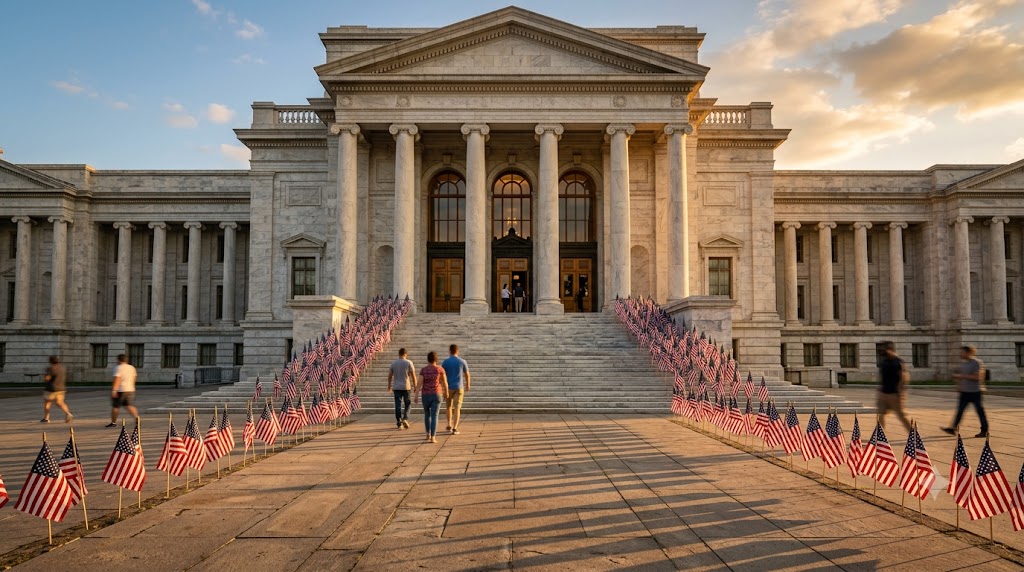
The Fed Switched Verbs Again — From ‘When To Cut’ To ‘Whether To Hike.’
New chair Kevin Warsh says inflation risks are fading but won’t rule out a July hike; officials split nine-to-eight. Plan for the parked Fed, not the pivot — short-duration Treasuries paying 4%+ and gold as ballast.
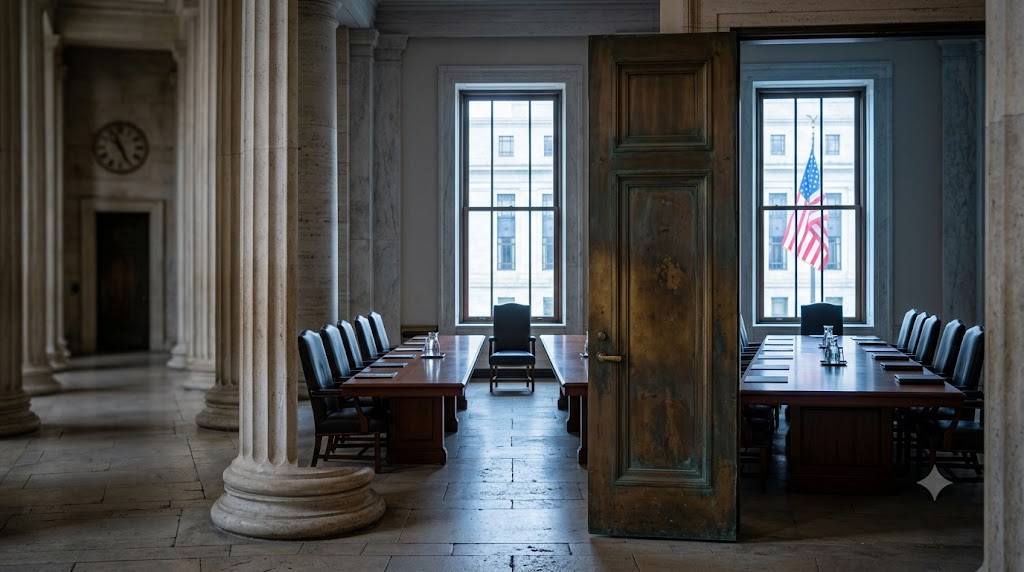
The USMCA Didn’t Die. It Got A Decade Of Annual Reviews.
The U.S. declined to renew its North American pact, swapping a 16-year extension for yearly reviews. A tariff is a cost you can price; an open-ended review isn’t. We anchor income in domestic cash-flow payers.

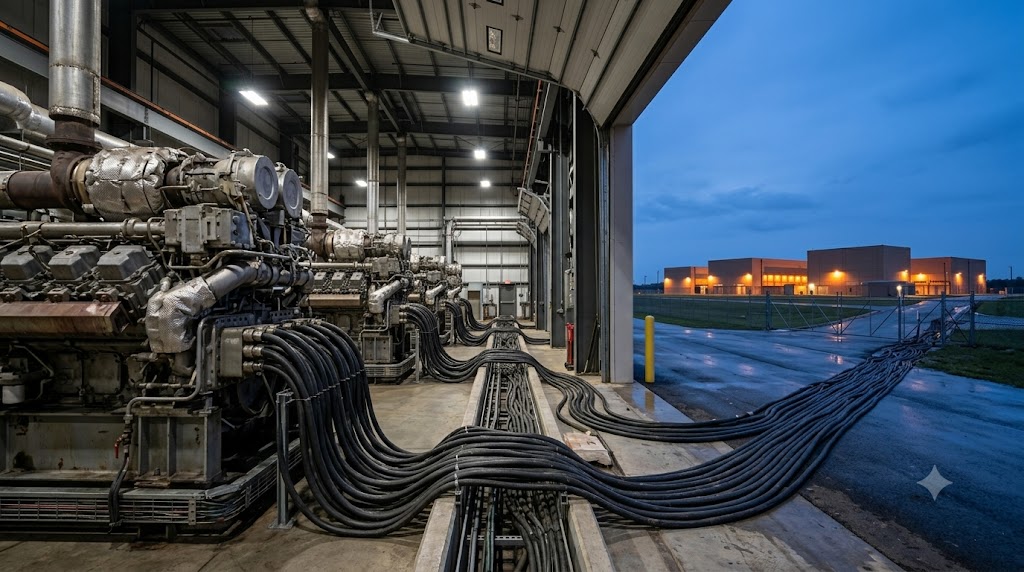
The AI Build-Out Now Runs On Small Engines And Old Utilities.
Off-grid data centers are buying on-site engines from Caterpillar and GE Vernova and 20-year contracts from Constellation, Southern and NextEra. The dividend-paying back door into AI — the megatrend at a utility multiple.
Kroger Buys Giant Eagle: The Boring Dividend Machine Keeps Rolling.
Kroger is paying $1.65B for 200 supermarkets and ~$9B in sales, the same week General Mills jumped 8% on a beat. The slow, cash-generative consolidation that quietly funds the dividends a retirement plan lives on.

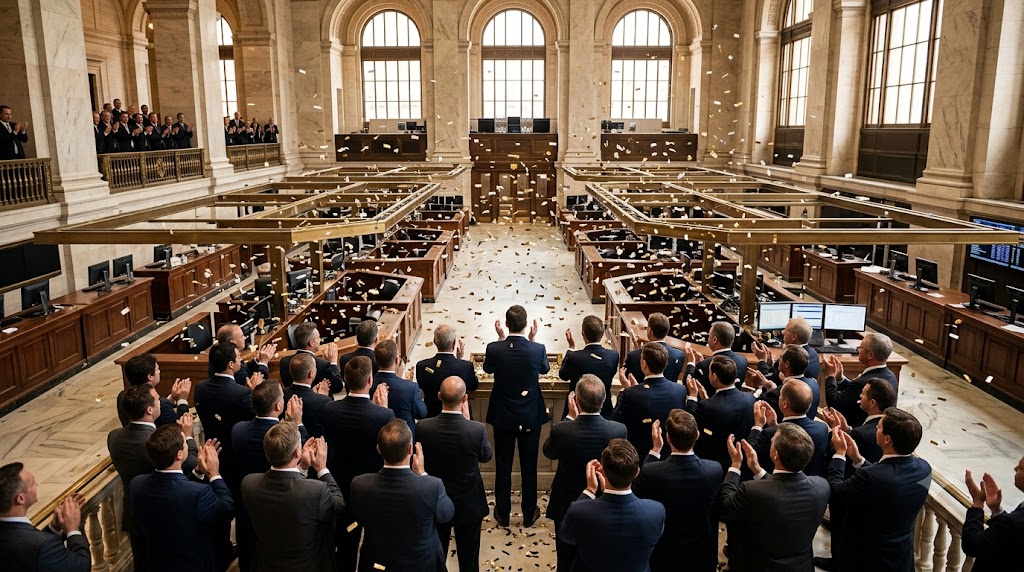
A Record Half For IPOs — And Why New Issues Aren’t A Retirement Strategy.
U.S. IPOs raised a record $130B; Bending Spoons popped 40%, Anthropic and OpenAI filed. New issues trade up 24% on average — but the pop lands in institutional hands, not yours. Own the economy, not the casino.
Musk’s SpaceX Sketched An AI Phone. Here’s Why It Reaches Your Index Fund.
SpaceX showed investors an xAI handset on a Qualcomm Snapdragon chip. It may never ship — but every AI-device bet needs the same silicon. Own the picks-and-shovels suppliers, not the vaporware.
American Capitalism At 250: Three Questions, One Retirement Lesson.
On the eve of the semiquincentennial, the WSJ frames three forks — growth vs. redistribution, bridges vs. walls, competition vs. control. You don’t get to pick the answer; a plan has to survive whichever way it breaks.

A 52-Year-Old Pot Of Soup, And The Case For Never Turning Off The Compounding.
A Bangkok restaurant has simmered the same broth since 1974. You can start a new pot; you can’t start an old one. The most expensive retirement mistake isn’t a bad fund — it’s going to cash and starting over.

Europe Is Fighting Over Air Conditioning. It’s Really A Fight About The Buffer.
A record heat wave, a two-year court fight to install one unit. The buffer you resent building in the mild years is the one that saves you in the hot one — and you can’t install it during the emergency.

The New Fed Chief's First Job Is To Read The AI Boom.
Kevin Warsh has to decide whether the AI boom is a blessing or a fire. He leans toward the 1996 Greenspan who let it run — but that decade ended in a bust. Higher-for-longer isn’t going away, and the Fed is split on whether it must hike again.
Iran's Frozen Billions Start To Thaw As Hormuz Reopens.
A 60-day deal frees some of Iran’s $100 billion in frozen assets and reopens the strait, but only slowly. Oil has come off the boil while fuel’s inflation drag lingers into 2027 — the case for energy as both a return engine and a hedge.

The Flood Of AI Money Is The Tell.
How companies finance themselves says more than P/E ratios: firms are funding half of M&A with stock and raising record amounts to chase the same build-out. When companies turn from buyers of their stock to sellers, the market is telling you shares are dear.
Why Sanctions Keep Failing To Cow Rogue Regimes.
A thousand sanctions on Iran, yet it still earned ~$43 billion from oil; North Korea steals billions in crypto. Sanctions leak and regimes adapt — the geopolitical risk premium on crude doesn’t disappear, it just hibernates, which is why the energy and defense sleeve earns its keep.
In A Shift, The U.S. Lets Iran Sell Its Oil In Dollars.
Treasury waived sanctions for two months to grease a Hormuz deal, and crude slid on the news. Geopolitics can drain a war premium in a single headline — which is why we hold energy for the dividend and the hedge, sized so a $1.78 swing is a Tuesday, not a heart attack.

The Tech Slide Deepens, And Diversification Earns Its Keep.
A global selloff dropped the Nasdaq 2.2% with memory names off 13%, yet six of the S&P’s eleven sectors rose. A 13% one-day move in your largest holding near retirement isn’t excitement — it’s a margin call waiting for a reason.
The Fed's Favorite Gauge Just Said The Quiet Part Out Loud.
PCE ran 4.1% — its hottest since 2023 — and officials shifted from debating cuts to debating hikes. Four-percent inflation halves a saver’s purchasing power in 18 years, so short-duration ladders and a cash-flow tilt aren’t caution, they’re the plan.
Stocks Limp To The End Of A Five-Day Slump.
The S&P fell every day of the week for the first time since April 2024, yet the Dow rose and gold climbed. A balanced sleeve barely felt it — five red days is the market clearing its throat; if your whole net worth flinched, the problem was the allocation.
Sentiment Crawls Off The Floor, And One Number Matters Most.
Consumer sentiment ticked up to 49.5, but the figure that matters is long-run inflation expectations falling to 3.3% — the number the Fed loses sleep over, because expectations can become self-fulfilling. Believe the spending data, not the mood ring.
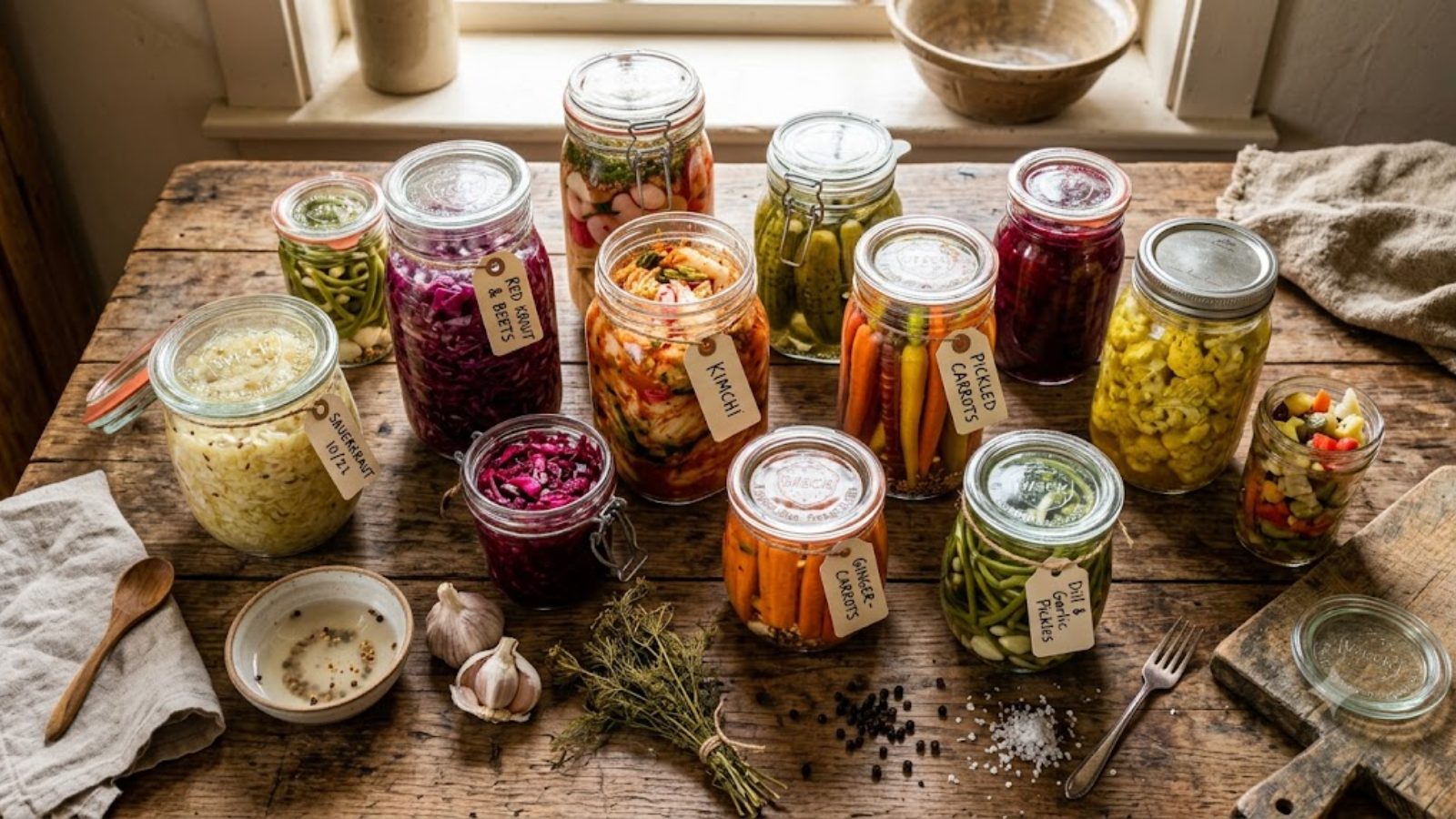
An $18,000 Consult To Learn Where The Pickles Are.
A fermented-food diet is sweeping the Trump cabinet, with a doctor charging $18,000 to walk you through the refrigerated aisle. The wellness version of a Vegas sky villa — the product is exclusivity; the sauerkraut costs four dollars.
When Your Broker Starts Selling Roulette Tickets.
Charles Schwab (SCHW) is rolling out all-or-nothing bets on where the S&P closes — a marketing decision, not an investment strategy. Use Schwab for the cheap funds; leave the roulette wheel in the corner of the app.
They Gave An AI Tomorrow’s Headlines. It Still Went Broke.
Given tomorrow’s front page, both a columnist and the AI Grok blew up by sizing bets too aggressively. Leverage turns being right into being broke — and the man who nearly crashed the system in 1998 now sells index funds.

Crazy-Rich Returns Are Luring Everyone Into Red-Hot Asian Markets.
Taiwan doubled, Korea tripled, Japan’s Nikkei is up 80% on the AI build-out. A diversified sleeve already owns TSMC and Samsung through index funds — when stores raffle off Nvidia shares, rebalance, don’t add margin.

Coca-Cola And The IRS Square Off Over $20 Billion.
Coke (KO) faces a $20 billion tax fight, yet keeps reassuring everyone its 64-year dividend streak is safe either way. Even the bluest chips carry tail risks — litigation is a footnote until it’s a refinancing.
Your Resume Is A Financial Asset. Keep It Sharp In Calm Weather.
Workers landed jobs by overhauling their LinkedIn before they needed to. The cheapest insurance against a layoff is a profile that’s already sharp — the same logic as keeping the portfolio and emergency fund ready before the storm.

Mars Gives M&M’s A Makeover, And The Color Blue Loses.
Natural-dye pressure cost M&M’s its blue and brown after spirulina algae gummed up the factories. Regulation always sounds free in the press release and shows up later as a cost on the income statement — even in the snack aisle.
AI Is Now Being Regulated One Friday Letter At A Time.
Washington restricted, then partly un-restricted, an AI model in two weeks. The signal isn’t the model — it’s that policy risk is now as real as compute cost, which argues for owning the diversified picks-and-shovels over any single model-maker.
Crimea Went From Crown Jewel To Maintenance Nightmare.
Ukraine’s drone campaign collapsed Crimea’s infrastructure as oil quietly fell to $69. Markets decided the war premium is deflating, not building — a tailwind for consumers and a reason to hold energy and defense for the long arc, not any single Friday.
The $100 Million Payday For CEOs Is Back.
More U.S. CEOs crossed $100 million last year than any year since 2021. Nine-figure pay clusters at frothy market tops, and these are mostly stock-option moonshot awards — boards betting on price, not dividends.
The WallStreetBets Crowd Ordered A Frosty With A Side Of Short Squeeze.
Wendy’s (WEN) jumped ~18% on a Reddit short-squeeze, out-trading even Micron. GameStop walked so Wendy’s could run — a coordinated dare with zero relationship to burger sales, not investing.
JPMorgan Finally Narrowed The World’s Longest Job Interview.
JPMorgan (JPM) named two co-presidents with $30M retention bonuses, narrowing the race to succeed 70-year-old Jamie Dimon. Succession risk at a too-big-to-fail anchor doesn’t show up in the yield until the day it does.
'Is This Just Free Money?' Polymarket’s Fake-Bet Hype Machine.
A Journal probe found paid creators posted $1.9 million in fake Polymarket wagers; the same bets would have lost $166,000. When a platform stages its winners and hides its losses, the house edge is the business model.

Hollywood Posts Its Best Box Office Since Pre-Covid.
Disney’s (DIS) Toy Story 5 opened to $312M and domestic box office is the highest since 2019 — driven by attendance, not just ticket inflation. A content slate that shows up supports a stock more than any buyback.

Starmer Quits Amid A Labour Revolt, And Farage Counts To Three.
Britain heads for its sixth prime minister in seven years. The FTSE rose on the day because markets priced it in weeks ago — a country’s politics and its index move on different clocks. Own the world broadly.
Carnival’s Soft Outlook Is A Read On The Whole Consumer.
Carnival (CCL) guided light as the Iran war hit Mediterranean bookings, but it’s 93% booked for the rest of 2026. Demand held everywhere except the war zone — not a cracking consumer, and lower oil helps the fuel bill.
Walmart Is Becoming A Media Company With A Side Business In Cereal.
Walmart (WMT) bought ad-tech firm Vibe.co for $1.4 billion to chase Amazon in high-margin advertising. The most important thing happening at Walmart has nothing to do with groceries — and that margin shift is the bull case.
SK Hynix Wants $29 Billion To Build Even More AI Memory.
SK Hynix plans an Aramco-scale $29 billion Nasdaq listing after a ~300% run. The AI build-out pulls in foreign capital to fund even more of itself; you own it sensibly through an index fund, not by chasing listing day.
When Regulation Sent Shoppers Back To The Highway Diner.
New age-verification laws are pushing online shoppers back into physical stores along England’s highways. A small-business case study: sometimes the moat is the storefront and the friendly hello — things a spreadsheet undervalues until the law changes.
It Took A Busload Of Scots At Costco To Remind Us The Country Is Rich.
Peggy Noonan on the World Cup’s Tartan Army, stunned by free refills, Costco, and affordable homes. Abundance you live inside stops looking like abundance — the same reason people undervalue a paid-off house or a compounding 401(k).
Las Vegas Is The K-Shaped Economy With A Neon Sign On It.
Three-quarters of Vegas visitors now earn six figures; profit-per-room more than doubled while total visitors fell. The cleanest read on the K-shaped consumer — and why the cash-flow tilt leans toward what affluent spenders buy.

The Memory-Chip Crunch Is Nearly Unsolvable.
AI demand has Samsung, SK Hynix and Micron (MU) funneling capacity to data centers and squeezing consumer gear. A physical bottleneck that takes years of fabs to fix — the inflation nobody legislates away, now in your next laptop.
Oil Took The Scenic Route Back To Square One.
Crude went from $118 in March back to $72 — below where it traded the day before the war began — as Hormuz reopened. Why the energy sleeve is insurance you hold through the round-trip, not chase at the top.
Apple Found Out Memory Isn’t Free Anymore.
Apple (AAPL) raised Mac and iPad prices 15-25% as memory costs quadrupled. The AI build-out tax on a price tag — and why owning the whole stack collects Micron’s pricing power while Apple eats the input cost.
Micron’s Midnight Blowout: Memory Is The New Oil.
Micron (MU) earned $28 billion in a quarter versus $1.9 billion a year ago and jumped 15% after hours, erasing a week of panic overnight. The whipsaw of mega-cap concentration — own the build-out, not the narrative.
AbbVie Pays $10.9 Billion For Itchy Skin: The Patent-Cliff Playbook.
AbbVie (ABBV) bought Apogee (APGE) at a 49% premium to restock its immunology pipeline before Humira’s successors face new competition. For dividend retirees, a great yield is only as safe as the pipeline behind it.
Hormuz, Not The Headlines: Why The Iran Vote Reaches Your Grocery Bill.
The Senate voted 50-48 to curb the Iran war, but the market read isn’t the politics — it’s the Strait of Hormuz. A genuine de-escalation that keeps oil flowing is the single biggest disinflation lever in the paper.
An Open-Book Stress Test, And A Wave Of Buybacks.
Big banks aced a test whose answers the Fed disclosed in advance, then answered with capital returns — JPMorgan’s $50B buyback, dividend hikes. Good news for the income sleeve, with one open-book asterisk.
China Is Quietly Hobbling The Dollar’s Biggest Weapon.
Iran has blunted U.S. sanctions by routing oil through China’s yuan-based plumbing, beyond Washington’s reach. A slow-motion story that’s the strongest argument for owning real assets and a sliver of gold as ballast.
Socialism Is Back In Fashion, And Both Parties Are Wearing It.
Greg Ip argues there’s little practical difference between Sanders’s socialism and Trump’s state capitalism — both want government stakes in major companies. When both wings eye nationalization, favor cash-flow durability and pricing power.
The Price Of A Good Time Has Never Been Higher.
Fans are financing $9,000 ballgames through Klarna in a you-only-live-once economy. As an investor you can own the toll booth (Live Nation, MSG Sports) instead of paying it — and never finance a depreciating memory at 20%.
Stranded Spirit Fliers Are Now Winging It By Bus.
With Spirit gone, its fans simply boarded the actual Greyhound — bus ridership jumped 30% on overlapping routes. The consumer-trading-down story in its funniest form, and a tell that argues for a defensive cash-flow tilt.

Florida’s Messiest Political Fight Is Between Two Birds.
Legislators (and Dave Barry) spent real hours trying to swap the state bird from a mockingbird to a flamingo. A palate-cleanser with a lesson: perspective is free, and every committee solves problems by adding a third bird.
The 4% Rule, Honestly: A Starting Point, Not A Cruise Control.
The most famous number in retirement planning, explained in plain English — where it came from, why a 4%-inflation world strains it, and the flexible cash-buffer-and-guardrails approach we actually use to turn a nest egg into a paycheck.
The GLP-1 Bill Is Now A Retirement-Plan Line Item.
Families are draining retirement accounts to fund ~$700-a-month weight-loss drugs for their kids. The quiet financial story of the GLP-1 era — and why medication inflation belongs in the plan now.
Own The Economy, Don’t Just Rent It: The Real Lesson In The Wealth Gap.
The ultrawealthy compounded by owning financial assets, not earning wages. A teacher with a steady 401(k) is on the right side of the same math — the on-ramp is open to everyone.
Does Your Index Fund Own SpaceX? Here’s Why You Shouldn’t Care.
People agonize over the half-percent decision and ignore the ones worth 10x more — how much you save, your mix, your fees. Own broad, hold, and stop relitigating the benchmark.
Used To The Heat, Undone By It: A Lesson In Building The Buffer.
Americans from the hottest states wilted in Europe’s AC-free heat wave. A funny read with a real lesson: it’s not the size of the shock, it’s whether you built the buffer — the emergency fund is a plan’s air conditioning.
Week Of June 20–27 — AI Stopped Being A Stock Story And Became An Inflation Story.
Our read of the June 20–27 Journal: the AI build-out became an inflation, oil round-tripped to where the war started, and the Fed switched from debating cuts to debating hikes. Plus Chevron powering a Microsoft AI site, a $35B Lockheed restock, and the ACA subsidy cliff.
Retiring Before 65 Just Got More Expensive: The ACA Subsidy Cliff.
Nearly 4 million people dropped ACA coverage as enhanced subsidies vanished, with some premiums doubling. What it means if you plan to retire before Medicare at 65 — and how to build the gap-year cost into the plan now.
Everyone Wants Passive Income. A Dividend Portfolio Is The Version That Actually Works.
From a lint-roller side hustle to AI-chatbot “income” that earned $250 — why the boring, diversified, cash-flowing version is the passive income that actually compounds for retirement.
The AI Boom Is The New Inflation — And It’s Coming For Your Electric Bill.
An ~$8 trillion build-out is pushing up prices on chips, gadgets and electricity while PCE runs 4.1%. Why ‘higher-for-longer’ is now a supply-chain fact, and how a retiree should position for it.
A $35 Billion Restock: Why The Defense Sleeve Earns Its Keep After A War.
The Pentagon refills its THAAD interceptor stockpile after the Iran war, turning a shooting war into a multi-year, government-funded backlog behind the dividend — with one ‘pending Congress’ risk to watch.
Real Progress Against A Brutal Cancer — And Why Your Retirement Plan Should Care.
Two new FDA approvals for advanced triple-negative breast cancer cut progression ~40% versus chemo. The human win — and the planning lesson about budgeting for the breakthroughs that aren’t cheap.
The World’s Fastest Beer Run: A Three-Minute Lesson In Reading The Fine Print.
FIFA’s ‘hydration breaks’ quietly became high-speed beer runs. A funny story with a real lesson: a rule built for one purpose gets repurposed the moment there’s money in it — just like every ‘safe’ financial product.
The Greenspan Put Just Died At 100. Don’t Build A Retirement Around A Rescue.
Alan Greenspan’s passing is a fitting headstone for the era when investors trusted the Fed to rescue every selloff. With inflation at 4.1% and a hawkish chair, plan as if no one is coming to save the portfolio.
Old Oil Meets New AI: Chevron Will Power A Microsoft Data Center For 20 Years.
Chevron signed a 20-year deal to power a giant Microsoft AI data center in West Texas. The AI build-out rerouting through dividend-paying energy — the megatrend without paying 40x earnings.
A 14% Yield Is Not A Gift. It’s A Warning Label.
Michael Saylor’s bitcoin-treasury ‘Stretch’ preferred yields ~14% on a company that makes almost no cash and already crashed 99% once. The oldest red flag in finance, for anyone shopping high-yield ‘passive income.’

Even The Comfortable Feel Broke. That’s A Planning Problem, Not A Portfolio Problem.
A WSJ poll finds 40%+ of the upper-middle class fear they haven’t saved enough and 86% doubt their kids will do better. Anxiety this broad is usually about not having a written plan — not about returns.

Tuesday, June 16 — Trump Strikes A Deal To End The Iran War. Oil Falls, And The Dow Hits A Record.
A cease-fire to reopen the Strait of Hormuz sent crude to $80.75 and the Dow to a record 51,671.03 — the best three-day run in a year. But inflation's hot and hawkish Kevin Warsh takes the Fed chair Wednesday. Plus a CFP-grounded SpaceX IPO deep-dive and the Knicks' 53-year vesting period.

‘Trump Accounts’ For Kids Launch Soon — But The Rules Are Still Half-Written.
A new federal children's savings account launches within weeks with a $1,000 government seed deposit — but the contribution, gift-tax and withdrawal rules are still being worked out. What to do now and what to wait on.

The Pentagon Wants $35,000 Missiles, Not $2 Million Ones — And That Reshapes Defense.
The Iran war burned through expensive munitions fast. Now the U.S. is buying cheap drones and low-cost cruise missiles (a Leidos design targets ~$35k) — quietly rewiring who wins in defense.

America’s Strange New Credit-Card Problem: We’re Not Borrowing Enough.
Heard on the Street flips the worry: U.S. card debt (~$1.3T) is manageable and debt-service is near record lows. The real issue is that banks have tightened so much that lending growth is too slow.

The Hidden Tax In Index Funds: What SpaceX’s Listing Just Exposed.
James Mackintosh's Streetwise column uses SpaceX's ~$1.8T debut to show an uncomfortable truth: index funds must buy a stock when it joins an index, at almost any price — a built-in distortion you pay for.
Royal Enfield Is Coming For Harley — And The Culture War Is The Marketing Plan.
India's Royal Enfield is targeting younger U.S. riders with cheaper bikes while Harley-Davidson (HOG) fights culture-war battles and watches its core age. A brand fight with a real lesson about moats.

‘Backdoor’ Reference Checks Are Back — Because AI Broke The Résumé.
With most applications now AI-assisted and references coached, hiring managers are quietly calling the people you didn't list. A workplace shift — and a lesson about reputation as an asset.

Colombia’s Stark Choice — And Why Emerging-Market Politics Are Money Risk.
Mary O'Grady's column frames Sunday's Colombian runoff as socialism vs. a free-market conservative — a reminder that emerging-market political risk is real portfolio risk.
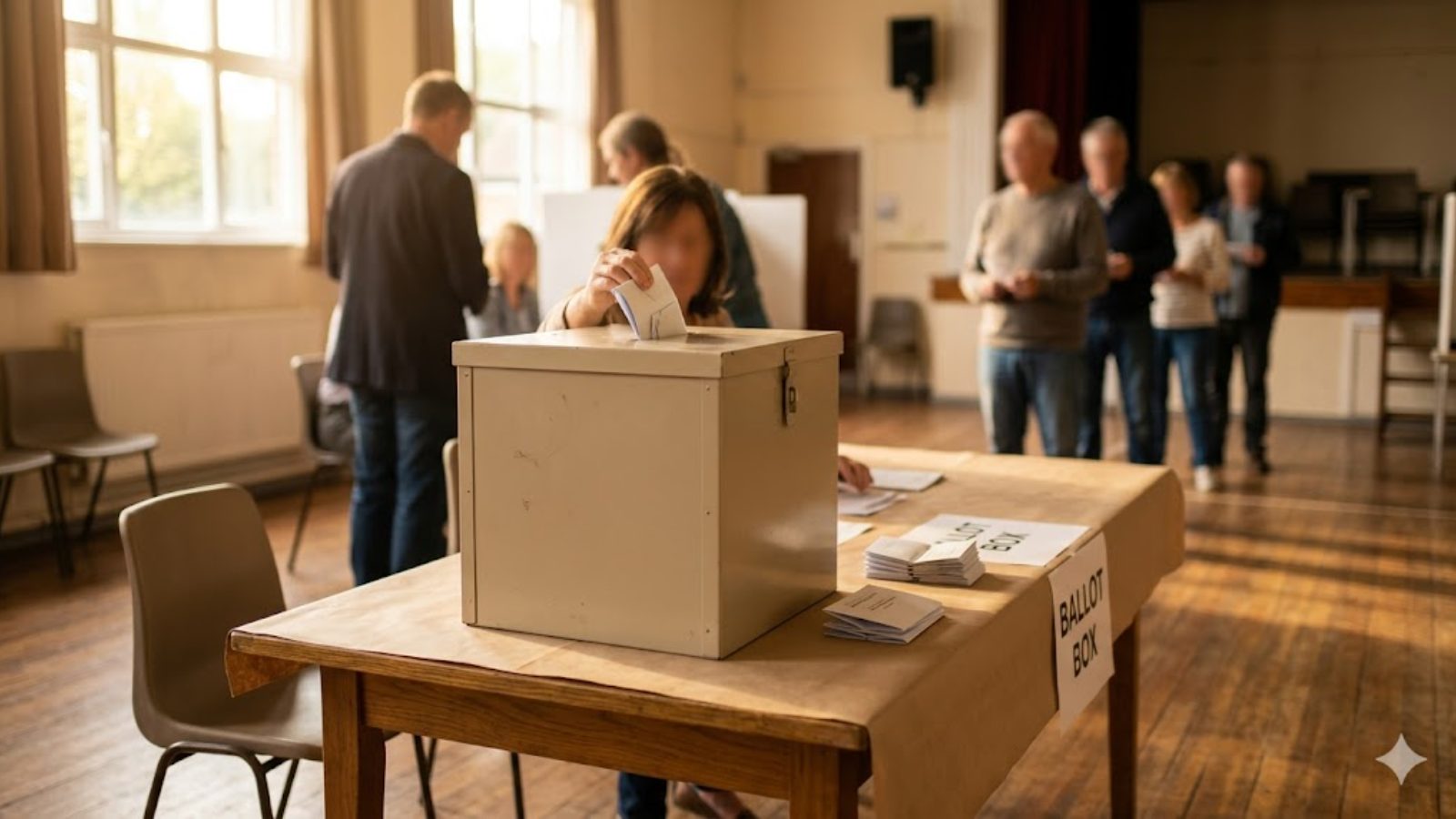
Jalen Brunson, King Of New York — And The Quiet Lesson In Staying.
The Knicks won it all and Jason Gay crowned Brunson the king of New York. His biggest move wasn't the 45-point clincher — it was choosing to stay, and letting the build compound.

The $12 Coffee Mug That’s Worth More Than Your Souvenirs.
A Journal feature on people who collect cheesy travel souvenirs for the memories they hold. A light read — and a quiet point about what money is actually for.

AI Just Cracked A 1946 Math Problem. Is It Really Doing Math?
An OpenAI model disproved a longstanding Erdos conjecture, verified by humans. A sharp essay asks whether machine-generated proof is real mathematics — and how we should use AI everywhere.

Trump Strikes A Deal To End The Iran War. Oil Falls, And The Dow Closes At A Record.
A cease-fire to reopen the Strait of Hormuz sent crude tumbling and stocks to fresh highs — the Dow's best three-session run in more than a year. What it changes, and the one thing it doesn't.

Should You Buy The SpaceX IPO? A Planner’s Honest Answer.
SpaceX (SPCX) is public at ~$1.75T — $18.7B revenue, a ~$4.94B loss, ~94x sales. A CFP-grounded buy / no-buy: the real S-1 numbers, the IPO rules, how landmark IPOs actually performed, and a position-sizing verdict.
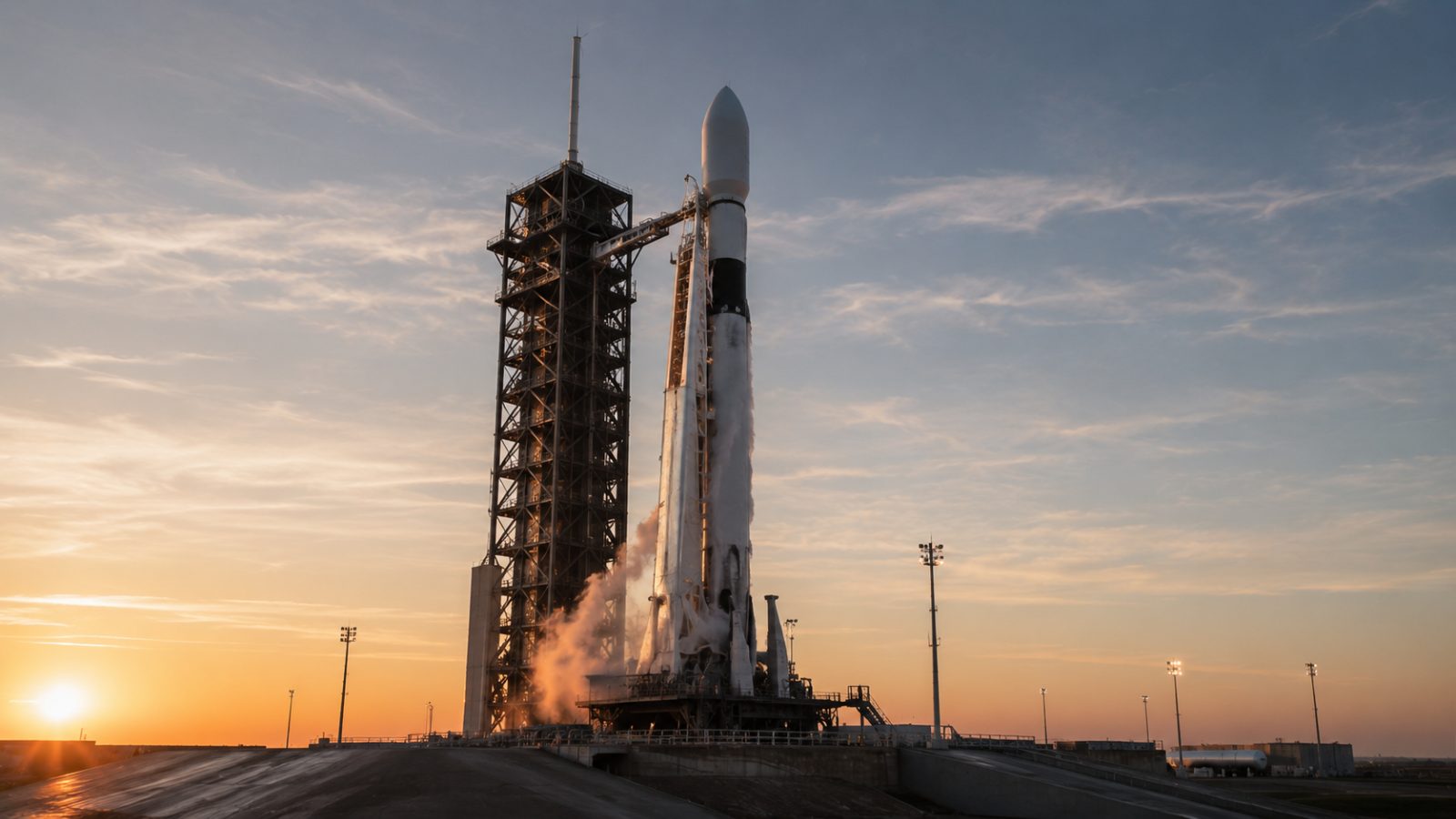
The Knicks Waited 53 Years. Your Retirement Shouldn’t Have To.
It took the Knicks fifty-three years to win it all again — a vesting period. From 401(k) matches to pensions to deferred comp, here’s how a plan shortens the wait for the money you’ve earned.
The War’s Over — But Inflation Isn’t. Kevin Warsh Takes The Fed’s Chair.
The relief rally assumes rate cuts. The bond market and a hawkish new Fed chair — whose first meeting is Wednesday — may have other plans.
Why Oil Never Went Through The Roof — Even With A War On.
Crude topped out near $86 and then fell — not the $120 everyone feared. The four quiet brakes that kept the spike in check, and how to actually own energy.

Teachers Are Cashing In On The AI Data-Center Boom. Here’s The Investing Lesson.
In Richland Parish, Louisiana, a Meta (META) data center is funding teacher bonuses through the local tax base — a map of where the AI build-out’s money actually lands.
Worried About A Tech Bubble? There’s A Cheaper Place To Hide.
Jason Zweig argues European stocks — left behind in the AI trade, cheaper and yielding ~3% — are the diversification U.S. investors quietly need. I agree, with one caveat.
The War’s Quiet Casualty: The World’s Fertilizer — And Your Grocery Bill.
A big share of the world’s fertilizer flows through the Middle East. Natural-gas spikes shut plants, and that ripples straight into food prices — and the inflation the Fed still hasn’t beaten.

The Invention Of The Trillionaire — And What The Gilded Age Teaches Us.
The weekend Review puts Elon Musk beside the railroad barons. The history rhymes — and the lesson for ordinary investors is older than any of them: concentration makes fortunes, diversification keeps them.
House Robots Are Coming, And They’ll Be Dangerously Cute.
Owners held funerals for Sony’s robot dog. A new essay warns that machines built to be adorable are built to lower your guard — the same trick that sells bad financial products.
‘Rocky,’ America At 250, And The Long Game.
Peggy Noonan’s bicentennial essay on a 1976 boxing movie is about optimism and reinvention — and about ‘going the distance,’ the most underrated skill in investing.

The Summer Jersey Goes Everywhere — A Field Guide (And A Note On Spending).
With the World Cup on, soccer jerseys are this summer’s go-anywhere uniform. A fun Style read — plus one gentle footnote on small, joyful, planned-for spending.

Gifts With Big Dad Energy — And The Best One Costs Nothing.
Father’s Day is June 21. A quick, fun gift guide from the weekend Journal — plus the one ‘gift’ I push every dad toward: a plan that outlives him.

Serenity In 17,000 Square Feet — And The Quieter Kind You Can Actually Afford.
New York’s most extravagant new spa has five plunge pools and a $1,495 couples massage. A fun read — and a reminder that the real luxury in retirement is not having to check the price.

Friday, June 12 — Stocks Roar Back: The Dow Jumps Nearly 1,000 Points As Dip-Buyers Return.
The day after the worst session in weeks, dip-buyers stormed back: the Dow jumped 929.97 points to 50,848.75 (▲1.86%), the Nasdaq added 2.5%. SpaceX went public in the largest IPO ever and popped 19%, Trump threatened Iran's oil, and the bond market refused to buy the bounce.
Stocks Roar Back: The Dow Jumps Nearly 1,000 Points As Dip-Buyers Return.
The day after the worst session in weeks, buyers came right back.
Trump Threatens To Strike Iran's Oil — And Crude Catches A Bid.
President Trump escalated again, threatening further military strikes on Iran and floating the idea of seizing its oil infrastructure.
The Bond Market Isn't Buying The Bounce.
For all the green on the stock screens, the bond market barely budged.
Why a 1,000-Point Rebound Feels So Good — And Why That's The Dangerous Part
The Dow's snap-back felt like relief. Here's what's really happening in your head when the screens turn green — and how I keep it from driving your portfolio.
The Nursing-Home Coin Flip: Medicare Advantage Denials Draw A Federal Probe.
A new federal investigation found that Medicare Advantage insurers — including CVS Health's Aetna (CVS), Humana (HUM), Cigna (CI) and others — deny skilled-nursing and inpatient-rehab stays at strikingly high rates, in some cases as high as 80%, often reversing them only on appeal.
The Social Security “Trust Fund” Deception — And What Retirees Should Actually Plan For
A WSJ opinion piece argues the so-called trust fund is more accounting fiction than a vault of cash. Here's the across-the-desk version for anyone counting on that check.
Where Mortgage Rates Actually Are Right Now — And Why They Won't Budge
The 30-year fixed is parked around 6.58% and the 15-year near 6.01%. With inflation hot and the Fed on hold, here's what that means whether you're buying, refinancing, or sitting tight.
Does Microfinance Actually Work? Yunus's Nobel Idea Gets Re-Examined.
Muhammad Yunus won a Nobel Peace Prize for the idea that tiny loans could be capitalism's cure for global poverty.
From Sizzler To SpaceX: The Quiet Billionaire Behind Musk's Empire.
The Journal profiled Antonio Gracias, the longtime Musk associate and DOGE volunteer whose SpaceX stake is now worth around $68 billion — a fortune that traces back, improbably, to franchising Sizzler and Little Caesars before he ever touched a rocket.
The Cattle Killer Comes Back: Texas Ranchers Battle A Flesh-Eating Fly.
The New World screwworm — a flesh-eating parasite eradicated from the United States back in the 1960s — is inching north again through Mexico.
At The Movies: A Sober Take On The Summer's Big Alien-Encounter Spectacle
WSJ's Kyle Smith reviews the Russo brothers' new sci-fi tentpole. A weekend watch — and a small lesson about spectacle versus substance.
Off Duty: The Quiet Luxury Of Renting A Room At The Convent
Convents across Europe rent beautiful rooms for a song — if you can live by the rules. A weekend read on cost, simplicity, and what “enough” really looks like.
Thursday, June 11 — A Three-Year-High Inflation Print And A Widening War Sank Stocks.
May inflation hit 4.2% — the hottest in three years — as the Iran war kept oil bid and pushed Fed cuts out. The Dow fell 1.87% to 49,918.78. We leaned into defense, energy and real assets; plus SpaceX's $1.75T debut and Deutsche Telekom's bid for all of T-Mobile.
Inflation Just Hit a Three-Year High — and the War Is Part of the Reason
Consumer prices rose 4.2% in May, the hottest in three years, as the Iran war pushed energy costs up and pushed Fed rate cuts further out. What it means for the book.
SpaceX Is to Orbit What the Model T Was to the Road
SpaceX's $1.75 trillion IPO is here. Why the collapse in the cost of reaching space looks like the automobile and AI revolutions — a platform shift, not a stock story.
Deutsche Telekom Wants All Of T-Mobile — The Largest Merger Anyone Has Ever Tried.
Timotheus Höttges, who runs Deutsche Telekom — the West's largest telecom, with 273 million mobile customers and a 54% stake in T-Mobile US — is reportedly preparing to fully absorb its flashy American offshoot.
NextEra Is Buying Dominion To Build A Mega-Utility. The Market Hated It. I'm Buying The Dip.
Shares of NextEra (NEE), the largest U.S.
North Korea Arms Up, Taiwan Drills Live-Fire — The Defense Tailwind Stays Chronic.
North Korea is likely to expand its nuclear enrichment by about 75%, according to international researchers, even as Taiwan ran live-fire Himars drills aimed squarely at deterring Beijing.
Battered But Not Beaten: Iran's Grip On Hormuz Keeps A Floor Under Oil.
Iran's regime was battered by bombing but came away with real leverage over the Strait of Hormuz, the chokepoint a fifth of the world's oil passes through.
A Cloud Startup That Refuses To Touch Nvidia Just Raised $350M — Led By AMD.
TensorWave, a Las Vegas cloud-computing startup, runs exclusively on Advanced Micro Devices (AMD) hardware — on principle, because its founder thinks Nvidia controls too much of the AI infrastructure market.
The Bond Market Just Quietly Repriced The Year. Here's What 4.54% Is Telling Us.
With inflation back at 4.2%, the 10-year Treasury yield sits at 4.541%, the fed-funds target is still 3.50–3.75%, and the average 30-year mortgage is 6.57%.
The Pope Weighs In On AI: Build A City, Not A Tower Of Babel.
In his first encyclical,
Tuesday, June 9 — The AI Story Just Reset, And Tech Carried The Market Again.
In one day Apple rebooted Siri on Google's Gemini and OpenAI filed to go public. After Friday's chip scare, money rotated to names with real products and cash flow — Nvidia widened its moat in Asia and Amazon bought a mountain of Corning glass.
OpenAI Files To Go Public — The First Real Gut-Check On The AI Trade.
OpenAI, the maker of ChatGPT, said it filed paperwork for an initial public offering.
A Smarter Siri, And A Farewell: Apple Bets Its AI On Google's Engine.
Apple (AAPL) used its big developer showcase to introduce an AI version of Siri — one built with technology developed alongside Alphabet's Google (GOOGL) — that can finally draw on your own data to answer more complicated questions and complete tasks, instead of punting them to a web search.
Nvidia Plants A Flag In Asia — And Widens The Moat Again.
Nvidia (NVDA) said it will collaborate with South Korea's biggest tech companies — memory maker SK Hynix, SK Telecom and internet group Naver — to build AI infrastructure across the region, with an eye toward robotics and other industrial uses.
Amazon Bought A Mountain Of Glass. We Bought The Company That Makes It.
Amazon.com (AMZN) entered a multibillion-dollar agreement with Corning (GLW) for the optical fiber, cable and connectivity that knit its fast-growing data centers together.
$159 Billion In AI Bonds: Genius, Or A Bubble Inflating? Both Sides Have A Real Case.
Global bond issuance by the big AI-tech companies is on track for a record — roughly $159 billion in 2026.
Iran's Missiles Signal A Wider Goal — And Keep A Bid Under Oil.
Iran's series of ballistic-missile salvos aimed at Israel are meant to show that, despite an intense air campaign against it, Tehran retains real strike capability — and the will to use it.
Taiwan's Arms Backlog: An Op-Ed Argues Delay Is Emboldening Beijing.
Defense analyst Seth G.
The Weight-Loss Pill Era: Novo's Wegovy Tablet Tops Three Million Scripts.
Novo Nordisk (NVO) said prescriptions for its Wegovy weight-loss pill have surpassed three million — a big number for an oral version of a treatment that until recently mostly meant injections.
The World's Most Unlikely Boom: Inside North Korea's Pizza-And-QR-Code Economy.
It's a story that makes you do a double-take.
Saturday, June 6 — Hiring Gathers Steam, And Wall Street Hates It.
A strong May jobs report should have been good news; instead the Dow fell 695 points as the chip trade cracked and semis led a sharp selloff. Strong hiring means rates stay higher for longer — and the bond market quietly repriced the cuts away.
Hiring Gathers Steam — And Wall Street Hates It.
The May jobs report came in strong — solid payroll gains and a labor market that refuses to roll over.
The Chip Trade Cracks: Semis Lead A Sharp Selloff.
The hardest hit corner Friday was the one that had run the furthest: semiconductors.
The Bond Market Quietly Repriced The Cuts Away.
The clearest tell on Friday wasn't in stocks — it was in bonds.
Mortgage Rates Head Into Summer Stuck Near 6.5%.
With the jobs report pushing rate cuts out, the 30-year fixed mortgage stayed parked in the mid-6% range heading into summer.
Inside The Push To Rein In Medicare Spending.
The Centers for Medicare & Medicaid Services is again at the center of the spending debate, weighing how to slow the growth of the program millions of retirees depend on without cutting the care they were promised.
The Retired Shuttle Engineers Who Can't Quite Let Go.
A lovely weekend read: the engineers who built and flew the Space Shuttle, now long retired, still gather to tinker, teach, and keep the old knowledge alive — unwilling to let a life's work simply fade into a museum exhibit.
Friday, June 5 — The Dow's Biggest Record Day Of The Year Had Nothing To Do With AI.
+875 to 51,561.93 on health care and banks — financials' best day since April 2025 — while Broadcom (AVGO) lost $286B for meeting expectations. Private credit gates, Buffett buys Macy's, oil's clock ticks. We added Macy's (M) and UnitedHealth (UNH), trimmed AVGO.
America Has The Money For The Data-Center Boom. It Can't Find The Transformers.
Thursday's A1 lead: 60%+ of 2027 capacity isn't under construction; $670B of hyperscaler capex meets turbine and transformer backlogs. Alphabet (GOOGL) raised $85B, Berkshire took $10B — and Alphabet is the only hyperscaler that owns a power company. Reinforced GOOGL.
Crypto Winter Turns Bitter — Bitcoin Halves While The Biggest IPO Ever Prices
Bitcoin ~$65,380 (−25% YTD), Strategy's (MSTR) first sale since 2022, a 12-day $4B ETF outflow streak — while SpaceX prices at ~$1.75T for June 12. The same speculative dollar, two doors. We own the fee collectors: GS and MS.
45,000 People Entered A Lottery To Watch Bugs Blink
The synchronous fireflies of the Smokies: 960 parking spots, 45,000 applicants, $325-a-night viewings sold out. Thursday's A-hed is pure joy — and a sneaky lesson about scarcity, patience and not spooking the compounding with a flashlight.
Carnage In Chip Stocks Hits Extra Hard In A Top-Heavy Market
Broadcom's $286B drop spread across semiconductors and landed harder because the indexes lean on a handful of mega-cap names. Why concentration is the real risk — and how a multi-engine book (we set a record the same week) absorbs it.
The $75B SpaceX IPO And The Index-Inclusion Trap In Your Retirement Funds
SpaceX prices at $135 (~$1.77T) for a June 12 Nasdaq debut. The S&P 500 won't bend its rules for 12 months — the Nasdaq-100 could in July. So QQQ may hold SpaceX while SPY won't. Plus how to buy it, the bear case, and our take.
Broadcom Lost $286 Billion In A Day. Its Crime? Meeting Expectations.
The 4th-largest one-day value loss ever — for affirming $100B+ AI guidance. Nvidia (NVDA) rose 1.9% the same day: the AI trade is consolidating around the leader. We trimmed Broadcom (AVGO) back to target.
Private Credit's 'Anything Goes' Era Just Ended
Direct-loan spreads at 2-year highs; Bcred investors asked for 10% and got 5%; Cliffwater hit 17%. The gates are working as designed — that's the product. Why our models hold zero private credit and zero BDCs.
Buffett's Team Went Shopping At Macy's. We Followed Them In.
Berkshire (BRK.B) disclosed a Macy's (M) stake: 1.3x book, 11x forward earnings, 3.2% yield, real estate appraised above the whole market cap. Four straight quarters of positive comps. Starter ~1% in income tiers.
Oil Dipped On A Ceasefire. The Inventory Clock Didn't Notice.
WTI eased to $93.04 — hours before an Iranian drone hit Kuwait's airport. Exxon and Chevron execs warn inventories reach a critical point within weeks. Gasoline +35% y/y; record 280B miles driven. Reinforced XOM, CVX, LNG.
The Banks Stopped Fighting Crypto And Started Absorbing It
JPMorgan (JPM), BofA (BAC), Citi (C) and Wells (WFC) plan a tokenized-deposit network for H1 2027 — and the $25,000 day-trading rule died Thursday (Robinhood +5.5%). Reinforced JPM, GS, MS.
Apple's Comeback Plan For AI Is The Thing Everyone Mocked: Siri
A ChatGPT-style Siri built on Google's Gemini — plus a paid Siri app — expected at next week's WWDC. The 'tollbooth for AI actions' thesis, the honest caveats, and why we're watching rather than chasing Apple (AAPL).
Washington Wants Equity In AI. The Biggest Lab Wants A Breather.
Officials discussed federal stakes in AI companies; Sanders drafts a 50% public-fund bill; Anthropic — near $1T valuation, $50B run rate — asks the industry to slow down. AI is becoming a state-entangled utility; that favors the giants.
Ta-Da! Scientists Are Taking Improv Class So You'll Trust Them
Alan Alda's center has trained 35,000 scientists in improv — funded partly by auctioning his M*A*S*H boots for $125,000. Featuring the 'hammer humidifier' pitch and the best two words in client communication: 'yes, and.'
Forget The Pied-à-Terre. Meet The 'Med-à-Terre.'
Wealthy retirees are buying $2M–$10M second homes near elite hospitals, not beaches. The planning lesson: late-retirement geography is a healthcare decision. (It's also the demand curve behind our UnitedHealth add.)
Wednesday, June 3 — Nine Up Days In A Row. Marvell Joins The Trillion-Dollar Talk. Oil Climbs Again.
The S&P 500's longest win streak in over a year. Nvidia's Jensen Huang says Marvell (MRVL) could be the next trillion-dollar company (+7%). Oil up three straight days. Washington leashes AI. We added MRVL, Dollar General (DG), Motorola Solutions (MSI) and MP Materials (MP).
Nvidia's CEO Says Marvell Could Be The Next Trillion-Dollar Company. We Bought It.
Marvell Technology (MRVL) jumped ~7% after Jensen Huang's comment. What it actually does — custom AI silicon and optical networking — and why the AI-chip trade widening past Nvidia is a healthier rally. Starter ~2% position.
America Is Trying To Build Magnets Without China. It Matters More Than It Sounds.
A Minnesota startup (Niron) makes powerful magnets with no rare earths at all. China controls ~90% of the rare-earth chain. The theme is private — so we bought the public proxy, MP Materials (MP), at ~1.5%.
Dollar General Beat, Raised, And Jumped 8%. A Barbell Against The AI Trade.
Dollar General (DG) beat and raised on “value-seeking consumers” (+8.2%). Why a cheap, dividend-paying discounter belongs next to a basket of expensive AI chips. We added DG at ~1.5%.
The Counter-Drone Arms Race Goes Mainstream. Motorola Bought Its Way In.
Russia intensified drone strikes on Kyiv; the U.S. Army is “jailbreaking” its weapons to counter drones; Motorola Solutions (MSI) bought D-Fend for ~$1.5B. We added MSI and reinforced LMT, RTX, GD, NOC.
Washington Just Put AI On A Leash. The Headlines Got It Backwards.
A new executive order asks AI labs to give the government 30 days' pre-release access to powerful models. Why a clear rulebook can be a moat for the incumbents (MSFT, GOOGL, NVDA) — and which AI names have the most to lose.
Truckers Are Driving Slower To Save Fuel. That's A Real Signal About Oil.
Diesel is up 44% and truckers are easing off the accelerator. A quirky human-interest story with a serious tail: oil climbed three straight days, vindicating our energy overweight. Reinforced XOM, CVX, LNG.
“Solo Agers” Are Navigating Life's Hardest Decisions Alone. Here's The Scaffolding.
A growing group is aging without a spouse or kids to lean on. The power of attorney, health-care proxy, advance directive, trust, and LTC plan every solo ager should put in place early — core CFP planning work.
Buffett Bought A Homebuilder. Saylor Sold Bitcoin To Pay A Dividend. That's The Whole Lesson.
Berkshire (BRK.B) bought Taylor Morrison ($6.8B) and added Delta (DAL); Strategy (MSTR) sold bitcoin for the first time since 2022 to fund a preferred dividend. Why we own durable cash flow and avoid crypto-treasury equities.
Estonia Just Gave Every High-Schooler Free ChatGPT. The Joke Has A Serious Tail.
A tiny Baltic country shipped what bigger systems are still debating. A fun headline and a clean data point for the “where does AI demand actually go” question. We stay tilted to AI infrastructure over apps.
Garth Brooks Might Sell His Catalog For $2 Billion. Songs Are An Asset Class Now.
The only artist with multiple diamond albums is exploring a ~$2B catalog sale. Why streaming turned old songs into bond-like income — and the quiet lesson about prizing durable cash flow.
Anthropic Files To Go Public. SpaceX Eyes $1.75 Trillion. The IPO Window Is Wide Open.
Two of the most valuable private companies on earth moved toward the public market. You can't buy either yet — so the trade is in the plumbing: Goldman Sachs (GS), Morgan Stanley (MS), and the AI suppliers. Reinforced GS, MS.
Gen Z Can't Get Enough Of Roth IRAs. They're More Right Than They Know.
Young savers are piling into tax-free Roth growth. The plain-English math on why time — not income — is the real superpower, plus the practical playbook we'd hand any 20-something. Core CFP planning.
Friday, May 29 — Three Records To Close May. GDP Quietly Cut. Anthropic At $965B.
Dow 50,668.97, S&P 7,563.63, Nasdaq 26,917.47 — all all-time highs. Anthropic raises $65B at $965B valuation, largest in SV history. GDP revised to 1.6%. Dell (DELL) +28.75% AH on $4.2B AI server orders — we added it. Tesla (TSLA) joined the book too.
The Auto Industry’s AI Collision — What 1M Lost Buyers, Qualcomm-Stellantis & A Beijing Verdict Actually Mean
The WSJ’s Thursday A1 reported a million U.S. new-car buyers gone. Qualcomm signed Stellantis. Pope Leo XIV warned about labor displacement. A Beijing court fined a tech firm for AI-driven firings. Read the four together — you see one picture, and one clean trade. We added Tesla (TSLA) and Dell (DELL).
Schadenfreude At The Sausalito Yacht Club — A Field Manual For Closed Institutional Systems
The funniest piece in this week’s WSJ. A canceled St. Patrick’s Day party. A 90-year-old radio legend. A hog stuffed with pulled pork. A $400K-and-counting lawsuit. Also, accidentally, a perfect case study in family-governance failure mode.
The Rear Window Vanishes — Polestar 4 And The Auto-AI Trade Behind The Joke
Dan Neil's WSJ Rumble Seat column on the 2026 Polestar 4 — the $66,900 EV that ditched its rear window for a video feed. Funny on the surface, structural underneath. Why we are NOT in Polestar / Geely, and what it tells us about Mobileye (MBLY), Nvidia (NVDA), and Qualcomm (QCOM) Drive Orin.
Drew Barrymore’s “Karmic” 1700s Mansion — And Why Buying On Feelings Is A Behavioral-Finance Red Flag
The WSJ Private Properties piece on Drew Barrymore buying a circa-1700s Harrison, NY mansion she said she felt a “spiritual calling” toward — from her great-aunt. The hard numbers on celebrity-property ROI. Why buying on feelings is the same signal we look for in client portfolios.
Wednesday, May 27 — Nasdaq + S&P At Records. Chip Stocks Rip. The Tuesday AI Cluster.
Qualcomm (QCOM) +12% on Stellantis AI vehicle deal. Nasdaq +1.2%, S&P +0.6% both close at all-time highs. The Pope vs. Silicon Valley. Huawei's chip end-around. 84% of small businesses now use AI. SpaceX IPO 15 days out.
Pope Leo XIV: AI Is "A Threat To Normalize An Anti-Human Vision"
The pontiff's first encyclical — "Magnifica Humanitas" — reads like a warning to Silicon Valley. Anthropic's Chris Olah stood beside him at the unveiling. What it means for the regulatory backdrop the AI trade is now running into.
Huawei's "LogicFolding" Chip End-Around: What It Means For ASML, TSMC, And NVDA
Shenzhen claims it can match 1.4nm chip density by 2031 without ASML lithography machines. 381 chip models already in mass production. The export-control playbook just got a real counter-move.
84% Of Small Businesses Now Use AI This Quarter. Here's Why That Locks In The Hyperscaler Trade.
A 14-person gluten-free bakery in Pleasantville, NY ditched enterprise ERP and now spends a few hundred dollars a month on an AI agent that runs inventory. Multiply by 33 million small businesses.
Gavin Baker's Decade-Long SpaceX Bet Is About To Print. Read-Through For GS, MS, And The Picks-And-Shovels Names.
Baker first bet in 2015 at a $10B valuation at Fidelity. He bought again in 2019 at $30B through Atreides. SpaceX is now 15 days from a $1.5T float. GS / MS co-running the book.
"AI Addiction Nearly Ruined Him." Why The Chatbot-Psychosis Story Is Now A Regulatory Catalyst.
Joe Alary, 57, built an AI companion he named AImee, became obsessed, spent 20-hour days "coding" with ChatGPT, maxed two credit cards on servers, nearly lost his job. He's one of dozens now in a formal support group.
BP Fires Its Chairman For "Abusive Behavior." A Governance Reminder For The Energy Sleeve.
Albert Manifold ousted Tuesday after the board was told he bullied employees. Shares -4% in London. Why we don't own BP and what it tells us about ExxonMobil, Chevron, Cheniere, and Williams positioning.
Russia Threatens The Baltics. The Pentagon Pulls Back From NATO. Defense Stocks Keep Catching A Bid.
Moscow has threatened to bomb "decision-making centers" in Latvia. Air-raid sirens in Lithuania last week. The Pentagon is scaling back forces it would send to Europe in a crisis. European defense spending is structurally repricing.
Qualcomm +12% On The Stellantis AI Deal. Why Tuesday's Chip Rally Is The Real Signal.
The PHLX Semiconductor Index gained nearly 6% in one session. South Korea's Kospi hit a record on Samsung + SK Hynix. Nasdaq + S&P both closed at records. The "AI everywhere" trade just got fresh fuel.
Private Credit To VC-Backed Startups Hit $68.8 Billion. AI Is Two-Thirds Of Every Dollar.
Venture-debt deal value rose 12% in 2025. 64% of VC equity dollars went to AI deals. Pinegrove now puts 45% of its capital into defense, aerospace, and hardware. Software lending has been cut in half.
"The AI Overwatch Act Would Help China." Op-Ed And What It Tells Us About The Regulatory Setup.
The Abundance Institute's head of AI policy argues U.S. AI export controls cede the global market to China. Huawei's Ascend 950 is now nearly 3x as powerful as the H20. The export-control debate is approaching decision point.
Saturday, May 23 — Dow At A Record. Fed Talking Hikes. SpaceX 21-Day Countdown.
The actual Friday close came in higher than the print paper: Dow 50,579.70 (+0.58%), S&P 7,473.47 (eighth straight week of gains). The Saturday edition: Memorial Day cookout inflation (+28%), the groom economy, the AI vibe-slop crisis, summer-camp parent vacations.
The Bond Desk Is Now Pricing In Fed Hikes
Kevin Warsh's first week as Fed chair-designate plus Trump's "I'll let him do what he wants" framing has BNP Paribas and Standard Chartered openly forecasting potential hikes. Reinforces JPM, BAC, MS, GS and gold at 12%.
21 Days To The Largest IPO In American History
The Saturday paper lays out the manual, low-tech 21-day SpaceX IPO process. Goldman and Morgan Stanley running the book. Expected June 12. $80B in shares allocated. Plus OpenAI and Anthropic filing within weeks.
The "Vibe Slop" Crisis Is Coming — And Why The Infrastructure Trade Still Works
Two AI insiders warn that Anthropic's Claude Code and other agentic tools are pumping out broken code. Bullish for cybersecurity (CRWD, PANW, FTNT), neutral for the picks-and-shovels AI book.
Your Memorial Day Cookout Costs 28% More Than Last Year
Beef +14%, hot dogs +24%, tomatoes +31%, gas back up. The real-inflation story your client is actually living through, and the cleanest validation of why the Fed pivot has legs. Energy, gold, and financials all benefit.
The Groom Economy — $15K Wedding Wardrobes And The 90-Day Tax Question Most Couples Miss
Off-Duty's lead feature on the groom economy. Pink tuxes, $15K wedding wardrobes, dog ice sculptures. Plus the actual 90-day post-wedding checklist newlywed clients miss, with the CalSTRS / CalPERS survivor wrinkle.
Friday, May 22 — The Dow Hits a Record. The IPO Window Opens.
Dow closes at 50,579.70, first record since February. IBM (IBM) jumps 12% on the Anderon quantum foundry. SpaceX files for IPO. Spotify (SPOT) +13% on a Universal AI deal. Intuit (INTU) cratered 20% on a 17% layoff. AMD commits $10B to Taiwan.
You’re Probably Overinvested in Bonds
Sixty years of return data say a 90/10 stocks-cash portfolio crushed the 60/40 by almost 3x over 40 years — including through every modern inflation regime. The case against long-duration bonds, and what we actually use instead.
America’s IPO Mini-Boom Just Opened the Door
SpaceX filed Wednesday. OpenAI is filing in days. Anthropic doubled to $10.9B in Q2 revenue. Goldman closed within a cent of $1,000. Why the public-market picks-and-shovels trade just got new fuel.
Even at $5 Trillion, Nvidia Is Underpriced
Competition is real — AMD just committed $10B to Taiwan, Arm ripped 16% to a new high. None of that breaks the bull case. The Anthropic disclosure that explains why Nvidia and the AI infrastructure book stay overweight.
Natural Gas Is Escaping Into Thin Air
200 billion cubic meters of natural gas a year is vented or flared — enough to power Japan, South Korea, and Australia combined. The inflation story inside the inflation story, and the picks-and-shovels names that benefit.
U.S.-China Diplomacy Is Alive With “The Sound of Music”
At Xi’s state banquet for Trump, the band played “Y.M.C.A.” and “Edelweiss.” The cultural detail aside, the summit produced real deliverables: 200 Boeing jets, beef imports, Tesla FSD approval. What it means for the China-exposure sleeve.
Thursday, May 21 — The Fed Just Stopped Talking About Cuts. They’re Talking About Hikes.
Thursday’s FOMC minutes showed officials retiring the cut question and weighing hikes. What it does to bonds, banks, gold, and the dividend tier. Reinforce JPM/BAC/MS, hold gold at 12%, rotate dividend tier toward financials and industrials.
Wednesday, May 20 — Bonds Broke. Stocks Followed.
10-year Treasury at 4.668%. S&P, Nasdaq, Dow all down. AI rebellion goes mainstream. Putin lands in Beijing. The day's themes, ticker actions, and where we stayed put.
Americans Just Turned on AI
Eric Schmidt got booed. A Molotov was thrown at Sam Altman's house. The polling has flipped. Why the picks-and-shovels trade still works even when sentiment doesn't.
Tuesday, May 19 — Warsh Takes a Fed That Can't Cut
$72B of AI-power consolidation in one day. NextEra (NEE) buys Dominion (D), Google (GOOGL) and Blackstone (BX) launch an AI cloud venture. OpenAI cleared for IPO.
A Glimpse at the Future of War
Mead is back from Kyiv. Drones replace rifles. Defense favors the defender. Ukraine is building a military-tech state under fire. What it means for the defense sleeve.
Reconnaissance at 70,000 Feet
Josh Dean's history of the Skunk Works is really about how cheap successful defense programs can be when run outside the system. The read-through for tier-2 defense names like PLTR, KTOS, AVAV.
Trump's Primary Campaign Against Massie
The $32.6M Kentucky House race is the most expensive primary in U.S. history. The bond market, the defense lobby, and every Republican in Washington is watching.
The Strongest Muscle You’re Ignoring Is Your Backside
One in four over 65 falls every year. 28,000 die. The cheapest fall-prevention dollar isn’t a supplement or a wearable — and most retirees can’t use it anymore. Plus the LTC math that follows the first fall.
How To Live Longer Than Your Money Plan Thinks You Will
Fidelity’s $315K lifetime healthcare estimate vs. the stale $175K most outside platforms use. The five-year planning gap, the SOA tables, and the Blue Zones behaviors.
Teen Boys Are Injecting Themselves From WhatsApp Suppliers For A Better Jawline
WSJ C3. The looksmaxxing gray market, peptide stacks at $65 a pop, and the $115K Roth-IRA opportunity cost on the same dollars.
She Quit Her 9-To-5 To Write Beach Romances. Now She Sells Millions.
Carley Fortune profile, plus the Solo 401(k) math ($69K shelter), QBI deduction, and the S-Corp election threshold — for the side gig that grew up.
An Architect Couple Traded Colorado For Palm Springs. The Renovation Was $1.05 Million.
The relocation-tax case behind the lifestyle piece. California Prop 19, FTB residency audits, the CalSTRS/CalPERS survivor-election wrinkle, and the homeowners-insurance swing.
Saturday, May 16 — The Personal Journal Edition
All five Personal Journal pieces, the right-rail sit-to-stand benchmarks, the Blue Zones cheat sheet, and the LTC trigger-event sidebar — in one Saturday read.
How We Optimize — A Quarterly CFP-Grounded Review
The framework we use to construct and maintain every model portfolio. Concentration limits, diversification standards, tax-location, rebalancing triggers, and values-based screens — all CFP-grounded. This quarter's changes summarized at the end.
Iran Hits Tankers In The Strait, Brent $114, State Farm Hammered, Palantir Prints Records
Dow -557; Brent +5.8% to $114; 10Y at 4.44%. Adds: SLB 2%; CB 2%. Reinforces: XOM/CVX/COP/OXY +1% each; LMT/RTX/GD/HII; GLD 3%→5%; PLTR 2%→3%. Watch: CRBS, ALL, TRV. Avoid: SAVE.
The Bezos Fashion Piece Is A Wealth-Leveraging Case Study
$500K/yr to CFDA → Met Gala co-chair. The mechanics scale to every wealth level. Four giving vehicles: direct, DAF, private foundation, CRT — matched to your scale.
Spirit Airlines Bankruptcy: A Capital Wealth Traveler's Money Guide
Don't call the airline first — call your credit-card company. Five-step checklist for tickets, miles, and the BAC co-branded card. Plus the LUV / UAL portfolio read-through.
Iran Hit Tankers In The Strait. Brent $114. Here's What We're Buying.
Strait of Hormuz escalation. Three scenarios for the next 90 days. Adds SLB; reinforces XOM/CVX/COP/OXY; raises GLD from 3% to 5% in conservative tier.
State Farm's Wildfire Reckoning — What It Means For Your Premium
California regulators sample 220 wildfire claims, find unlawful behavior in half. Two-step homeowner playbook plus the rotation: CB add 2%, watch ALL and TRV.
The Sewage Spill That's Re-pricing Coronado — And Your Estate Plan
265 days of unsafe water at Silver Strand; 129 days closed at Hotel del Coronado. Five estate-planning decisions for California coastal owners.
The AI Oversight Order: What It Means For Your Tech Holdings
Cybersecurity-focused EO contemplated after the Anthropic Mythos episode. Read-through for MSFT, GOOGL, AMZN, ORCL, NVDA, PLTR, and CRBS.
Emerging Markets Just Lapped The S&P, Spirit Folded, And A Personal Journal Story On Divorce
MSCI EM +14% YTD vs S&P 5.6%. Korea +57%, Taiwan +34%. Spirit Ch11. Adds: TSM 3%, EWY 2%. Reinforces: EEM 2%→4%, UAL 2%→3%. Personal Journal divorce piece is the read of the week.
What Divorce Taught Real Families About Money — Five-Step California Playbook
Don't treat every issue as an emergency. Mediator vs dueling lawyers. House · retirement · kids · everything else. QDRO and beneficiary updates. Inspired by the Ebeling/Brown WSJ Personal Journal.
Korea +57%, Taiwan +34% — Emerging Markets Just Lapped The S&P
MSCI EM +14% YTD vs. S&P 5.6%. The AI buildout pays our suppliers. Adds: TSM 3%, EWY 2%; reinforces EEM 2%→4%. Three risks that would kill the thesis.
Trump Has An IRA To Sell You: Five Questions Before You Click Sign Up
TrumpIRA.gov rolls out as a federal portal. Five questions every saver should ask. Why your existing custodian is almost certainly already cheaper.
Foreclosures Hit a Six-Year High — And It's Insurance, Not the Mortgage
March foreclosures up 28% YoY. The mechanism is taxes + insurance, not P&I. California-specific picture and what to do if you're feeling escrow pressure.
Iran War Hits Spirit, Pentagon Doubles Down On AI, And The Fed Just Pivoted Hawkish
DJIA 49,499 (+0.31%); NASDAQ 25,114 (+0.9%) records. WTI $101.94 (-3%); gas $4.39/gal — nine-week surge. Spirit Airlines liquidating; Pentagon signs eight AI vendors (GOOGL/MSFT/AMZN/ORCL/NVDA + xAI/OpenAI/Reflection); Anthropic shut out. EU auto tariff 15% → 25%. Fed shifts to "when do we hike". Reinforce: GOOGL, MSFT, AMZN, ORCL, NVDA, LMT, RTX, GD, HII, XOM, COP, CVX, OXY, JPM, WFC, GLD, F, GM. Add: VRT, ETN.
Pentagon Just Signed Eight AI Vendors. Anthropic Wasn't One.
Defense Department closes classified AI work with OpenAI, Alphabet (GOOGL), SpaceX/xAI, Microsoft (MSFT), Amazon (AMZN), Oracle (ORCL), Nvidia (NVDA), and Reflection AI. Hegseth calls Anthropic CEO "ideological lunatic" after refusal on guardrails grounds. National-security pref for open-source models named explicitly. Reinforces our AI builder + data-center power thesis (VRT, ETN, CMI, VST).
How YouTube Took Over The American Classroom
Investigation into Google's quiet capture of K-12 curriculum. Teachers integrate YouTube as core lesson delivery; questions about influence and oversight. Adds another moat to Alphabet (GOOGL) beyond search and cloud. Held inside our AI/Cyber/Data sleeve.
The Key To OpenAI
Path to a public listing runs through one regulator. Profile of the IPO hurdles, governance complications, and the partnership map (Microsoft, Oracle, Nvidia). Reinforces ORCL counterparty and MSFT exposure to OpenAI compute economics.
How Not To Respond To Political Violence
Saturday op-ed on tone, restraint, and conduct in public life. Cultural framing for an unsteady political season. No portfolio action; long-arc reminder that we manage through cycles, not headlines.
An Uproar Over Electric Cars In Formula One
Inside F1's identity debate: combustion vs. electrification. Competitive, technological, and brand implications. Cultural read on the broader EV adoption curve, with light read-across to industrial transition holdings.
A $1,000 Trip To Venice
Long-weekend in the City of Bridges that actually pencils out. Budget breakdown, off-season timing, and the case for shoulder-season travel. Tied loosely to retirement-income work — bucketing for travel inside a planning framework.
Musical Light In The Darkness
Review of a new book on music as cultural memory and resistance. Saturday review-section piece. No portfolio implications; the cultural read for the weekend.
AI Saved Q1, Venezuela Reopens, And The Debt Just Hit 100% Of GDP
S&P 7,209 (+1.0%); NASDAQ +0.9%; Russell 2K +2.2% led tape. April finished +10%. Q1 GDP 2.0% on AI capex; XOM/COP back in Caracas; PCE 4.5% on tariff pass-through. ADDs: HII, DG. Reinforce: GOOGL, AAPL, MSFT, AMZN, META, NVDA, AVGO, XOM, COP, SLB, LMT, RTX, GD, WMT, COST, CAT, GLD.
WSJ Editorial — AI Saves The Trump Economy
$133B Q1 capex by GOOGL/MSFT/AMZN/META; group on path to $725B/yr. PCE 4.5% on tariff pass-through. Builders win, financiers under pressure. Reinforce GOOGL, MSFT, AMZN, META, AAPL, NVDA, AVGO; add DG.
National Commission On The U.S. Navy — A Generational Rebuild
Four-part call: autonomous systems, faster ship repair, scalable weapons, expanded maritime industrial base. Add HII (1.5%); reinforce GD, LMT, RTX, NOC, AVAV, KTOS. Defense holds 18%.
WSJ Editorial — Albany Demands A Climate Sacrifice
Hochul seeks delay on 2030 climate law as compliance cost rises to $4K/household + $2.23/gal. Tilt utilities to Sun Belt; reinforce gas-as-bridge: EQT, WMB, KMI, CEG, VST.
Kimberley Strassel — Lessons For Anna Paulina Luna
Luna's farm-bill federalism case gets the federalism backwards. Regulatory unpredictability favors largest, most diversified consumer-staples operators (WMT, COST, KO).
WSJ Editorial — Charges Of A Covid Coverup
DOJ indicts former NIH official David Morens for obstructing origin investigations. Hold UNH and large-cap diversified healthcare; avoid binary single-product biotech.
Quantum Computing's IPO Rush — Eight Pure-Plays In One Year, A New Watchlist Is Born
Bousquette's WSJ B10: 3 quantum IPOs already in 2026, 5 more announced, Nvidia ships open-source quantum AI models. New Capital Wealth Quantum Watchlist: IONQ, RGTI, QBTS, QUBT + Infleqtion, Xanadu, Horizon Quantum + IQM, Pasqal, Terra Quantum, Seeqc, Quantinuum. Speculative sleeve only — cap at 5% of total account.
Spirit Bailout, Boeing Beat, Tesla Turns, Google's In-House Chip — And A Counter-Drone Theme Is Born
S&P 500 at 7,137.90 (+1.05%, 8th record 2026); NASDAQ at 24,657.57 ATH. Iran-Hormuz stalemate holds oil bid; Defense + Energy stay overweight. ADDs: HAL, SLB, BA, AVAV, KTOS, TXN.
Dan Gallagher — Big Tech's AI Capex Is Now A Macro Variable
2026 hyperscaler AI capex on track to exceed $400B, larger than entire U.S. utility sector annual capex. ADD TXN (analog/power-mgmt proxy). Maintain NVDA, AVGO, GOOGL, MSFT + Power/Infra (ETN, VST, GEV).
WSJ Editorial — Iran's Drone Doctrine Tests The West
Shahed-class drone costs $20K; Patriot interceptor costs $4M. Asymmetry demands a new sleeve. Counter-Drone theme born today. ADD AVAV, KTOS; RTX/LMT/NOC benefit too.
Karl Rove — Democrats Court Their Own Peril
Coalition-not-tactics argument. If cycle resolves early, capex visibility accelerates in Energy + Defense. Reinforces overweights: XOM, CVX, COP, HAL, SLB + LMT, RTX, NOC, GD, BA.
Matthew Continetti — Why Democrats Cannot Quit Israel
Donor class vs activist base; primary fight coming. Aid-package politics remain bipartisan — Defense primes win either way. Stay overweight LMT, RTX, NOC, GD, HII, BA.
Sadanand Dhume — Pakistan's Quiet Pivot Toward Israel
Expanded intel-sharing with Israel is public surface of year-long realignment. FMS pipeline expands if it holds. Reinforces Defense overweight: LMT, RTX, NOC.
WSJ Editorial — RFK Jr., The Oncologists And The FDA
HHS accelerated-approval reforms face organized cancer-center pushback. Hold UNH, LLY; avoid speculative oncology biotech until pathway resolution is clearer.
Jonathan Weil — Private Credit's First Real Stress Test
Default rates cross into mid-single digits for first time at scale. Large BDCs reporting non-accruals that look like the syndicated loan market. Reinforce avoid.
Spencer Jakab — Meme Stock Era Is Not Over, It Has Moved
AVIS, SAVE, regional banks squeeze pattern. Keep on special-situation watchlist for tactical sleeves only — tiny sizing, not core.
WSJ Editorial — The Supreme Court's Gerrymander Mistake
Rucho (2019) produced exactly the state-court chaos critics predicted. Policy uncertainty favors large-cap quality + dividend coverage; avoid policy-binary mid-caps.
Barton Swaim — The Real Story Behind The Latest SCOTUS Leak
Leaks now signal internal coalitions, not just outcomes. Three current cases (Chevron, 340B, in-house ALJs) touch names we own. Use volatility on opinion days.
Andrew Cuomo — How New York Should Rebuild Penn Station
MSG lease is the obstacle, not the design. Watch midtown-west REITs + infrastructure primes if procurement turns real. Modest sizing until contract awards arrive.
Ray Kelly — What's Next For Greater NY
Two-tier recovery: trophy buildings at/above pre-pandemic, B/C class at structural vacancy. Stay concentrated in trophy REITs; avoid B/C office.
Henry Hitchings — Shakespeare's Other Inheritances
The vocabulary of money — collateral, premium, dividend — entered English through the plays. A reminder: vocabulary is what scares clients into inaction.
Clarence Page — Robert Reich At 50: A Reckoning
50-year intellectual arc as a lens on the Democratic coalition. Long-arc perspective piece for client conversations about political climate.
Joseph Bottum — The Cheeseburger And The Soul Of America
Small pleasures as unifying institutions. Not a trade — a values piece for Q1 client touchpoints.
Warsh Grilled, Iran Talks Stall, TMUS-DT & SpaceX/Cursor $60B — Oil Back At $92
Senate grills Fed nominee Warsh; Tehran rejects talks; three mega-deals. All 7 themes hold; proposing 11th theme — Telecom Consolidation.
Holman Jenkins — From The 2019 Impeachment To Iran
Jenkins traces how Democratic tactical choices keep handing Trump strategic wins — Ukraine, Gaza, now Iran. Energy 18% + Defense 16% stay. CVX, XOM, HAL, RTX, NOC, LMT.
Julian Baggini — Clairvoyance And Control (Véliz's Prophecy)
The real AI hazard is not that predictions are wrong but that they become self-fulfilling. Healthcare Innovation 4% theme stays; tilt AI/Cyber toward audit-trail names. PANW, CRWD, NET.
William Galston — The Upper Middle Class American Dream
Real wages up 38% in the 80th–95th percentile since 2000. Median household up 6%. Two-track economy. Consumer Disc quality only; WMT, COST.
Randy Maniloff — Major League Baseball At 150
Not a direct portfolio call. Adjacent read: Entertainment & Live Events. MLB betting handle up 22% YoY. DKNG, FLUT, MSGS.
Tom Tugendhat — The Price Beijing Pays For Backing Tehran
China's Iran subsidy is costing it the Gulf and ASEAN. Defense 16% tilts to Pacific primes (LMT F-35, NOC B-21, RTX Aegis). Gulf energy wins twice.
Jason Riley — The Biggest AI Risk Is Foolish Policy
The real threat is not extinction — it's licensing regimes that lock in incumbents. AI/Cyber 20% tilts toward productivity-layer: PLTR, SNOW, DDOG. Open-source exposure via META Llama.
Sekerke & Hanke — How To Ease The Fed Off QE
Proposed: Treasury-managed Resolution Fund auctions Fed legacy holdings in tranches. Short long-duration; own the belly. Financials 16% benefit from curve steepening. JPM, BAC, WFC, GS.
R&O — Oncologists vs. The FDA And RFK Jr.
Practicing oncologists break with FDA on accelerated-approval immunotherapy. Healthcare Innovation 4%: LLY, VRTX, REGN, ISRG. UNH Q1 beat (+5%) is the set-up.
R&O — When Warren And Trump Agree (On The Fed)
Populist left and right converge on Fed critique. Gold 12% conviction holds; long-end Treasurys underweight stays. Dollar structural underweight. Favors EFA, VEA, EWJ.
R&O — A Quiet U.S. Favor For Xi Jinping (IMF Quotas)
IMF 16th quota review expands China voting share with no reciprocal concessions. China underweight holds. Frontier/EM debt reprices wider; EMB at risk. Defense offsets.
Ashlea Ebeling — Unwed Couples Face A Messy Legal Landscape
Three documents close the worst gaps: will/trust, beneficiary designations, durable POA + health-care directive. CalSTRS/CalPERS survivor-election is permanent at retirement. Planning agenda item this quarter.
Ben Cohen — Advice To Apple's Next CEO (John Ternus)
Cook doubled AAPL market cap twice. Ternus inherits Monday. Three jobs: finish India, reach AI parity, settle EU DMA. AAPL hold don't chase at 32x fwd. MSFT, GOOGL relative winners if Apple fumbles.
Iran Endgame Uncertain, Oil Grinds Back Toward $90, And A Stealth Manufacturing Boom Gets Its First Headline
Iran cease-fire expiring Tuesday. All 7 themes hold; proposing 10th theme — Healthcare Innovation.
Greg Ip — America's Stealth Manufacturing Boom
Factory production +2.3% YoY, shipments +4.2%, Boeing deliveries +72%. Ip argues 50 years of decline is ending. Three baskets: Defense (LMT, RTX, NOC, GD, BA, TXT), Power/Infra (ETN, PWR, VRT, GEV, EMR), Semi Equipment (AMAT, LRCX, KLAC, ASML, TXN).
Andy Kessler — Viz.ai And The AI Healthcare Pathway
Viz.ai reads stroke CT scans in under 6 minutes. Medicare reimburses $1,040 per scan. Deployed at 1,700 hospitals. Trigger for our new 10th theme: Healthcare Innovation / Oncology (RMED, BMY, AMGN, LLY, RXRX).
James Mackintosh — Why The S&P Rally Rests On One-Offs
Strip tariffs, AI capex, and dollar weakness out of S&P EPS and growth looks closer to 4% than 12%. Defensive sleeves that earn their keep: short-duration Treasuries (SGOV, JPST), Gold (GLD, NEM), staples (PG, KO, MCD, WM, VZ).
Mary Anastasia O'Grady — The Trouble In Trump's Venezuela
Venezuela is the inverse-Iran oil trade. Chevron licensed back but PDVSA infrastructure has decayed. Iran/Venezuela/Saudi triangle is the marginal-barrel story of 2026. Energy theme stays at 18%: CVX, XOM, COP, EOG, FANG, OXY, SLB, HAL.
Jason Gay — How Should LIV Be Remembered?
Sports is business. LIV took the players but never built a sticky audience; PGA Tour + PIF framework agreement re-centered elite golf. Read-through: live rights compound (DIS, CMCSA, NFLX, AMZN), sports betting (DKNG, FLUT, CHDN), league equity (MSGS, MSGE).
Allysia Finley — The Life-Science Political Risk Map
IRA second-wave drug pricing is live; FDA stable but cautious; psychedelic and rare-disease pipelines are the bright spots after Trump's EO. Backs our 10th theme: RMED, BMY, AMGN, LLY, RXRX, SDGR, RLAY.
Roland Fryer — The Economics Of Religion
Fryer quantifies trust networks: one-sigma increase in attendance correlates with 8-12% higher earnings, controlling for income, geography, education. A planning piece, not a trade — but one that reframes how we talk to clients about community and legacy.
WSJ R&O — Yale Takes Itself To Reform School
Yale rolls back some DEI overhead; Ivy admissions re-requires SAT/ACT for 2026-27; institutional neutrality re-adopted. Endowment-flow read-through: PE (BX, KKR, APO), asset managers (BLK, TROW, BEN), for-profit education (LRN, CHGG, STRA).
D.G. Hart — Bookshelf Review Of Sutton's Chosen Land
Long-horizon framing for generational wealth planning. Estate tools ($27.22M exemption, 30% AGI rule, DAFs) plus the Gold sleeve as a 20-year hedge.
Iran De-Escalates, Hormuz Opens — Records Stretch, Oil Cracks 11%, 8th Theme Proposed
Oil cracks 11% on the week; Nasdaq best run since 2020. Proposing 8th theme — Nuclear & Critical Minerals.
"It's Getting Harder To Tell Investing From Gambling" — Jason Zweig's B1 Column
The WSJ weekend Intelligent Investor column names the blurring line between speculation and allocation: Kalshi, Polymarket, 0DTE options, single-stock-leveraged ETFs, and re-platformed gambling apps have created genuinely ambiguous territory. Zweig's ask of advisors: "If you can't tell a client whether their position is an investment or a bet, you haven't done the work." Our client-book guidance: separate the bet sleeve from the allocation sleeve and size it honestly. Bring the question to your next review.
You've Filed 2025. Now Here's What Matters For 2026 — A Capital Wealth Planning Read
Laura Saunders's Tax Report lays out the 2026 limits: 401(k) at $24,500, IRA/Roth at $7,500, SS wage base at $176,100, HSA family at $8,750. Four planning levers shift materially for CalSTRS/CalPERS/ households: 403(b) payroll update (do in April), backdoor Roth, QCDs ($108K cap), and 529-to-Roth rollovers. Checklist inside.
"To Beat China, Embrace Open-Source AI" — Ramaswamy & Perault On The Platform Question
A13 op-ed argues the US AI lead is a deployment lead, not a compute lead — and deployment requires open weights. Investment map: META strengthens (Llama platform), NVDA wins either way (GPUs run both stacks), MSFT/GOOG face real margin questions, cyber/infrastructure (VRT, CRWD, PANW) stays defensive. Our sleeve stays platform-diversified.
"America Loses Its Will To Work" — Barton Swaim's Labor-Force Essay
Prime-age labor participation still short of 2019 despite 4.2% unemployment. Swaim argues a meaningful share of the gap is cultural rather than economic. Planning impact for our book: lower dual-income re-entry probability to 30%, flag Social Security credit gaps for households supporting non-earning adults, add caregiver-lost-earnings to LTC conversations.
"Water, Water Everywhere—Except In California's Reservoirs" — Ring On Water Infrastructure
California reservoirs at 68% of average despite a wet spring. Ring's Cross Country column frames the gap as structural, not climatic. Our water/infrastructure sleeve names: XYL (picks-and-shovels), AWK (regulated utility), WTR, WMS. For California-resident clients, a hedge on household cost-of-living as much as a portfolio holding.
"Trump Meets His Match In Pope Leo" — Peggy Noonan On The American Pontiff
Noonan's A13 Declarations column frames Pope Leo XIV — the first American Pope — as a figure whose quiet moral authority is reshaping political discourse. Not an allocation story, but a civic one worth reading. Client-letter folder, not portfolio folder.
Day 5 Post-Blockade — Blockade Goes Global, Private Equity Takes the Pentagon, Mega-Layoffs Arrive
Iran widens the blockade; records across the board. Seven-for-seven on themes. Adds: TSM, MP, ALB, PEP.
Fed Chief in the Crosshairs — Pentagon Opens Its Books to Detroit
Trump moves on Powell; Pentagon courts GM, Ford, GE, OSK for wartime munitions. Two defense adds.
S&P Hits Record 7,022 — Banks Crush, ASML Raises, Strait Still Shut
S&P 500 breaks 7,000. Morgan Stanley posts record quarter; utilities pledge $1.4T grid overhaul for AI.
Day 2 Post-Blockade — Gold Hits Record as Allies Split
Gold at $4,761 all-time high. Full scenario analysis and portfolio playbook.
Blockade Day — The Strait of Hormuz Becomes a Battlefield
Navy orders Hormuz blockade. Brent at $100, gold at record. Playbook for the phase that began.
Q1 2026 Portfolio Report — Full Performance Review
CW Aggressive +13.4% vs S&P −2.1%. 35 positions, sector allocation, Q2 strategy.
Sharia-Compliant Portfolios — Eid Mubarak Edition
Halal-screened portfolios across energy, AI, defense, and real assets.
Where to Invest Now — Iran Conflict Market
Day 28 of the conflict. Three scenarios, sector playbook, portfolio strategies.
Refinancing, ARMs & Mortgages — What You Need to Know
Fixed vs. adjustable, when to refinance, and how Iran-conflict rates affect your home loan.
Replacing Bonds With Dividends
Why dividend equities may outperform fixed income. Yield, risk-adjusted returns, tax efficiency.
50 Best Stocks to Own in 2026 & Forward Projections
WSJ-researched, CW-validated. Thesis, 12-month targets, Q2–Q4 sector projections.
Recession Portfolio — Dividends, Defense & Real Assets
3-tier defensive portfolio — dividend funds, defensive growth, cash hedges. Any market.
2026 Tax Numbers — What Changed & What It Means For You
Brackets, retirement limits, SALT caps, CalSTRS/CalPERS guidance. Plain English.